
2026 will test the credibility and direction of global cooperation on climate, including for the UNFCCC. The climate regime must demonstrate that it can make a durable and politically resilient shift, elevating the focus on implementation, delivery, and partnerships alongside consensus-based negotiations. The stakes are high. Decisions taken this year will shape the pathway to the second Global Stocktake in 2028 and determine how the regime can evolve to support delivery at scale, crucial to ensuring the process remains fit for purpose in a more uncertain global order. COP31 must integrate climate action into the geopolitical arenas shaping this decade.
In a similar vein to COP30, success at COP31 will not be defined by a single flagship outcome, but rather how it delivers across a range of priorities. It will also depend on how it functions as part of a continuous political and technical process to 2028.
Priorities for the COP31 Presidency
Structured cooperation between successive Presidencies to provide continuity in delivery is key. The COP31 Presidency will need to build on the progress made by the Brazilian COP30 Presidency to strengthen the coherence, impact and accountability of the Action Agenda in delivering real-world results across all elements of the climate landscape. It should also establish a Troika with the COP32 and COP33 Presidencies to develop a credible workplan to ensure there is visible progress in implementation ahead of the second Global Stocktake’s political phase.
Priorities for the COP31 Presidency and ambitious parties include:
- Laying the foundations for the second Global Stocktake, ensuring it drives course correction.
- Accelerating action on mitigation and transitioning away from fossil fuels.
- Securing public finance commitments and mobilising private finance.
- Integrating adaptation and resilience into actionable plans.
- Articulating the role of trade and industry, and diffusing trade tensions.
- Supporting the evolution of a global climate system that remains flexible enough to advance progress and implementation wherever political space exists in an increasingly unpredictable world.
Read our briefing The Road to Antalya for more on these recommendations and how COP31 should be seen as a staging point on the road to the next Global Stocktake in 2028.
The diplomatic year: all roads lead to COP31
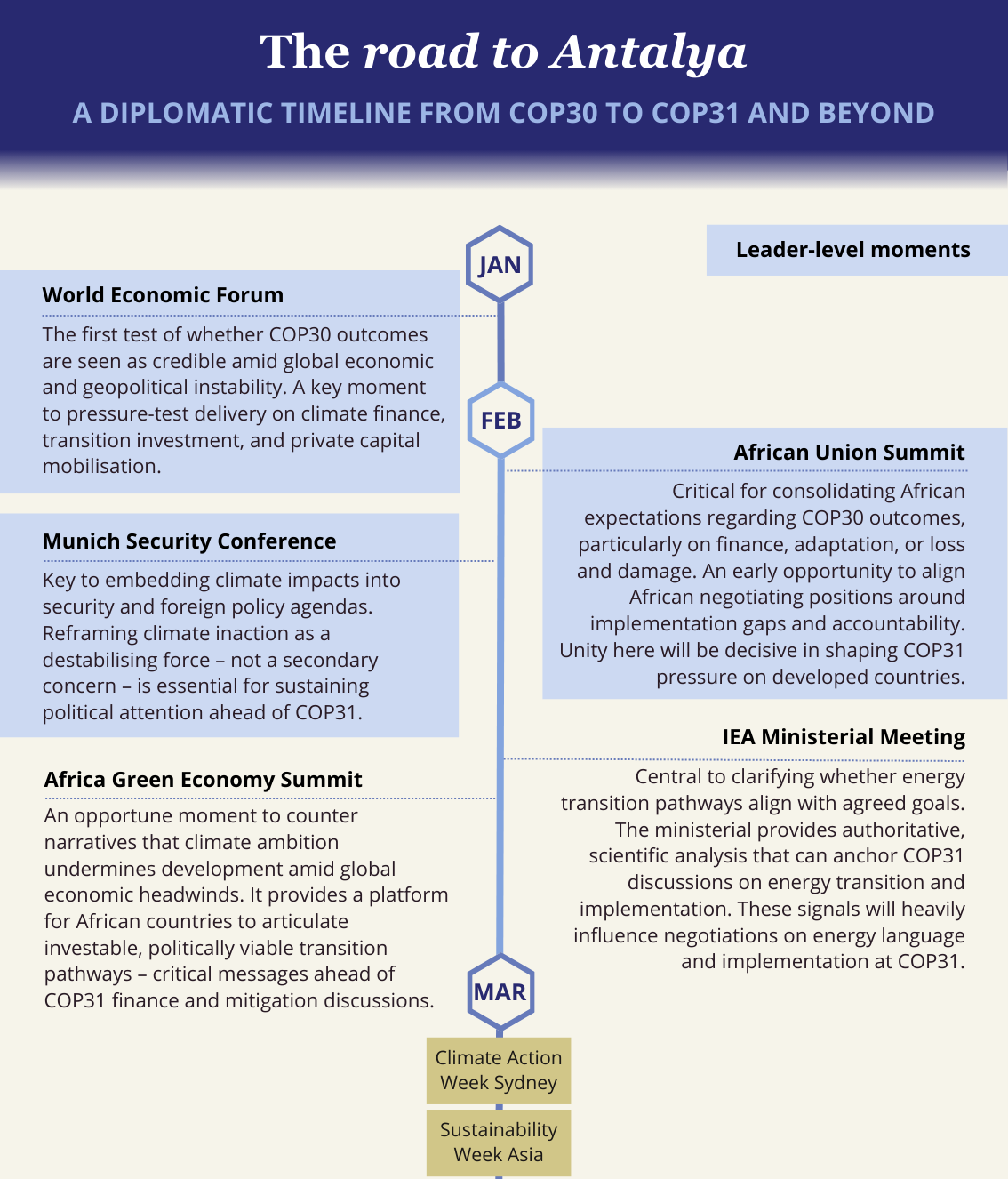
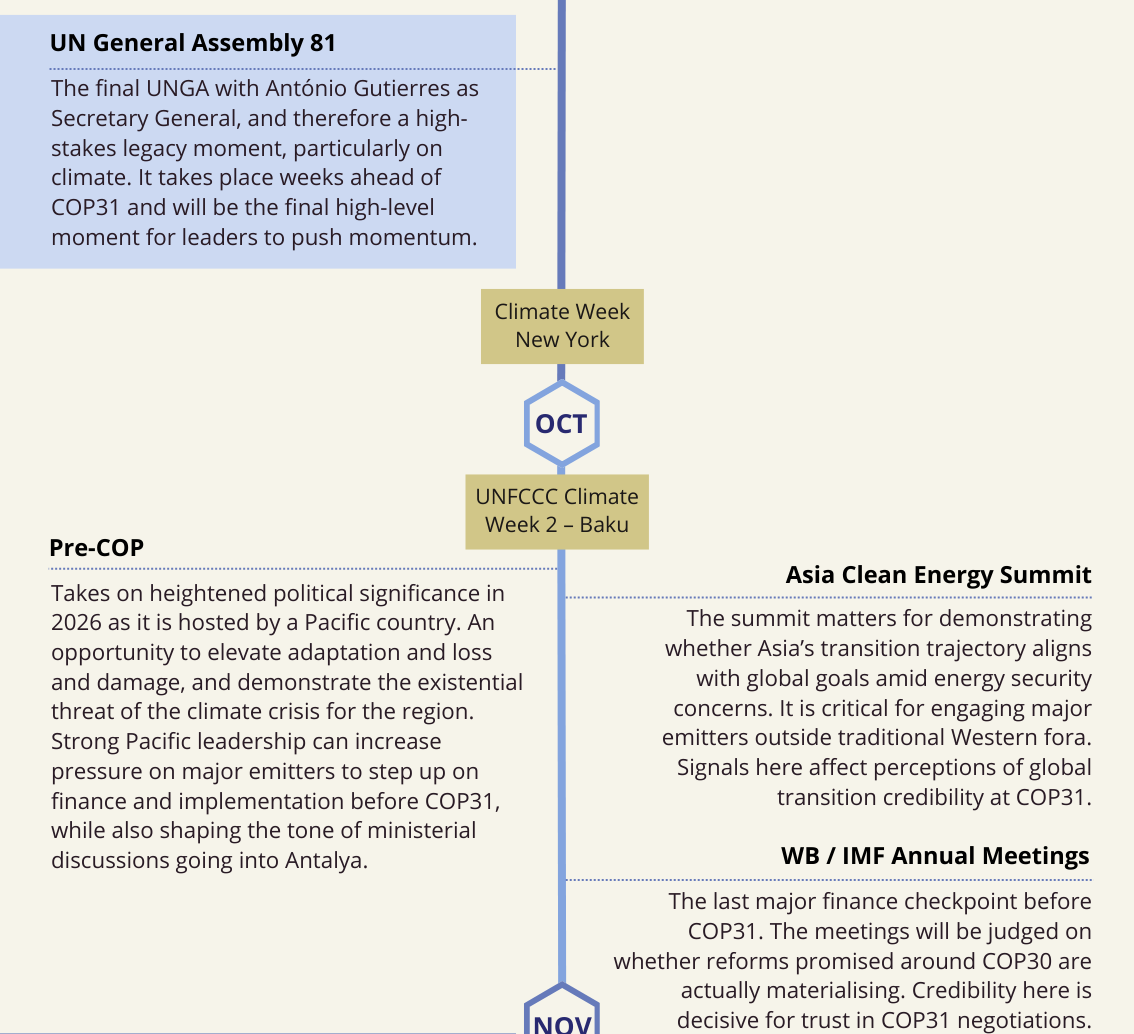
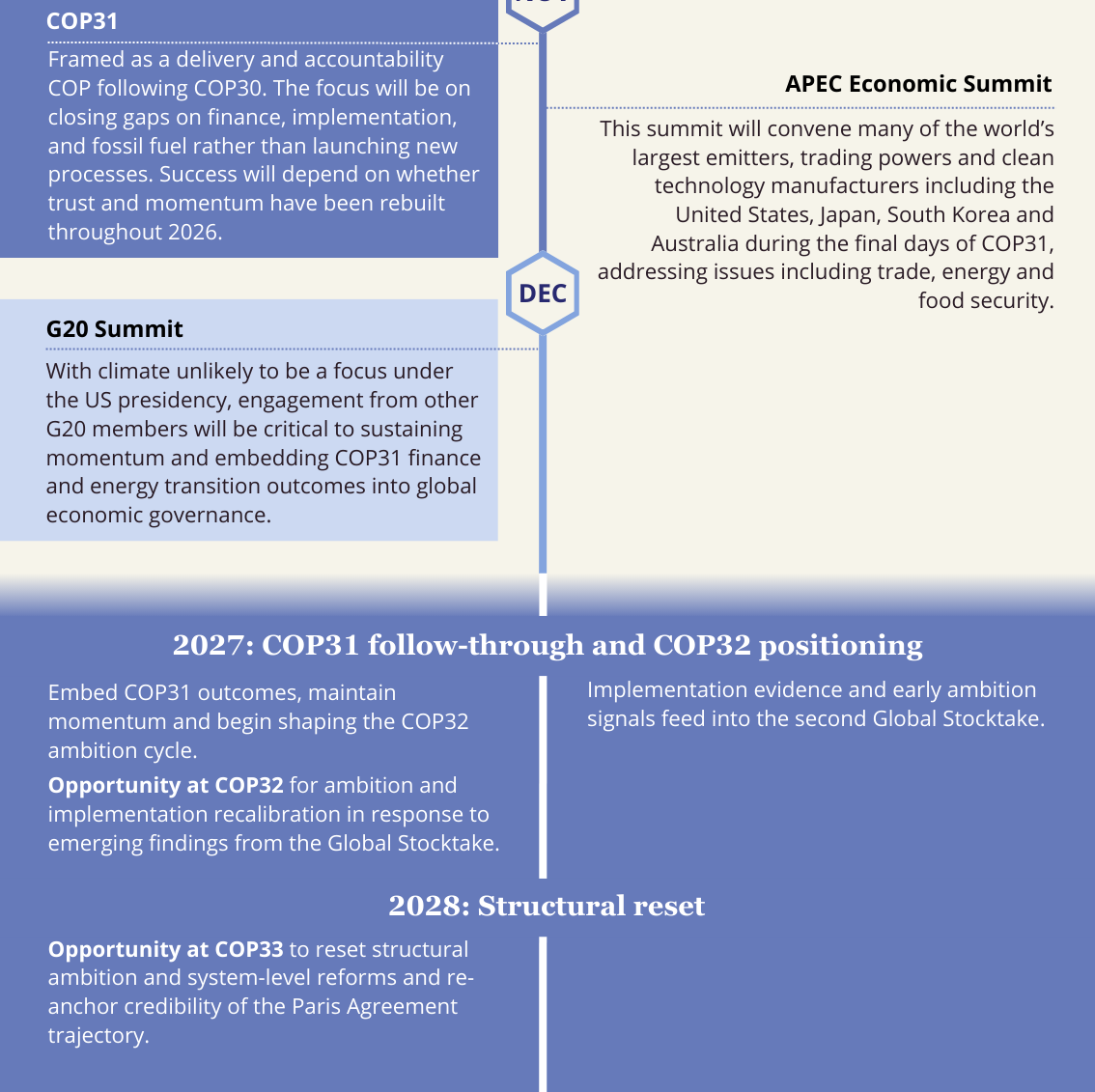
Parties must maintain a focus on translating political signals from inside and outside the process into implementation, leveraging the Action Agenda alongside new or reinvigorated coalitions and partnerships. In the lead-up to this year’s COP, it will be vital to sustain a steady drumbeat of climate leadership and delivery through a broader global calendar of key meetings and events. Our timeline visual below highlights some of the significant moments.
Each milestone in 2026 should lock in commitment and strategic focus that culminates in Antalya. This rhythm of direction must carry through COP31, demonstrating how international cooperation translates political alignment into practical delivery and progress across the full range of priorities.