
Asia is becoming the decisive arena for the global energy transition. The region is expected to account for most global energy demand growth over the next decade, driven by economic expansion, rising populations, and rising cooling needs linked to climate change. Clean energy deployment is accelerating rapidly, supported by high ambition, strong renewable resources, innovation, and the potential to expand clean industrial supply chains.
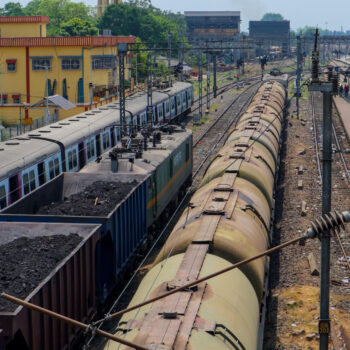
At the same time, Asia remains deeply exposed to fossil fuel risks and escalating climate impacts. Many economies are still locked into coal and LNG, alongside large investments in fossil-fuel infrastructure, leaving them vulnerable to chokepoint disruptions and geopolitical shocks. Recent flooding in Sumatra, China, Vietnam, India, and Bangladesh shows how climate risks are compounding existing economic and energy vulnerabilities across the region. Reducing dependencies on volatile fossil fuels, accelerating clean energy growth, and strengthening infrastructure and economic resilience offers opportunities to address energy security, economic development, and climate priorities.
And business leaders increasingly recognise this: recent polling found strong support across six Asian markets for electrification powered by renewables as a driver of competitiveness and resilience.
Asia is a strategic priority in E3G’s new five-year strategy. Over the past few years, E3G has built permanent capacity in Japan, India, Indonesia, Singapore, and more recently, in Australia, while also supporting diplomatic alliance secretariats active in the region, including the Powering Past Coal Alliance (PPCA) and the Coal Transition Commission (CTC), and the International Transition Plan Network (ITPN).
This blog brings together some of E3G’s recent analysis and engagement across the region. Rather than providing a comprehensive overview of every programme, it highlights a selection of the issues, partnerships and policy debates shaping our work in key countries, illustrating how national energy transitions connect to wider regional and global efforts.
Below, we highlight recent publications from colleagues across India, China, Japan, Indonesia and the wider region that explore both the risks and opportunities of Asia’s clean energy transition.
E3G’s work in India has focused on linking domestic transition priorities with international diplomacy, trade, finance and industrial policy. Our analysis explores clean tech cooperation with the EU and UK, India’s NDC ambitions, and how clean energy can strengthen energy security and industrial competitiveness. We have also convened high-level stakeholders on deepening strategic partnerships and financing clean energy transitions.
Earlier this year, China announced its 15th Five-Year Plan.Our analysis explores how the Plan signals continued movement toward clean energy, industrial upgrading and resilience, but important questions remain about ambition and implementation. Sectoral plans suggest growing policy focus on areas such as storage, demand-side management, virtual power plants and non-CO2 emissions control, even if headline targets remain modest.
In this piece we consider how the EU may need to manage its interdependence with China on climate and the transition amid growing tensions around trade and industry.
Japan’s current priority is securing reliable energy and rebuilding industrial competitiveness, but there is a risk of relying on costly stopgap measures through its Asia Zero Emission Community initiative, instead of accelerating a fair transition. Our recent work shows that Japan’s fossil fuel dependence leaves it exposed to chokepoint disruptions, and explores how decarbonisation should be treated as a core part of Japan’s economic security and competitiveness, not a secondary climate add-on. In the wider Southeast Asia region, our analysis looks at how Asia-wide clean-energy cooperation through AZEC can support countries’ energy transition goals, strengthen energy security, and accelerate the shift toward renewables, while ensuring cooperation is aligned with national climate and development priorities.
Late last year, we explored in our analysis how Indonesia’s 100 GW solar ambition and broader electrification agenda could strengthen energy security and reduce fossil fuel dependence, but delivery will depend on implementation.
At London Climate Action Week, Indonesian leaders joined the Global Energy Transition and Electrification Summit, underscoring interest in pathways to long-term resilience and prosperity. E3G also has worked with Indonesian and international partners to draw on lessons from countries like India, Brazil and China to support Indonesia’s solar and coal transition agenda, including policy recommendations for the 100 GW solar plan and a discussion on renewables and electrification for energy security at the Indonesia Net-Zero Summit on 1 August.
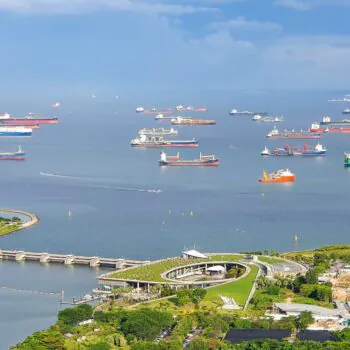
The PPCA and CTC continued their engagement across the region, hosting events at Ecosperity in Singapore and the ASEAN Clean Energy Forum in Manila. And ITPN is deepening its work in Singapore, Indonesia, and Japan.
Future outlook
The rest of the year will bring further analysis on strategic partnerships, clean tech trade, renewables growth and regional cooperation in the region. Asia’s choices now will shape both national competitiveness and the pace of global decarbonisation.
Navigating the greatest energy security crisis of our time will depend on how successful the world is in reducing its dependence on fossil fuels and building a more resilient, just, and clean-energy based future. We look forward to working together with governments, business, financiers, and partners for accelerating Asian action and ambition.
- BRICS Leader’s Summit, New Delhi, 12th-13th September
- New York Climate Week, 21-27th September
- Japan Climate Action Summit, 2nd October
- Bangkok Climate Action Week, 3-11th October
- Indonesia International Sustainability Forum, 6th – 7th October
- Pre-COP, Fiji and Tuvalu, 5-8th October
- ASEAN Ministers on Energy Meeting & ASEAN Energy and Business Forum & AZEC Ministerial, Manila, 5-9th October
- World Bank Annuals, Bangkok, 12th-16th October
- Singapore International Energy Week; and Japan Week, Tokyo, 26th-30th October
- Bharat Renewable Energy Summit 2026, 4th International Conference on Green Hydrogen and 9th Session of the International Solar Alliance (ISA) Assembly, New Delhi, 2nd-5th November
- APEC Leaders’ Summit, Shenzhen, 18th-19th November
- COP31, Antalya, Turkey, 9-20th November