
The current Japanese government’s trade agenda centres on economic security, supply-chain resilience and industrial competitiveness. Yet, one critical element remains underemphasised: the role of decarbonising industrial value chains in achieving these objectives.
Globally, trade policy is no longer just about market access; it is about strategic positioning in a shifting landscape shaped by rapidly evolving technologies and geopolitical shocks – from US trade disruptions to tensions in the Persian Gulf. This is making low-carbon industrial value chains a structural requirement for sustained competitiveness. The central question is whether Japan can position itself competitively within emerging low-carbon trade dynamics.
Recalibrating reliance on China is part of a broader strategic shift
Prime Minister Takaichi’s strong stance on reducing strategic dependence on China has intensified Japan’s focus on supply‑chain resilience. This builds on previous governments’ efforts to cut Chinese rare earth reliance from over 85% in 2009 to roughly 55–60% today.
China’s dominance in solar, batteries, and critical minerals is an ever-present concern for Japan. The Chinese government’s recent export controls on dual-use materials and rare earths for key Japanese firms highlights the urgent need for greater resilience beyond traditional risk assessments. This has led to reticence in clean tech investments and a continued reliance on fossil-fuel solutions.
Ongoing tensions in the Persian Gulf, however, expose Japan’s vulnerability to fossil-fuel imports and rising energy prices. Japan’s continued support for fossil-based infrastructure – through the US-–Japan investment pledge and Japan’s financing offer to its Asia Zero Emissions Community (AZEC) members and allied countries – remains tied to oil and gas-related investments. This highlights the trade-offs between alliance politics and energy security; and short-term emergency measures versus long-term structural needs of a resilient future.
Diversification of supply chains, domestic capability-building and trusted partnerships are now framed as pillars of national resilience. Yet the role of decarbonising industrial value chains and strengthening existing and forging new low-carbon industrial partnerships remains unrepresented in the economic security debate. As defined by the Cabinet Office, economic security focuses on safeguarding Japan’s economic foundations by ensuring stable supplies and mitigating external risks. In an increasingly carbon-constrained global economy, risk mitigation must integrate the decarbonisation of trade and accelerated investments in clean industrial value chains for bolstering economic security and competitiveness.
Economic security requires clean competitiveness
The imperative of a clean energy transition is shaping global trade, as evidenced by mechanisms such as the EU’s Carbon Border Adjustment Mechanism (CBAM) and the rise of clean technologies. Shifting trade and industrial value chains towards low-carbon goods and production processes have become a structural requirement for sustained competitiveness. With the current crisis in the Middle East, international partners are likely to accelerate renewables deployment, expanding the market while actively seeking diversified clean trade and investment partnerships.
For Japan, this global realignment should not be seen merely as a matter of regulatory compliance, but as industrial survival. By hesitating on full-scale technological transitions, Japan risks marginalisation in emerging value chains, as evidenced by its automotive sector in recent years.
As pioneers of hybrid technology Japanese manufacturers successfully dominated the early transitional phase of the global market. However, their continued reliance on conventional hybrids domestically – rather than a decisive, full-scale shift towards battery-electric vehicles (BEVs) – has created a significant sectoral competitive risk. Despite recent market backlashes, global EV demand continues to rise. Japan’s continued success with hybrid technologies may therefore prove more temporary than structural as global electrification accelerates. In the longer term, competitiveness is likely to depend increasingly on access to abundant low-cost clean electricity, linking industrial competitiveness more closely to upstream power-sector transformation.
In 2025, conventional hybrids accounted for around 60% of Japan’s passenger car sales, while battery-electric vehicles s remained below 2%, trailing far behind China (36%) and South Korea (13%). Leadership in clean technologies is increasingly reflected in electrification ambitions. EV adoption is one of the clearest indicators of the greening of high-volume core industrial sectors, as it is closely tied to the pace of renewables-based electricity deployment.
At the same time, large-scale electrification increasingly depends on access to abundant low-cost clean electricity. Without faster power-sector decarbonisation, the economic case for large-scale BEV adoption and broader industrial electrification remains constrained, linking industrial competitiveness closely to upstream energy transformation.
Japan’s slower transition risks weakening the automotive sector, a core industry with extensive economic linkages to other sectors and increases vulnerabilities in adapting its trade and industrial structures to the technologies shaping future competitiveness and economic security.
Pathways to clean-trade competitiveness
If Japan continues to rely on transitional technologies in core-trade sectors, it risks being locked into high-carbon supply chains just as key markets tighten carbon-related trade rules. Enhancing its long-term clean competitiveness will therefore depend on:
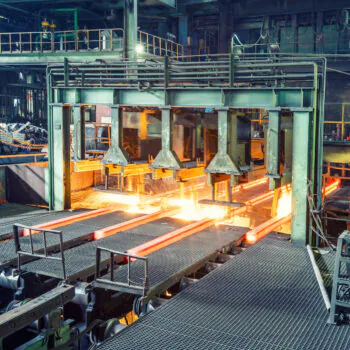
Low-carbon industrial materials will eventually become as critical as securing raw materials. This points to the growing importance of partnerships that combine natural resources with technological expertise, for example by linking green steel sourcing, resilient battery supply chains and EV component manufacturing. Resource-rich partners like Australia, with its strong potential for large-scale green iron and steel, could play a pivotal role in decarbonising Japan’s industrial base, while Japan’s technological capabilities and industrial demand can support the development of mutually beneficial low-carbon supply chains.
Manufacturers and industrial buyers are critical in shaping supplier behaviour, by integrating measurable low-carbon criteria into procurement and supply-chain standards. In sectors such as automotive, where large manufacturers anchor complex value chains, such demand-side signals can play a decisive role in accelerating the shift towards low-carbon inputs. Requiring certified low-carbon steel in vehicle production or setting carbon-intensity benchmarks for battery suppliers would reinforce leadership in low-carbon technologies. Recent Green Transformation (GX) initiatives to promote low-carbon steel indicate that demand-side signals are emerging, but their expansion across sectors will be an important factor in shaping the pace of industrial decarbonisation.
Aligning Japan’s GX strategy with industrial and economic security policy is central to linking decarbonisation with trade diversification. Japan’s flagship carbon-pricing mechanism, the GX-ETS, represents an important step forward. However, current benchmark trajectories and proposed price limits risk undermining its role as a credible carbon price signal. In this context, clearer long-term targets and more ambitious benchmarks – particularly in comparison to the EU’s CBAM and South Korea’s ETS – are likely to shape the scheme’s credibility and Japan’s international positioning.
Japan’s role in clean-trade geopolitics
Japan’s technological strengths and regional partnerships across the Indo-Pacific make it well placed to connect its economic security goals with clean trade. The key question is not whether Japan can reduce geopolitical dependencies, but whether it can position itself at the centre of emerging low-carbon trade networks.
Regional dynamics in the Indo-Pacific may prove equally decisive. South Korea’s renewed interest in joining the Comprehensive and Progressive Agreement for Trans-Pacific Partnership (CPTPP) signals deepening economic integration across the region. The emerging Australia-Japan-South Korea trade dynamic presents a strategic opportunity to strengthen regional clean technology cooperation and build more resilient and diversified clean supply chains.
Japan’s ability to connect upstream energy transformation with downstream industrial competitiveness and regional trade integration will be central to its future positioning. If left unrealised, these dynamics could limit Japan’s scope to reduce strategic dependencies.
Ultimately, a future-oriented competitiveness strategy will remain incomplete without strong clean-trade signals. Aligning trade and industry policy with decarbonisation is becoming a defining condition for long-term resilience and competitiveness in a shifting global economy.