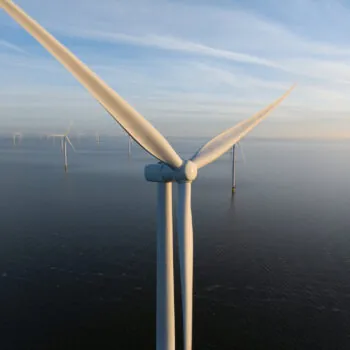
Leaders have set an ambitious target to deploy 300 GW of offshore wind in the North Seas by 2050. The commitment recognises the strategic importance of replacing dependence on fossil fuels, and the benefits of clean electrification for competitiveness. However, delivery gaps have emerged as technical bodies lack the mandate and agency to deliver the full strategic value of the project. Europe’s leaders must re-inject high-level leadership to drive progress across cooperation on planning, security, and finance.
North Sea leaders affirmed the strategic case at the Hamburg Summit in January 2026 and set out a forward action plan. Delivering on the ambition to deploy 300 GW of offshore wind in the North Seas would set up Europe to develop a new renewables powerhouse for the continent – driving competitive electrification, clean industrialisation, and technology leadership in key sectors.
However, delivering on that opportunity requires leaders to take control of the process. Doing so would be a signal of their resolve to improve competitiveness, affordability and security outcomes for industry and households alike.
The strategic imperative
The North Seas region is one of the few places where Europe can produce vast quantities of clean and homegrown electricity – the energy needed to power an electrified, competitive and more secure European economy. Every 100 GW of North Seas wind could replace approximately 60 bcm of European gas demand, the equivalent of around 15% of the combined fossil gas demand of the UK and EU in 2025. Replacing that fossil fuel dependence could save billions in the EU and the UK, help reduce electricity prices, and ensure a secure and stable supply of electricity.
Moreover, the North Seas present a major industrial opportunity for Europe: powering industry across the continent with clean, competitive electricity and driving the development of critical supply chains, while securing European leadership in pioneer offshore technologies and manufacturing of strategic components.
Finally, as security risks in the North Seas region mount, making the most of the sea basin’s geo-strategic location through cooperation on surveillance, protection and security-by-design, can strengthen Europe’s defences for all.
Forward progress but gaps remain
European leaders re-affirmed the ambition to deliver 300 GW of offshore wind by 2050, including up to 100 GW of joint, cross-border projects, at last January’s North Sea Summit. Moving to implement the action plan agreed by leaders, the Offshore TSO Collaboration (OTC) has set up workstreams to progress actions on planning, cost allocation and financing tools. Informal coordination between security and energy stakeholders has also begun at national level, or in some cases, bilaterally.
However, while these are positive forward steps, they are insufficient to coordinate across the region and deliver on the scale of this industrial project. Key gaps thus remain across the planning, security and financing frameworks needed to deliver the full strategic ambition of the North Seas project.
Five actions for European leaders to reclaim agency
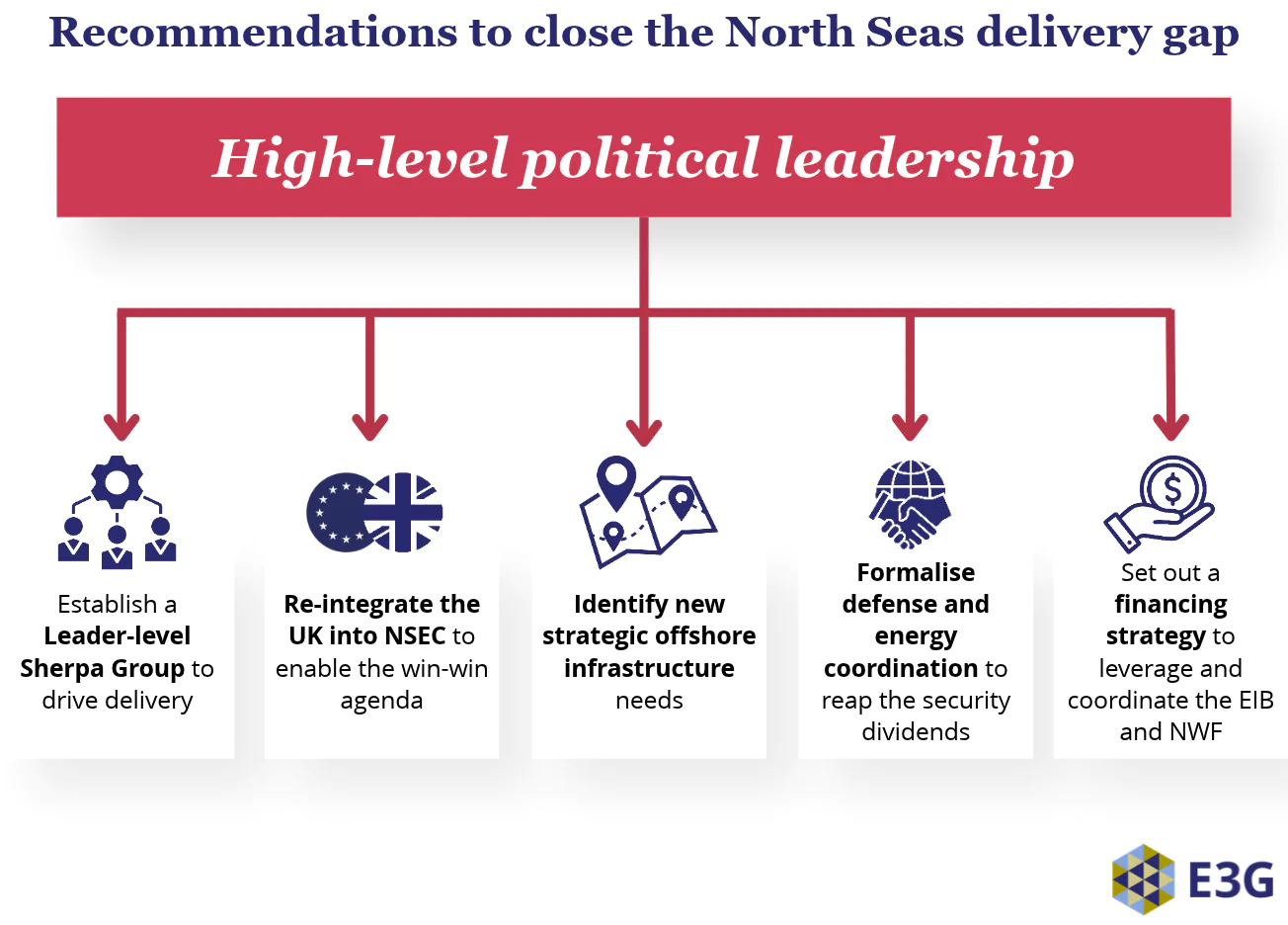
- Establish a leader-level sherpa group to ensure strategic objectives are achieved and delivery remains on track in the run-up to the next North Sea Summit.
- Re-integrate the UK into the North Seas Energy Cooperation (NSEC) as a full member to enable the closer collaboration required to deliver the North Seas agenda.
- Instruct the Offshore TSO Collaboration (OTC) to identify the new, strategic offshore infrastructure necessary to ensure that delivery of the strategic objective of 300 GW by 2050 remains viable and cost effective.
- Formalise cooperation between national security and energy stakeholders across the region, to leverage the security dividends of closer cooperation and ensure the timely deployment of resilient infrastructure.
- Develop a financing strategy for the North Seas that leverages existing public finance institutions like the European Investment Bank (EIB) and the UK’s National Wealth Fund (NWF) to provide de-risking capital for shared, cross-border infrastructure projects while ensuring coordination across institutions.