
Offshore wind in the North Seas has the potential to be a major geostrategic asset for Europe. Aside from reducing dependence on fossil fuels, North Seas wind can improve European security, and support building strong supply chains that are ready to capitalise on global market growth. To grasp this opportunity, leaders must step up cooperation and focus on increasing the speed of delivery.
North Seas wind offers security benefits beyond reliable energy supply
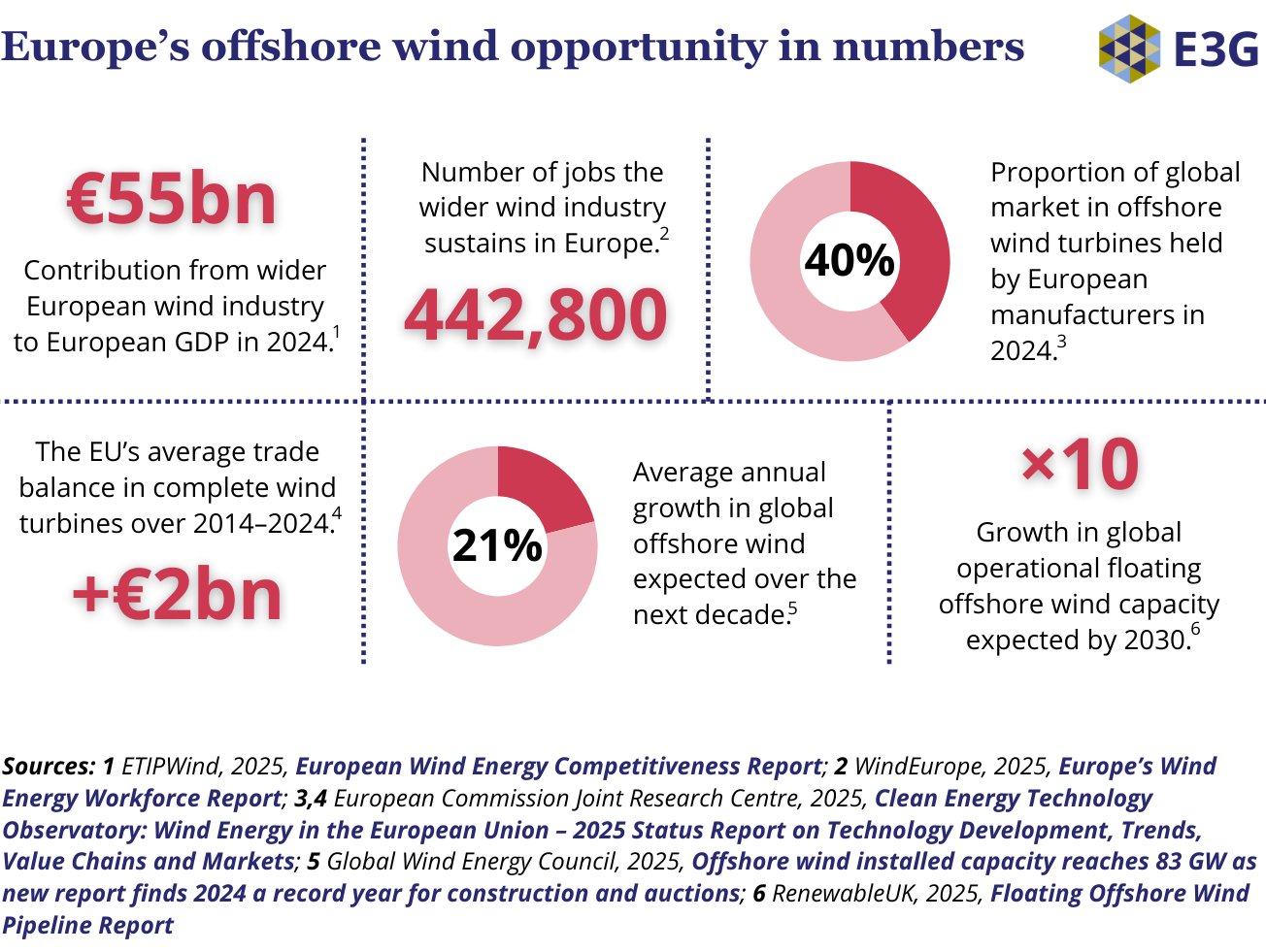
Leaders already recognise that North Seas wind is a valuable opportunity to reduce exposure to the price shocks and supply squeezes that come with fossil fuel dependency. In 2023, they agreed to deploy at least 300 GW of offshore wind in the North Seas by 2050.
But an offshore wind grid can do much more for European security. The infrastructure itself can be a defence asset, for example by including surveillance and monitoring equipment. Decentralised systems can moreover make it easier to restore energy supply following damage, or attack. These are important considerations for Europe, given the position of the North Sea as a potential future security flashpoint.
North Seas adjacent countries work together closely on energy and on security – but those dimensions are not yet linked. Countries need to cooperate to ensure that security requirements – and opportunities – are integrated into the design of the North Seas grid through a “security by design” approach. This planning must also account for emerging threats, including hybrid and cyberattacks.
North Seas wind can help Europe be a global shaper and leader on offshore wind
The global offshore wind market is forecast to grow by 21% annually over the next decade. This presents a significant opportunity for the European economy given Europe’s technological leadership in offshore wind.
Scaling domestic markets is essential for the European wind industry to maintain its global status. However, the wind industry’s supply chains are expected to become constrained by 2030, and the industry needs predictability to be able to invest. A stable, coordinated plan for North Seas wind can give the industry that security.
Again, cooperation is vital, on issues ranging from spatial planning, through developing regional supply chains, to building partnerships with developing offshore wind markets. Harmonising tendering requirements, standardising components, and creating efficiencies of scale can improve the economics of delivery – ultimately benefiting consumers as well. The addition of large volumes of renewable energy from the North Seas at stable prices stimulate the wider economy, supporting industrial investment and electrification.
An action plan for the North Sea Summit
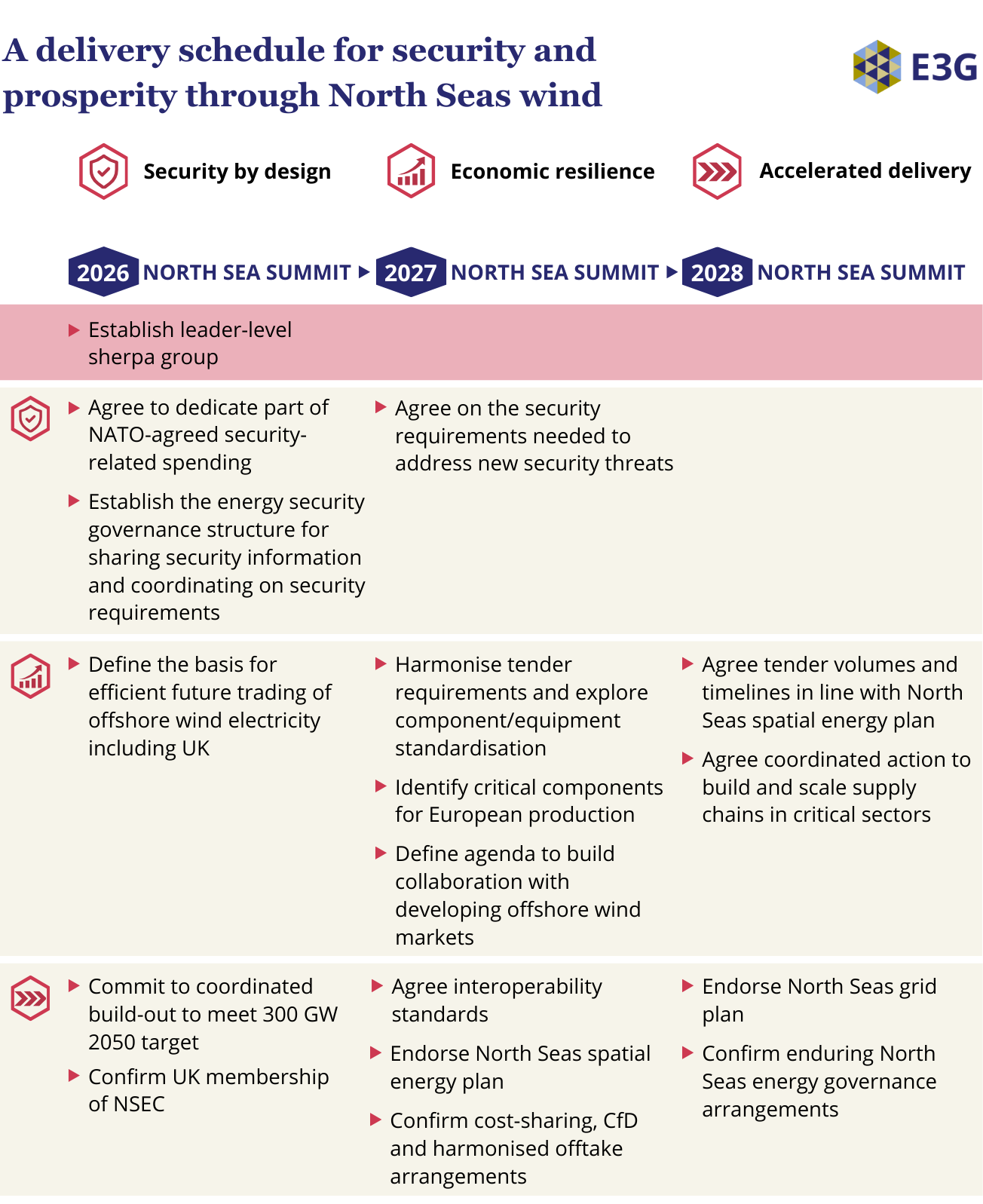
Delivery of North Seas wind is not on track to meet the targets set in 2023. At this year’s summit, leaders need to move beyond ambition to delivery.
In our report, we set out an action plan that can get things moving quickly, laying the foundations for Europe to reap quick and sustained benefits. Priority actions for this year include:
- Ensure high-level coordination. Establish a leader-level sherpa group to accelerate delivery and drive progress on agreement. Leader-level engagement is essential to ensure cross-government coordination and bring energy and security thinking together.
- Bring the UK fully into the cooperation. As one of the major deployers of wind energy in the North Seas, the UK’s participation is vital to achieve both security and economic benefits.
- Accelerate delivery. Commit to coordinated build-out to meet the 300 GW by 2050 target through a North Seas spatial energy plan to be approved at the next summit in 2027.
- Design systems for security. Establish governance mechanism to delivery “security by design” and agree to dedicate part of the NATO-agreed 1.5% of GDP security-related spending to cover the additional cost.