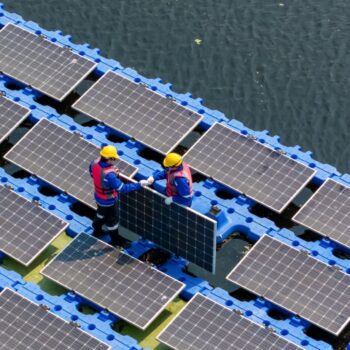

President Prabowo’s flagship 100 GW solar program marks a turning point after years of sluggish solar deployment, with Indonesia’s cumulative installed solar capacity reaching just 1.59 GW as of Q1 2026. Given this low starting point, Indonesia can prioritise scaling up deployment without having to wait for investments in grid flexibility. Nevertheless, the country still needs to establish a clear delivery mechanism. International partnerships can be a useful source of expertise and collaboration to help make Indonesia’s solar ambition a reality.
Indonesia is seeking to expand electrification across the economy and reduce its exposure to global fossil fuel energy supply disruptions, which are driving up fuel costs and increasing pressure on government subsidies. While large-scale solar deployment is already reshaping power systems globally, delivering Indonesia’s 100 GW ambition could usher in a new era of transformation for the country’s electricity sector.
In this briefing, we trace how the program has evolved from a political commitment into concrete action and identify key priorities for successful implementation including opportunities for international cooperation.
Key priorities for translating solar ambition into action
Although Indonesia’s 100 GW solar ambition signals growing political commitment to renewable energy, the existing electricity market structure and fossil-fuel-based infrastructure could constrain implementation. Delivering the programme will require following key priorities:
- Align the initial rollout with electricity planning and regulatory frameworks to build market confidence. Identify suitable locations and assess system readiness while ensuring that solar deployment is consistent with electricity planning and procurement regulations. This alignment is essential to avoid system overcapacity and to ensure that new capacity responds to demand and complements planned investments in other generation resources.
- Strengthen grid infrastructure and system flexibility to enable scale-up. While the initial rollout may require relatively limited system flexibility, rapid grid upgrades will be essential as deployment expands. Fragmented interconnections and differences in baseload generation across regions could otherwise constrain the integration of solar power at scale.
- Move beyond business-as-usual procurement to unlock investment. Conventional procurement approaches may not adequately address the barriers facing solar deployment. Targeted government interventions should reduce capital costs, improve project bankability, and establish transparent and effective procurement mechanisms that can accelerate implementation. The government could also ensure that projects put out to tender have secured land access and completed the necessary land clearance processes. In parallel, water-surface usage fees for floating solar projects and rooftop rental costs should be structured to preserve project economic viability.
International cooperation can help close the gap between ambition and implementation
Indonesia can draw on international experience while adapting lessons to its own power system and development priorities:
- India offers relevant examples of demand aggregation and centralised procurement.
- Brazil’s competitive auctions provide lessons on creating clearer price signals.
- China’s large-scale deployment illustrates how solar expansion can connect with domestic manufacturing and industrial development.
Existing partnerships, such as the Asia Zero Emission Community (AZEC) and COP 31’s Climate Implementation Bridge (BRIDGE) Initiative provide platforms to build on. The next step is to focus cooperation on practical delivery such as mobilising finance and investment, sharing technical expertise, strengthening project bankability and most importantly supporting the wider power-system transformation.
A chance to shape the next phase of Indonesia energy diplomacy focus
“Indonesia has a chance to become a new engine of global solar growth, turning record annual capacity additions into stronger energy security and a more resilient, renewables-powered economy.”
— Robi Ginting, Policy Advisor, E3G
As Indonesia enters a potential boom phase in solar deployment, substantial annual capacity additions could raise its profile as a new driver of global solar expansion. Indonesia can contribute practical lessons on linking clean energy deployment with energy security and economic transformation, and contribute to shared international objectives: the proposed Electrify Faster with 35-by-35 Target by 2035, and tripling renewable power and doubling the rate of energy efficiency improvements by 2030.