
The EU is experiencing its second energy crisis in five years. The risks of fossil fuel dependence have made the clean energy transition a strategic imperative for the EU’s energy security. However, existing operational standards and risk assumptions still reflect the realities of a fossil-based system. To deliver the security benefits of the clean energy transition, European system resilience must keep pace with an evolving threat landscape.
In 2026, the review of the EU’s energy security framework, together with other key files, offers the potential to embed a new and strategic approach to energy security – one that recognises and anticipates the security needs of an increasingly decarbonised and digital energy system. The EU needs a new energy security architecture that can leverage the security benefits of a decarbonised energy system, while also recognising and addressing new challenges.
A new energy system requires a new security risk assessment
This briefing assesses how the EU’s energy system transformation intersects with its energy security needs. It sets out the security benefits of a renewables-based system, followed by an assessment of five risk categories – physical, operational-planning, cyber, geopolitical and economic-financial risks – and the new or emerging threats within them.
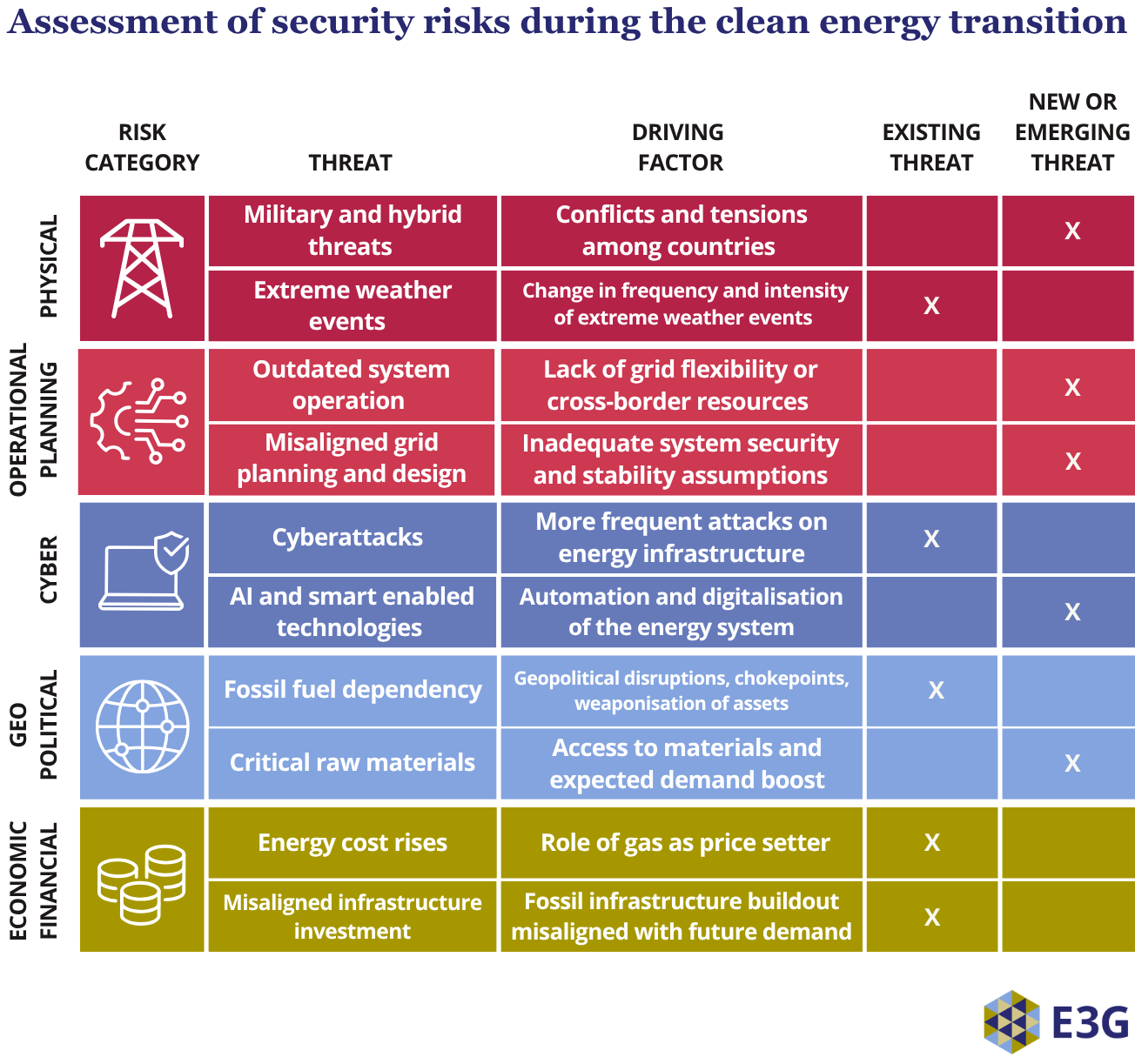
While some geopolitical and economic-financial risks are already well recognised, there are new or emerging risks that will require increased attention as the energy system transition progresses. Outdated operational standards for electricity networks, the development of new technology and adoption of AI, or the lack of investment in grid assets are among the threats which will need to be addressed.
To deliver a resilient energy system, EU and national policymakers must therefore prepare Europe’s energy security architecture to anticipate and adapt to these evolving risk categories.
Recommendations to EU and national policymakers for a cross-sectoral and integrated approach to energy security
- Introduce a “security by design” principle into network planning to strengthen resilience against emerging security threats. Security assumptions should be integrated from an early stage in the engineering and design of energy infrastructure to improve system preparedness. Running regular security assessments will also enable the design of a more resilient network.
- Fully integrate climate resilience into energy security planning. Mapping the evolution of climate risks is crucial to reassess grid design and operational approaches and to improve seasonal and weather-related preparedness.
- Update system operation to match the needs of a high-renewables, electrified and digital system. Updated protocols for system management and operation, as well as integrated, independent planning can ensure the delivery of a cost-effective, secure system.
- Strengthen and upgrade cybersecurity requirements for energy infrastructure to protect against digital threats. Addressing the intersection of energy and cyber legislation and aligning security standards across Member States will be crucial to manage the increased adoption of smart, digital and AI-related tools.
- Establish and secure competitive clean energy supply chains. Promote improved circularity and design of clean technologies and consider strategic stockpiling of critical raw materials as well as increased supply chain cooperation to improve resilience.
- Deliver the security benefits of cross border interconnection and regional system cooperation. Recognise the critical role of interconnectors and strengthen regional cooperation frameworks to improve the resilience of Europe’s energy system.