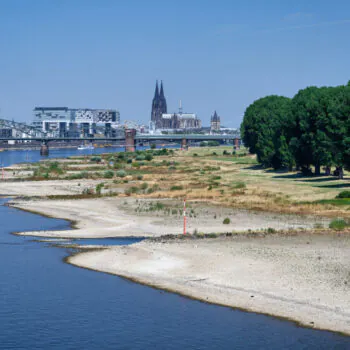

The European Commission is set to propose the bloc’s first European Climate Resilience and Risk Management Integrated Framework in the coming weeks (planned for October 28 at the time of writing). The package aims to establish a coherent EU approach to prevent and prepare for increasingly severe climate impacts. Coming off the back of Europe’s warmest summer on record – resulting in upwards of 35,000 excess deaths – there is now strong public appetite and political momentum for Europe to act. This blog sets out six tests for a Climate Resilience Framework that can put in place the rules, systems, and mobilise the investments needed to address the reality of Europe as the world’s fastest heating continent.
Europe’s climate risks are becoming a recurring reality. Another summer of extreme weather has once again brought the costs of climate impacts into sharp focus and exposed structural vulnerabilities across energy, health, water, food, buildings transport and security. The European Climate Risk Assessment already identified 36 major risks across these systems in 2024, many at critical levels. The European Commission’s Climate Resilience and Risk Management Integrated Framework now offers an opportunity to establish a more robust and linked-up approach to managing climate risks.
EU-level action matters. While resilience and adaptation are inherently local in nature, climate risks cross regions, sectors and policy areas, with many levers to address them at EU level. A stronger EU approach would not replace national or local efforts but rather help make them more effective, coordinated and timely, while reducing the risk that today’s investments and policy decisions end up locking in tomorrow’s vulnerabilities.
In an increasingly tense geopolitical setting, action on resilience and adaptation also offers a way to connect climate with priorities that cut across the political spectrum. Protecting health and social wellbeing, strengthening energy security, reducing economic exposure and safeguarding competitiveness are all part of preparing Europe for a more volatile global context. The forthcoming framework can help reinforce EU priorities across existing policy pieces – be they energy security, water management, construction or the next EU budget.
The significance of the upcoming Resilience Framework lies in setting a common European direction, establishing the foundations for more joined-up action and building momentum towards a long-term European vision for resilience. These six tests can help determine whether the framework can rise to this challenge:
Six tests for a Climate Resilience Framework that delivers
- Does it give Europe a common basis for understanding and assessing climate risks?
A shared, science-based understanding of climate risks is essential for Europe to prepare effectively. Building on existing national and sectoral assessments, a common approach would help countries better compare risks, identify where action is most urgent and prioritise reducing exposure to vulnerabilities before impacts occur.
What this could look like: Regular EU-wide risk assessments; a common EU climate reference scenario; stress-testing against more severe climate futures. - Does it set a clear, long-term vision for a climate-resilient Europe?
Better preparing for and managing climate risks requires a clear vision for a climate-resilient EU by 2050, backed by concrete commitments that can be integrated with existing EU governance mechanisms. This would help give direction to action across different sectors and levels of governance and make it easier to track progress towards resilience.
What this could look like: Clear EU-level objectives; measurable objectives for strategic sectors with gradually expanding scope; progress indicators and transparent monitoring. - Does it make climate risks something decisionmakers have to consider?
Considering and planning for climate risks should become a normal part of EU decision-making. From energy infrastructure to health, agriculture and defence, the framework should help different sectors understand how their risks connect.
What this could look like: A clearly defined “resilience by design” requirement; a strengthened “Do no Significant Harm +Resilience” principle: meaning that EU-funded projects should be designed to cope with climate risks, rather than exacerbate them; systematic climate-risk screening. - Does it clarify who is responsible – and accountable – for managing climate risks?
Climate risks and responsibility thereof cut across sectors and borders. A clearer identification of who is responsible for managing different climate risks at EU, national, regional and local level, and across public and private sectors as well as commensurate accountability measures would help improve coordination and ensure that risks don’t fall through the cracks.
What this could look like: Requirement to establish clear ownership and accountability; appropriate roles for public and private actors; mechanisms to identify and manage risks that cut across sectors or levels of government. - Does it put those most exposed to climate risks first?
Climate impacts do not affect everyone equally. People and places facing the greatest risks should be prioritised, with action taken early to reduce their exposure and vulnerability. The framework offers an opportunity to make those differences more visible and ensure that action reaches those who need it most.
What this could look like: Explicit attention to distributional impacts and vulnerable groups across every pillar of the framework; incentives for early action through measures such as social housing, school renovations and protection of care homes; reinforced emergency-response capacity; support for local and regional implementation. - Does it set into motion a plan to mobilise investments at the scale of the risks?
Preparing Europe for worsening climate impacts will require massive investment in infrastructure and public services. Yet the funding needed remains difficult to mobilise, while the costs of inaction continue to grow. The framework should put forward a plan to close the adaptation and resilience investment gap by leveraging key instruments at the EU’s disposal to channel both public and private finance.
What this could look like: A dedicated new EU adaptation financing mechanism or fund; adequate provisions within the final MFF package; stronger mobilisation of the European Investment Bank, National Promotional Banksand private capital; EU-level risk-sharing and insurance mechanisms.