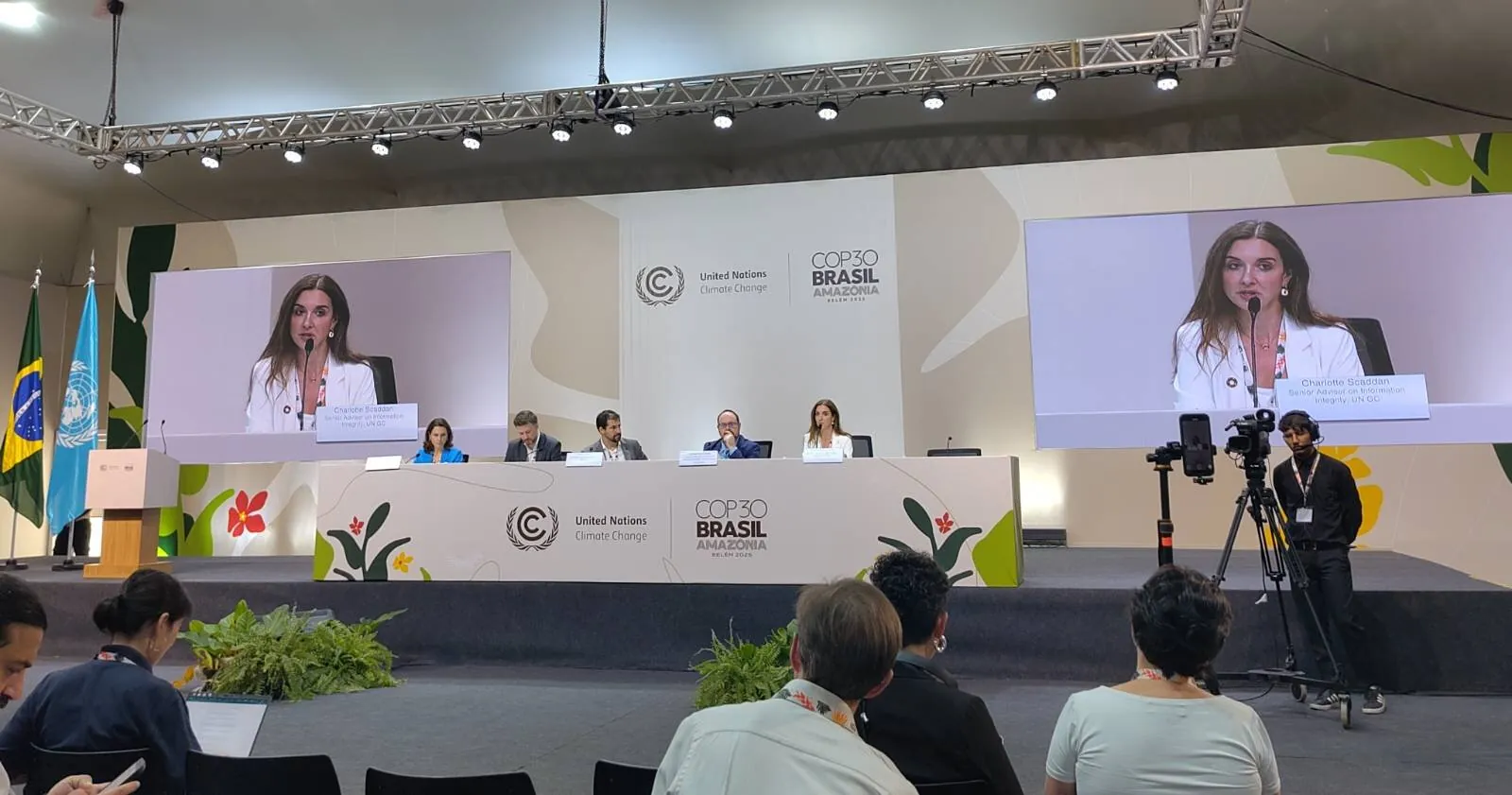

Welcome to E3G’s COP30 insights page, featuring expert analysis and commentary from Belém, Brazil. Explore our latest updates and reflections on the climate negotiations before and during COP30.
Week 2
E3G analysis on COP30 initial outcomes post final plenary
Belém COP30 holds the line and inches forwards on climate action
After intense negotiations running overnight and into Saturday, we leave Belém with a deal. Despite objections disrupting the final Plenary, COP30 has delivered some concrete outcomes and set the scene for future progress.
- In a context of serious geopolitical challenges, 194 parties continue to invest in the process and are willing to compromise to keep multilateralism alive. Many Parties demonstrated a genuine willingness to coordinate and pursue more ambitious climate diplomacy, even as long-standing divisions remained visible throughout the process. However, it is not everything we need to see to keep the goals of Paris within reach.
- There are hooks. The new Global Implementation Accelerator, with specific reference to the UAE consensus, is welcomed but must now be fleshed out by the Brazilian, Australian and Turkish Presidencies to ensure it supports forward implementation of the full set of Global Stocktake outcomes.
- Although the roadmaps on transitioning away from fossil fuels and deforestation were not agreed by consensus, the Presidency announcement to create such roadmaps is a positive step forward and necessary to address the mitigation ambition gap.
- A new adaptation finance goal was agreed, calling for countries to aim to triple adaptation finance by 2035. The call to developed countries to scale up steadily over time provides reassurance following aid cuts. On wider finance, a new high level ministerial dialogue on the NCQG, and a dialogue on the implementation of Article 2.1(c) represents an important step forward in aligning financial flows with the goals of the Paris Agreement.
- The Global Goal on Adaptation (GGA) was gavelled through, but the revised and reduced list of indicators raised objections from many Parties and sparking an emergency huddle. Clarity is needed when Parties next meet on how the refinement and implementation of the indicators will work in practice.
Kaysie Brown, Associate Director, Climate Diplomacy & Geopolitics, E3G:
“A deal was always going to be hard-fought, and the outcome shows that Parties were not consistently resolute in pursuing the level of collective ambition required, or united in their support for some critical elements. The work is far from over, and Brazil has a considerable amount to do in the days ahead to assure Parties on next steps and processes. Looking ahead, the question remains: whether there is political will to match what is happening in the real economy. And there are important foundations coming out of this COP to build on and deepen – elements that can be translated into tangible acceleration of real-world progress in cutting emissions, phasing out fossil fuels, strengthening adaptation, protecting nature, and matching needs with resources.”
Key outcomes
TRANSITION AWAY FROM FOSSIL FUELS
This COP saw a renewed energy and willingness from countries to work together to plot pathways to accelerate the shift from fossil fuels of the past to the clean energy of the future.
Over 80 countries and key groups vocally supported the inclusion of a roadmap within the final outcome, including through the Colombian Belem declaration on fossil fuels. While there is no specific mention of a roadmap in the final text, there is a clear golden thread between the new Global Implementation Accelerator (GIA) and newly Presidency roadmap initiative. The GIA, which will drive forward action to keep ambition to 1.5C contains a specific reference to the UAE Consensus added in the late stages of the negotiations. This provides a clear mandate for the Brazilian Presidency and the incoming joint Australian and Turkish Presidency to drive forward implementation of the full set of Global Stocktake outcomes, including to accelerate the transition away from fossil fuels championed by President Lula. The GIA also sets up a framework for this dialogue to progress with through open and inclusive information sessions, a report and a high level Ministerial at COP31. This new Roadmap initiative will take account of the views of a wide range of partners in an inclusive dialogue and report back by COP30
Existing coalitions such as the Powering Past Coal Alliance (PPCA), the Clean Energy Transition Partnership (CETP), Coalition on Phasing Out Fossil Fuel Incentives Including Subsidies (COFFIS), and the Beyond Oil and Gas Alliance (BOGA), will also continue to drive progress including through the Action Agenda and through the Columbian and Netherlands hosted conference on a just transition away from fossil fuels next year. Individual countries also made new commitments, including South Korea’s decision to phase out coal power and join the Powering Past Coal Alliance, a significant move from the country that has the 7th largest coal fleet in the world.
Dr Matt Webb, Associate Director, Global Clean Power Diplomacy, E3G:
“COP30 showed renewed energy and commitment from over 80 countries to accelerate the transition away from fossil fuels. This momentum must be taken forward by the new Brazilian Presidency initiative to develop a roadmap to end our fossil fuel dependency, through an inclusive process with diverse stakeholders, which will report back to COP31. This will complement the work of the Action Agenda and leading coalitions driving the energy transition”.
NDC AMBITION
The NDC Synthesis report released at the beginning of COP30 demonstrated that the Paris Agreement has worked to bring emissions and temperatures down. While we remain significantly off track to achieve the 1.5C warming target, we must not forget that 194 countries did still show up to COP30, and that 122 parties have now submitted their NDCs with a marked improvement in quality and credibility of many transition pathways and clearer plans on how they will implement what’s needed to achieve their climate goals.
Cosima Cassel, Programme Leader, Climate Diplomacy & Geopolitics:
“We entered this COP confronting an unequivocal reality: a decade on from Paris, despite genuine progress, this year’s NDCs still leave us only achieving one-fifth of the emissions reductions needed by 2035. Countries therefore came to Belem with a clear responsibility to deliver a credible, collective response to this ambition gap. The Mutirão package does not fully meet that test. Yet it does provide important foundations on which to build.”
FINANCE / ADAPTATION FINANCE
A new adaptation finance goal was agreed, calling for countries to aim to triple adaptation finance by 2035 within the $300B agreed last year in Baku. This likely represents at least $120 billion per year in adaptation finance, responding to vulnerable countries’ call to ensure that their growing needs for adaptation finance are taken seriously. While 2035 is a longer timeframe than developing countries asked for, the text includes a call to developed countries to scale up steadily over time, providing reassurance following aid cuts. And it includes a particular focus on scaling adaptation finance from multilateral climate funds – a vital source of grant-based finance for developing countries.
Lily Hartzell, Senior Policy Advisor, Public Banks & Development, E3G:
“Agreeing an adaptation finance goal is a major outcome of COP30, taking a concrete step to address the growing needs of developing countries. It certainly represents a compromise – a 2035 timeline reflects the difficult environment for donors at the moment. But there is a clear call to developed countries to scale up finance immediately, and – as with any goal in the UNFCCC – this represents a floor for ambition, not a ceiling.
Kate Levick, Associate Director, Finance & Resilience:
“Hard-won agreements on finance at COP30 were an important positive signal given international aid cutbacks and fiscal challenges for developing countries. COP30 made progress to link and consolidate finance goals, including welcome ambition on tripling adaptation finance, and to create new processes to develop and track their implementation. But the lukewarm response of Parties to Brazil’s ‘Baku to Belem Roadmap’ shows that achieving global reforms will require further consensus-building.”
GLOBAL GOAL ON ADAPTATION
The Global Goal on Adaptation (GGA) indicators were adopted despite voiced concerns about the process. In particular, the revised and reduced list of indicators from 100 to 59 put forward by the Presidency frustrated many Parties because it undid two years of work carried out by experts. The new indicator list was developed rapidly and without thorough consultation of Parties or the experts. Sierra Leone emphasised that they are “unclear, unmeasurable and unusable”. While the decision allows for the framework to move forward and links to existing reporting structures and the Global Stocktake process, urgent clarity is needed when Parties next meet in Bonn next June on how the refinement and implementation of the indicators will work in practice, including the Belém-Addis Vision culminating at COP32, to ensure there is a robust, legitimate and measurable set of indicators. This is critical to ensure there is a common language to track adaptation progress and instil faith in the implementation of the GGA.
Ana Mulio Alvarez, Policy Advisor, Climate Diplomacy & Geopolitics, E3G:
“While the final outcome for adaptation falls far short of the ambitious vision many hoped for, it nevertheless marks a significant step forward. The Global Goal on Adaptation (GGA) indicators were adopted and are poised for further refinement, Parties agreed on new guidance for National Adaptation Plans, and set a new adaptation finance target for 2035. These outcomes provide a foundation we can build on, even if the pace of action must accelerate. What matters now is translating these decisions into tangible protection for communities on the frontlines—because progress on paper must become resilience in the real world.”
BRAZIL
Gustavo Pinheiro, Senior Associate, Climate Diplomacy & Geopolitics, E3G:
“Under extraordinary geopolitical pressure, the Brazilian presidency managed to steer COP30 toward a result that restores confidence in the multilateral process. The Global Mutirão adopted in Belém shows that, even in a fractured world, countries can still unite behind a shared mobilization against climate change. The package builds on Dubai and Baku and sends a message well beyond the Amazon: cooperation delivers when it puts people first, strengthens adaptation finance, and accelerates the implementation of climate action. The launch of the Global Implementation Accelerator and the Belém Mission to 1.5 creates a needed bridge from the first Global Stocktake toward the next cycle, guiding the work that must unfold from COP30 to COP33 so that 1.5°C remains within reach.”
EUROPEAN UNION
At COP30, the EU played a key role ensuring that multilateral climate cooperation held even in an unsettled geopolitical context. It has helped lift the ambition of the summit’s overall outcomes, including supporting a growing coalition focused on shifting from commitments to practical implementation of a just and orderly transition away from fossil fuels, and showing flexibility by agreeing to a tripling of adaptation finance. The EU showed flexibility by agreeing to triple adaptation finance and softening its stance on the response to unilateral measures. Its decision on adaptation finance reflects a recognition that strengthening resilience abroad ultimately reinforces its own security and broadens the scope for deeper international partnerships. The EU now has a foundation from which to engage even more constructively with emerging markets and developing economies, aligning cooperation with real-economy opportunities and coalition-building.
Marc Weissgerber, Executive Director Germany and CEE, E3G:
“The EU arrived at COP30 on the back foot, yet its readiness to push forward and compromise in the right places helped steer the talks towards higher ambition. By backing a tripling of adaptation finance, Brussels signalled its strategic recognition that resilience built overseas ultimately strengthens Europe’s own stability. The challenge now is to convert this diplomatic momentum into long-term partnerships with emerging economies and to remain a credible, dependable force in driving the global transition from pledges to implementation.”
Marc Weissgerber, Geschäftsführer von E3G in Deutschland, kommentiert: „Deutschland und die EU haben auf der COP maßgeblich dazu beigetragen zu zeigen, dass Multilateralismus und Klimakooperation selbst in einem äußerst schwierigen geopolitischen Umfeld funktionieren können, selbst wenn die Ergebnisse der COP insgesamt bei weitem nicht ausreichen.“
„ Deutschland und die EU haben maßgeblich zu einigen Fortschritten der COP 30 beigetragen. Die Initiative von über 80 Industrie- und Entwicklungsländer, konkrete nächste Schritte zum Ausstieg aus der Nutzung fossiler Energieträger anzugehen, hat Deutschland und die EU aktiv unterstützt. Sie zeigten Flexibilität hinsichtlich des Ziels der Verdreifachung der Anpassungsfinanzierung, ohne die die COP gescheitert wäre. Im Bereich des internationalen Handels, bei Fragen sogenannter „unilateraler Maßnahmen“, ermöglicht die Flexibilität Deutschlands und der EU Raum für einen strukturierten Dialog. Deutschland und die EU können und müssen die Themen nach der COP weiter vorantreiben und strategische und gut koordinierte Impulse für die nächste COP in der Türkei geben. Zentral wird sein, dass DE und die EU mit strategischen Partnern in Industrie-und Entwicklungsländern zu diesem Ziel zusammenzuarbeiten, insbesondere in den Bereichen Ausstieg aus den fossilen Energieträgern, Anpassungsfinanzierung und Handel.”
TRADE
The Mutirao text includes the creation of a series of dialogues at the next three intersessionals in Bonn with participation from Parties and the WTO, UNCTAD, and ITC, and concludes with discussions at a high-level event – a ministerial – at COP33 in 2028 being captured in a summary report. Para 56 reaffirms Article 3.5 of the UNFCCC for a supportive and open international economic system and references unilateral measures, to be taken into account in the Bonn trade dialogues. To note, the UNFCCC language used in para 56 refers to unilateral measures rather than unilateral trade measures.
Jordan Dilworth, Policy Advisor, Climate Diplomacy & Geopolitics, E3G:
“It has been a historic COP for trade, reflecting how the COP process is adapting to a changing geopolitical landscape by dropping its longstanding barriers to trade discussions.”
“Providing spaces for trade discussions within the UNFCCC, as featured in the Global Mutirão text, balances the different negotiation positions witnessed over the last two weeks. While some Parties will be disappointed by the absence of an explicit mention of unilateral trade measures, there have been concessions, including the EU agreeing to exchange views in spaces with various levels of political representation. Questions remain on how the dialogues and ministerial event will relate to the new International Forum on Climate Change and Trade launched at COP30, which has the same proposed duration and whose remit could consider similar topics.”
REAL-WORLD PROGRESS – ACTION AGENDA
This COP demonstrated the groundswell of momentum and the delivery of action outside of the negotiation rooms, placing a spotlight on the scale and speed of climate action unfolding across the world. The newly structured Action Agenda showcased 482 initiatives organised across six axes directly linked with the Global Stocktake, and 117 concrete plans to accelerate solutions, and new commitments. This diverse array of initiatives is driving change in the real economy, across businesses, sub-nationals and other non-state actors and joins up with the growing network of Climate Action Weeks such as London Climate Action Week, in cities around the world helping to move roadmaps and initiatives into implementation as we progress towards the next COP.
Cosima Cassel, Programme Lead Multilateral Venues, Climate Diplomacy & Geopolitics, E3G, said:
“COP30’s Action Agenda underlined that real-world climate action is accelerating, even as political momentum remains uneven, because the economics of the clean transition are compelling. The restructuring of the Action Agenda has helped bring greater order to this momentum, offering clearer pathways for implementation and strengthening coordination.”
INFORMATION INTEGRITY
COP30 also tackled directly the issue of Information Integrity which emerged as a repeating theme across the two weeks in numerous venues, reflecting real-world concerns about climate mis- and dis-information.
Juan Pablo Medina Bickel, Research Manager, Political Economy & Governance, E3G:
“This is an historic moment in which the international climate regime recognises the systemic risks posed by disinformation and misinformation ecosystems to the climate action agenda. Most importantly, it upholds information integrity at the core of solutions moving forward. This landmark COP30 outcome should ensure that information integrity is incorporated into the COP31 agenda and future UNFCCC processes.”
ROAD TO COP31 / NEXT STEPS
There is far more to do. We don’t have an adequate answer to the NDC ambition gap and the outcomes on adaptation finance are not exactly what wanted, but a very good step. The Baku-Belém roadmap continuation is not yet clear. The COP31 Presidency of Turkey/Australia must take steps to bring momentum behind all these processes and ensuring the pathways are prepared throughout 2026, and in fostering the cooperation needed to close the remaining ambition gap. This means progress on reducing emissions and finding a path to phase out fossil fuels, accelerating financing including for adaptation, and strengthening governance and accountability to build a system fit for the future.
President Lula demonstrated his personal commitment to the process, pushing hard for a roadmap on transitioning away from fossil fuels and returning to Belém to encourage Parties to strive for ambition. His work must not stop here. We need to see him continue to work with South Africa, India and other G20 leaders to develop his vision through the rest of the COP30 Presidency.
It will also be critical for Australia in its role as COP31 President of Negotiations to embrace the voice of the Pacific Islands and work with Turkey to carry the implementation agenda forward through their joint Presidency.
E3G Reaction to draft texts (pre-plenary)
The plenary is ongoing currently and we will share further insights and analysis as the plenary progresses and comes to an end.
Key takeaways from the texts
OVERALL
Kaysie Brown , Associate Director, Climate Diplomacy & Geopolitics, E3G, said:
“In an increasingly turbulent and multipolar world, COP30 was a litmus test of whether political will and commitment to multilateralism could keep pace with the momentum already evident in the real economy.
“A deal was always going to be hard-fought, and the outcome on the table shows that Parties were not consistently resolute in pursuing the level of collective ambition required. Even so, there are important foundations to build on – elements that can be translated into tangible acceleration of real-world progress.
“Turkey and Australia now have a crucial role in ensuring the pathways are prepared throughout 2026, and in fostering the cooperation needed to close the remaining ambition gap. This means progress on reducing emissions and finding a path to phase out fossil fuels, accelerating financing including for adaptation, and strengthening governance and accountability to build a system fit for the future.“
NDCS/RESPONSE TO 1.5
Cosima Cassel , Programme Leader, Climate Diplomacy & Geopolitics, E3G, said,
“We entered this COP confronting an unequivocal reality: a decade on from Paris, despite genuine progress, this year’s NDCs still leave us only achieving one-fifth of the emissions reductions needed by 2035. Countries therefore came to Belem with a clear responsibility to deliver a credible, collective response to this ambition gap. The Mutirão package does not fully meet that test. Yet it does provide important foundations on which to build.
Brazil and the incoming COP31 Presidency must now move quickly to flesh out the Global Implementation Accelerator and the Belém Mission to 1.5 so as to drive tangible progress across aspects of implementation, building on the direction set by the UAE Consensus.
The two Presidencies must take forward work on developing pathways for transitioning away from fossil fuels and halting deforestation, along with continued implementation of the Action Agenda and the Baku to Belem Roadmap to $1.3 trillion. Delivering this will require all Parties to work together in the true spirit of mutirão to close the remaining ambition gap.”
FOSSIL FUELS / ENERGY TRANSITION
Dr Matt Webb , Associate Director, Global Clean Power Diplomacy, E3G, said,
“The draft text on the Global Implementation Accelerator, with specific reference to the UAE consensus, provides a clear mandate for the Brazilian Presidency to drive forward implementation of the full set of Global Stocktake outcomes, including to accelerate the transition away from fossil fuels. It is essential that the Presidency delivers on this flagship policy for President Lula and channels the momentum created by more than 80 countries into a constructive, inclusive and progressive process of dialogue on the transition away from fossil fuels.”
FINANCE
Summary:
The agreement includes a two-year work program on climate finance and a new high level ministerial dialogue on the NCQG. There is no explicit work to take forward the Baku to Belem Roadmap, which has represented the most serious attempt to align the financial system to direct climate finance to developing countries that this process could provoke.
ADAPTATION
Summary
This text sets out a new adaptation finance goal, calling for countries to aim to triple adaptation finance within the $300B agreed last year in Baku. This likely represents at least $120 billion per year in adaptation finance, responding to vulnerable countries’ call to ensure that their growing needs for adaptation finance are taken seriously. And while 2035 is a longer timeframe than developing countries asked for, there is some solace in the fact that the text includes a call to developed countries in particular to scale up steadily over time, providing reassurance following aid cuts. And it includes a particular focus on scaling adaptation finance from multilateral climate funds – a vital source.
Lily Hartzell , Senior Policy Advisor, Public Banks & Development, E3G, said,
“Agreeing an adaptation finance goal is a major outcome of COP30, taking a concrete step to address the growing needs of developing countries. It certainly represents a compromise – a 2035 timeline reflects the difficult environment for donors at the moment. But there is a clear call to developed countries to scale up finance immediately, and – as with any goal in the UNFCCC – this represents a floor for ambition, not a ceiling.” of grant-based finance for developing countries.
TRADE
Summary
The text includes the creation of a series of dialogues at the next three intersessionals in Bonn with participation from Parties and the WTO, UNCTAD, and ITC, and concludes with discussions at a high-level event – a ministerial – at COP33 in 2028 being captured in a summary report. These dialogues on trade feature various levels of political representation, culminating in a ministerial. Para 56 reaffirms Article 3.5 of the UNFCCC for a supportive and open international economic system and references unilateral measures, to be taken into account in the Bonn trade dialogues. To note, the UNFCCC language used in para 56 refers to unilateral measures rather than unilateral trade measures.
Jordan Dilworth, Policy Advisor, Climate Diplomacy & Geopolitics, E3G, said,
“Providing spaces for trade discussions within the UNFCCC, as featured in the Global Mutirão text, balances the different negotiation positions witnessed over the last two weeks. While some Parties will be disappointed by the absence of an explicit mention of unilateral trade measures, there has been considerable concession, including the EU agreeing to exchange views in spaces with various levels of political representation. Questions remain on how the dialogues and ministerial event will relate to the new IFCCT launched at COP30, which has the same proposed duration and whose remit could consider similar topics.”
“It has been a historic COP for trade, reflecting how the COP process is adapting to a changing geopolitical landscape by dropping its longstanding barriers to trade discussions.”
BRAZIL
Gustavo Pineiro , Senior Associate, Climate Diplomacy & Geopolitics, E3G, said,
“Steering this COP under extraordinary geopolitical pressure, the Brazilian presidency has shown that multilateralism can still rise above its fractures. Belém delivers a package that builds on Dubai and Baku and sends a message far beyond the negotiating halls: even in difficult times, countries can still find common ground.
“The decisions taken here strengthen adaptation finance, put people at the centre of climate action, and establish clear pathways for implementation and the scale-up of finance from Belém toward COP33. The Global Implementation Accelerator adds a crucial missing piece, a practical mechanism to carry forward the first Global Stocktake decision and guide the work ahead, keeping 1.5°C within reach.”
ACTION AGENDA
Summary
The newly strengthened Action Agenda highlighted the scale and pace of climate action taking place across the world. At COP30, the Brazilian Presidency and the High Level Champions showcased the results of their hard work – 482 initiatives organised across six axes aligned with the Global Stocktake, alongside 117 concrete plans designed to accelerate solutions. Governments, donors and philanthropic organisations also announced new commitments of support. Collectively, these efforts have added clarity, structure and impetus to the incredible pace of progress in the real world transition, demonstrating widespread engagement from cities, businesses, communities and investors.
Cosima Cassel, Programme Lead, Climate Diplomacy & Geopolitics, E3G, said,
“COP30’s Action Agenda underlined that real-world climate action is accelerating, even as political momentum remains uneven. What we saw showcased in Belém is a landscape increasingly shaped by subnational leaders, businesses, citizens and investors who are moving ahead because the economics of the clean transition are compelling.
“The restructuring of the Action Agenda has helped bring greater order to this momentum, offering clearer pathways for implementation and strengthening coordination. It shows that bottom-up leadership is now a driving force. Now, it must be matched by political resolve if we are to close the remaining ambition gap.”
EQUITY
Madhura Joshi, Programme Lead, Global Clean Power Diplomacy, E3G, said,
“COP30 was labelled as the COP of truth. And the one thing it truly highlighted is the the actual work of enabling transitions, not just pledges, is hard.
“The final outcome in the Mutirão package, is less than desirable but provides hooks to build on. These include some progress on adaptation — on indicators and finance, and mitigation — through the global implementation accelerator.
“ Equity is the foundation of a just transition for billions facing the worst of climate impacts. Protecting the people and the planet means that a lot more critical work is needed to scale finance, build resilience and adaptive capabilities while transitioning away from fossil fuels. Cooperative multilateralism is the key to achieving this is the key, and it is incumbent on countries and all of us to raise ambition and continue trying.”
E3G experts available for comment:
Matt Webb (EN), Associate Director, Global Clean Power Diplomacy, energy transition, TAFF | matthew.webb@e3g.org | +44 7548 240390
Lily Hartzell (EN), Senior Policy Advisor, (Public Banks and Development, multilateral diplomacy and climate finance) | lily.hartzell@e3g.org +1 202 802 2042)
Marc Weissgerber (EN, DE) E3G Executive Director Germany and CEE, (Germany at COP, International financial architecture reform, World Bank group, private capital mobilisation) m: +49 175 1974404 | marc.weissgerber@e3g.org
Cosima Cassel (EN, SP, DE) E3G Programme Lead Multilateral Venues, (Climate Diplomacy & Geopolitics, COP30) m: +49 (0) 160 339 0883 | Cosima.cassel@e3g.org
Gustavo Pinheiro (EN, PT, ES), E3G Senior Associate, (COP30, G20 dynamics, BRICS) +55 (61) 98338 8586 | gustavo.pinheiro@e3g.org
Alden Meyer (EN), Senior Associate, (UNFCCC and G7/G20 dynamics, multilateral climate and clean energy diplomacy, mitigation ambition, climate finance, US policy and politics) m: +1-202-378-8619 | alden.meyer@e3g.org
Rachael Drake (EN) Senior Policy Advisor (UNFCCC, Climate Diplomacy, Adaptation and GGA/Indicators) | rachael.drake@e3g.org
📲 For follow-up questions or requests for background, comment and analysis, please contact our press team at press@e3g.org or +44 (0)7783 787 863.
E3g media briefing – today
E3G will hold a press briefing in Conference Room 2 at 2pm-2.30 (GMT-3) and live streamed on the UNFCCC website.
Our experts will provide a status update on key topics, and outstanding issues, and take your questions.
Information integrity
Information integrity addresses two of the biggest global risks currently: i) climate change and ii) disinformation and misinformation issues. The convergence of these two risks seriously undermining the goals and pace of climate action. It feeds into political backlash and erodes the legitimacy of governments and multilateralism.
At COP30, information integrity was part of the official Action Agenda of the UN climate talks for the first time. It was included in the fourth letter by the COP President as key-Objective #30 (“information integrity in climate change matters”), under Axis 6 – Cross-cutting enablers and accelerators.
Juan Pablo Medina Bickel, Research Manager, E3G said:
A direct reference in the second draft of the Global Mutirão text to information integrity is a landmark recognition of the need to anchor climate action in reliable, accurate information to guide informed decision-making, enable public engagement, and enhance trust in the UNFCCC system and multilateral cooperation. It is crucial that this becomes a definitive outcome of COP30.
E3G reactions to second drafts of texts
Mutirao Package Overall
Kaysie Brown , Associate Director, Climate Diplomacy & Geopolitics, said:
We entered the week with a sense of direction of what is needed on climate action and ambition, moving faster and together to close the gap on mitigation, increase financing, and accelerate action on adaptation and nature. This latest text falls far short of that goal, and does not match the momentum we have seen building on different elements of the package over the past 2 weeks. Ambitious countries and coalitions now need to come together in support of a coherent balanced package that is ambitious across the board, and can produce a final result that truly meets the moment. Now is the time for strong leadership and the collective will to step up. This opportunity must not be missed.
Roadmap on Transition away from Fossil Fuels
Matthew Webb , Associate Director, Global Clean Power Diplomacy, said:
This text is simply unacceptable and reflects the cynical efforts of petrostates to block progress on a personal flagship outcome for Lula himself. This fails to recognise the groundswell of support from within the negotiations and the spirit of mutirão. It denies the needs of countries wanting to develop pathways to prosperity by seizing the benefits that the inevitable and unstoppable shift to clean energy will bring. Parties and the Presidency must work intensely to secure a plan for a clean energy future and overcome those parties trying to maintain our damaging fossil fuel dependency of the past.
Finance
Rob Moore, Associate Director, Public Banks & Development, said:
The last year has seen extensive global outreach to develop a plan for meeting the financing gap through the Baku to Belem Roadmap, presenting a vision for making the global finance goal a reality. This text seems to suggest that will all be set aside and we will yet again start from scratch in figuring out how to finance climate action. This would be a huge waste of what was a real attempt to advance the financing agenda.
EU
Marc Weissgerber , Executive Director (Geschäftsführer), E3G Berlin, said:
The EU showed leadership on pushing hard for a stronger text for a roadmap for transitioning away from fossil fuels (as part of a group of over 80), asking for more concrete provisions. But they need to show more flexibility and ambition regarding adaptation finance in order to be credible and get sufficient support.
Adaptation
Rachael Drake, Senior Policy Lead UNFCCC, said:
COP30 was billed as the adaptation COP and the new text on the Global Goal on Adaptation, with a pared down list of indicators to be adopted from 100 to 59, is reflective of difficult negotiations over the past two weeks. It allows for the framework to move forward whilst providing mechanisms for further refinement of the indicators. Going forward, urgent clarity is needed on how the refinement and implementation of the indicators will work in practice, including the Belém-Addis Vision culminating at COP32, to ensure there is a workable and measurable set of indicators. The text provides a welcome link to the Enhanced Transparency Framework and second Global Stocktake, which will be essential to assess global progress on adaptation.
The call for tripling of adaptation finance in the mutirão decision is ambitious and would support the implementation of the GGA. But as it is, the text is vague and risks undermining delivery. The challenge will be to ensure that finance can be delivered. Parties need to come together to have an honest conversation about how land a goal that will genuinely increase adaptation finance where it is most needed.
NDC response
Cosima Cassel, Programme Lead, Climate Diplomacy & Geopolitics, said:
With zero reference to fossil fuels, and no clear process to follow up on NDC ambition, this text has markedly weakened since the previous version which was already much less ambitious than what is needed if we are to leave Belém with a credible answer to the ambition gap. All references to fossil fuels have been stripped from the document; its reduction in ambition is not in keeping with the rise in momentum we have seen behind a roadmap, or the urgency the climate crisis demands.
Brazil lens
Gustavo Pinheiro, Senior Associate, Climate Diplomacy & Geopolitics, said:
This latest draft does not match the cooperative spirit countries have shown under Brazil’s mutirão approach. Parties have been forging common ground on mitigation, adaptation, finance, and the transition away from fossil fuels. That collective effort is not yet visible in the text. The Presidency and Parties now need to realign the draft with the ambition demonstrated in the rooms and rebuild a balanced package worthy of Belém.
Trade
Ellie Belton, Senior Policy Advisor, Clean Economy, said:
Explicit language on trade in the Mutirão text is a significant step towards addressing trade tensions at the UNFCCC. If all Parties can agree to regular dialogues on the role of trade in international climate cooperation, alongside the other key international organisations working on these issues, this would offer the space many countries have been calling for to continue collaborative discussions on both opportunities and challenges, which should help to rebuild trust and unlock enduring solutions.
Colombia has just launched its Belem Declaration on the Transition Away from Fossil Fuels
A strong statement of intent from an ambitious group of countries calling for accelerated process on transitioning away from fossil fuels at COP30 and beyond.
The Declaration sends an ever stronger political signal that complements and amplifies the existing call from over 80 developed and developing countries making the same call for action at this COP30
Among its many signatories, it includes Australia – now responsible for next year’s COP31 negotiations – and able to carry forward this momentum.
Parties now need to work with the Brazilian Presidency to use this momentum to secure the outcome called for by Lula in the endgame of COP30.
Matthew Webb, Associate Director, Global Clean Power Diplomacy, said:
Colombia’s leadership and the coalition behind this Declaration demonstrated the growing and unprecedented level of support at COP30 to deliver a process for a roadmap to the just transition away from fossil fuels – a step firmly in the interests of all countries seeking equitable transitions. With Australia now on board, there is a clear path for a roadmap to be landed in Belem and taken forward into COP31. The COP30 Presidency must grasp this opportunity and, in the spirit of the mutirão, secure the roadmap as an outcome from Belem.
High Level Speech: UN Secretary General Guterres
Guterres delivered a stark, high-stakes message. He praised Lula’s leadership and the Brazilian Presidency’s “no-effort-spared” push to steer COP30 toward success, noting that the world is watching Belém “down to the wire.” He highlighted the human toll of climate impacts and warned that decades of denial now make a temporary overshoot of 1.5°C inevitable, bringing more heat, hunger, disasters, displacement, and the risk of irreversible tipping points.
He urged countries to show flexibility and courage to reach a fair, balanced deal: concrete on adaptation, credible on emissions cuts, and bankable on finance. He called for tripling adaptation finance by 2030, capitalizing the Adaptation Fund, and pushing MDBs to step up. Renewables, he argued, are now cheaper and more reliable than volatile fossil fuels; the world must pursue a just, orderly, and equitable fossil fuel phase-out as agreed in Dubai.
He pressed for operationalizing just transition, reversing deforestation by 2030, and ensuring predictable, accessible finance for vulnerable countries, leveraging the financial system to multiply scarce public budgets. His closing line was unequivocal: 1.5°C is the only red line. This is the hour for leadership, boldness, and people-centered compromise.
Action Agenda: Real-world momentum puts pressure on Parties to move forward
At today’s closing Action Agenda high-level event, COP30 CEO Ana Toni said, “With this foundation we have shared the vision for the next five years of the Action Agenda…we are ready to move forward with purpose.”
As we move towards the endgame of the ‘implementation COP’, a joint letter from a wide group of Action Agenda partners was handed to the COP30 Presidency today. The letter congratulates the Presidency and Climate High-Level Champions for putting implementation and the Mutirão at the heart of COP30 and offers support to make the Action Agenda an ever more powerful engine for delivery year-on-year.
E3G partners and hosted Secretariats, the ITPN, ETC, PPCA, CETP* are co-signatories of the letter, along with over 130 organisations and initiatives.
Founded as a pillar of the Climate Convention, the Action Agenda mobilises voluntary climate action from civil society, businesses, investors, cities, states, and countries to accelerate emissions reductions, climate adaptation, and the transition to sustainable economies, as set out in the Paris Agreement.
At COP30 the Action Agenda has showcased what UN Climate Change Executive Secretary Simon Stiell called an “impressive scorecard of real-world action”.
In national climate plans, whole economy and society approaches are coming to the fore, and this is transformational. However, alignment with overall climate goals matters deeply. The world needs practical solutions that cut emissions and strengthen resilience as well as unlocking investment. The COP30 Presidency has emphasised the need to bring the COP negotiations closer to what is happening in the real economy, and we must continue to raise ambition for implementation, even under the toughest of conditions.
With 482 initiatives under 6 axes and 117 plans to accelerate solutions, and donors, governments and philanthropy pledging support, the momentum behind the Action Agenda is driving rapid change. There is a groundswell of climate action in the real world, and economies are undergoing a huge transformation driven by the benefits of the energy transition and the opportunities of the clean economy.
Kaysie Brown , Associate Director, Climate Diplomacy & Geopolitics, E3G
“As today’s Global Climate Action High Level plenary shows, the Action Agenda shines a light on the rapid progress and innovative climate action taking place around the world. All the initiatives and coalitions in the Action Agenda are delivering real climate action everywhere – in the real economy and in companies, cities and communities around the world. In the final hours of COP, negotiators should take note: this is the essential confidence boost for an ambitious political outcome at COP30.”
Cosima Cassel , Programme Lead, Multilateral Venues, Climate Diplomacy & Geopolitics, E3G said:
“The Brazilian COP30 Presidency has put implementation at the heart of COP30 through the Action Agenda. The value is its strength of delivery linked directly to the outcomes of the first Global Stocktake, from across non-party stakeholders. There is a breadth and depth of actors working together to deliver progress and the Action Agenda shines a light on the fantastic progress being made, while providing accountability needed to streamline and maximise the impact of the process.”
Karla Hill , Chief Programme Officer, E3G said:
“Going forward, Climate Action Weeks in cities around the world will help bring the Action Agenda to life as companies, governments and communities drive climate action. London Climate Action Week** – now one of the biggest independent climate action weeks in the world – is a focal point for action midway through the year and stands ready to continue the Mutirão with inclusive, real-world action for a safe climate.”
ITPN – International Transition Plan Network https://itpn.global/
ETC – Energy Transition Council https://energytransitioncouncil.org/
PPCA – Powering Past Coal Alliance https://poweringpastcoal.org/
CETP – Clean Energy Transition Partnership https://cetpartnership.eu/
**
London Climate Action Week https://www.londonclimateactionweek.org/
High Level Speech: President Lula
Speaking in Portuguese, the COP30 Presidency, the Minister of Environment and Climate Change and President Lula delivered speeches centered on praising the diplomatic corps and multilateral process. They did not offer substantive new insights, but did raise expectations of concrete progress across the different negotiating tracks. Lula once again stressed the need for a global roadmap for the transition away from fossil fuels.
Positioning himself as the leader of a country that produces 5 million barrels of oil per day, Lula made a deliberate move: he acknowledged the sector’s weight in Brazil’s economy while underscoring that, because we only have one planet, humanity must begin a serious conversation about how to live without relying on fossil fuels.
E3G’s take on the draft texts
The draft texts, released today, are notably clean; perhaps in better shape at this stage than seen at many recent COPs.
Brazil’s COP30 Presidency is showing it has listened to Parties, responding with further consultations where needed, and enabling constructive approaches to challenging issues. In these texts, there is a portfolio of options to be shaped into the final package which will be split into two parts – one for delivery mid-week of what the Presidency is calling ‘interrelated’ issues, and the other end of week with everything else. It’s now time for Parties to respond.
Now it’s game on for Parties and it is likely that a ‘pick and mix’ from across the options will develop over the next 48 hours. Parties know what needs to be done and now it is up to them to show their political commitment.
Overarching
Kaysie Brown, Associate Director, Climate Diplomacy and Geopolitics said:
“The Brazilian presidency has presented a credible package capable of delivering meaningful COP30 outcomes and propelling the Paris Agreement into its age of implementation. The Mutirão Package provides a substantial starting point. Now it is up to parties to converge and create this common direction of travel to drive progress and close the gaps on mitigation, adaptation, finance, just transition, and above all, our collective will.”
Brazil
Gustavo Pinheiro, Senior Associate, said:
“This is the most cohesive first-draft package a COP Presidency has put on the table in years. It gives Belém a real chance to secure a political and narrative win. The Mutirão framing is now fully baked into the text, and it will shape the dynamics of the high-level segment. Brazil’s listening diplomacy is shifting into a more deliberate orchestration of decisions that could define climate action as the Paris Agreement enters its age of implementation.”
NDC response
Cosima Cassel, Programme Lead Multilateral Venues, Climate Diplomacy and Geopolitics said:
“This draft has a solid foundation to push for a strong response to the NDC ambition shortfall coming out of COP30. However, the current options should not be mutually exclusive. A strong outcome would see a combination of an annual moment to take stock on filling the ambition and implementation gap, acceleration of implementation and a roadmap to 1.5C – and the latter must include a roadmap to transition away from fossil fuels. But for that to happen, the Presidency will need to work hard to ensure the finance and adaptation package is robust enough to support enhanced NDCs and ensure clarity on how Parties will operationalise the outcomes.”
Energy transition
Matt Webb, Associate Director, Global Clean Power Diplomacy said:
“Momentum continues to grow from parties and coalitions in response to President Lula’s clear call for a roadmap on overcoming fossil fuel dependence. We welcome that the Presidency has put forward options in its first set of draft texts which contain useful elements to move forward. Parties must now reach a robust outcome that provides a new space for dialogue to accelerate the transition away from fossil fuels and which urgently closes the emissions gap.”
Finance
Rob Moore, Associate Director, Public Banks and Development said:
“The Presidency has brought the horses to water, now they need to drink. Governments have just a few days to turn the tide after a year of aid cuts and private sector wavering, and to secure the legacy of Brazil’s vision for how the investment gap can be bridged. Whether they will be able to agree a new goal for adaptation finance for vulnerable countries remains up in the air and will be a key theme in the closing days.”
Lily Hartzell, Senior Policy Advisor, Public Banks and Development said:
“The draft mutirão decision takes the asks of developing countries, led by the LDCs, for meaningful progress on adaptation finance seriously, and rightfully so. Parties won’t agree on everything but now it is up to them to engage on the options and build a path to implementation.”
Adaptation
Ana Mulio Alvarez, Policy Advisor – UNFCCC and Adaptation, said:
“The GGA text is solidifying but significant hurdles remain, particularly developing a common vision for the indicators and agreeing a post-Belém process for further work on both the indicators and implementation. Parties should use the limited remaining time to address this, maximising the potential political space opening up to find a compromise and adopt a sub-set of the indicators. COP30 cannot end without an ambitious outcome on the GGA. Momentum is building towards an adaptation finance goal and the inclusion of detailed options in the mutirao decision text is a positive signal. An ambitious outcome on adaptation finance is an essential part of the adaptation package and will help ensure that the GGA indicators are backed by meaningful support.”
E3G’s reaction to text on trade
The Mutirão text includes four options in paragraph 58 to tackle trade discussions. Each option presents a higher level of political commitment, from convening technical workshops to a high-level UN Summit, and represents the various negotiating positions of Parties witnessed over the past week.
Ultimately, the likely landing zone will be a combination of the first and second options, which would include convening technical workshops on trade-climate linkages and dialogues at the next three Bonn sessions.
It remains to be seen whether the second option is politically feasible given the reluctance of the EU and other developed countries to accept new dialogues.
In addition, the second option is not favoured by developing countries, but the first paragraph reaffirms the promotion of a supportive and open international economic system, which is framed in such a way that might be welcomed by China.
Unilateral trade measures (UTM) are referenced twice in the options.
The third option is most explicit with a call for a Platform on Unilateral Trade-Restrictive Measures Related to Climate Change that would consider such measures and operationalise Article 3.5 of the Convention. This option reflects the positioning of the Least Developed Countries (LDCs) and Arab Group and would be a red line for the EU.
The second option includes a more political statement on unilateral measures, where it reaffirms the provision of the UN Framework Convention on Climate Change that “Measures taken to combat climate change, including unilateral ones, should not constitute a means of arbitrary or unjustifiable discrimination or a disguised restriction on international trade.” This inclusion would be welcomed by China and make a statement that acknowledges their concerns.
Ellie Belton, Senior Policy Advisor, Clean Economy, E3G, said:
“We are edging towards a more positive outcome on trade at COP30, with constructive dialogues and concrete proposals emerging both in negotiating rooms and under the Action Agenda, as well as in Brazil’s initiative to launch a three-year forum on climate change and trade. Parties must remain open to testing new approaches if we are going to succeed in rebuilding trust between developed and developing countries. This will be the key to unblocking tensions and reinforcing the benefits of trade cooperation for global climate action.”
‘The COP of Truth’
Juan Pablo Medina Bickel – Research Manager Political Economy and Climate Change said:
“We applaud the Brazilian government and the UN’s efforts in recognising this COP as the ‘COP of Truth’ in the Mutirão Text. This acknowledgement lays the groundwork for addressing the critical risks posed by disinformation and misinformation to science-informed climate action, as well as to trust in multilateralism and the implementation of climate conventions. It is now essential to directly recognise the central role of upholding Information Integrity at this COP and in future ones.”
A Brazilian lens
E3G’s Gustavo Pinheiro shares his perspective on COP30 progress to date.
Brazilian media are featuring COP30 as a “live test” of President Lula’s climate credibility. Coverage has centered on whether Brazil can turn diplomatic ambition into concrete delivery.
Finance continues to be the missing link for trust between Parties. The Brazilian press is strongly focused on the finance agenda, including the push for Article 9.1 of the Paris Agreement, the Baku to Belém Roadmap to $1.3T, the Tropical Forests Forever Facility (TFFF), and finance for adaptation. There’s open concern that a shaky Baku to Belém Roadmap landing would weaken Brazil’s hand at delivering in Belém.
Energy transition has emerged as a quiet pressure point. Media coverage highlighted the tension between Brazil’s clean energy positioning and ongoing investments to expand oil and gas, with plans to become the 4th largest exporter by the end of the decade.
Public opinion is increasingly responding to the ‘Mutirão’ narrative. Business leaders, mayors, and various social groups have received notable airtime so far as the press also explored solutions emerging at COP30, a rare alignment across major outlets.
Parties responded constructively to the COP30 Presidency’s proposal to start work on the Mutirão Package on Monday. At the first consultation, the Presidency presented the initial scope in a constructive session on what would constitute a balanced package for Parties.
Behind the scenes, Brazil is focused on landing on mandated negotiation items, even if in procedural form. Key agendas are the Global Goal on Adaptation (GGA) indicators, the Just Transition Work Programme (JTWP), the UAE dialogue on the implementation of the GST and the Sharm el-Sheikh dialogue on Article 2.1(c).
While negotiating outcomes won’t dominate headlines, they form the backbone of Brazil’s effort to show that COP30 and multilateralism can still deliver under tight political constraints.
Gustavo Pinheiro, E3G Senior Associate, E3G, said:
“Week two will show whether Brazil can turn goodwill into convergence of positions. While differences on parties’ positions emerged on week one, the leaders’ segment must now respond with convergence to deliver responses to the gaps in NDC ambition, finance, adaptation and emissions reductions. It should include the next steps on the transition away from fossil fuels, on zero deforestation, and on ensuring a just transition. The world is watching if Belém sends strong signals that multilateralism still delivers, even as geopolitics get complicated. It won’t just restore trust in the COP process. It may redirect the narrative for the decade.”
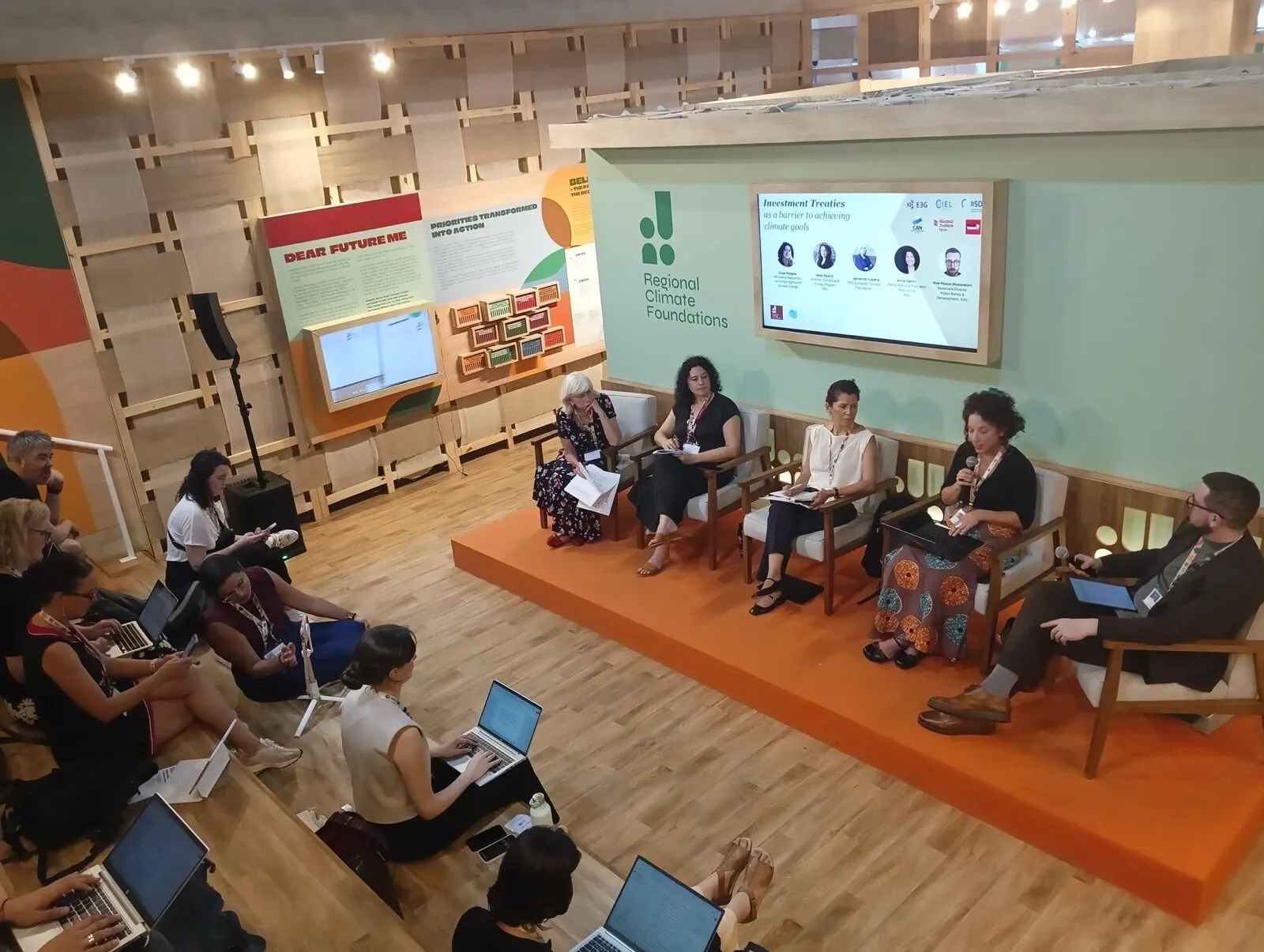
Investment treaties and ISDS as barriers to climate action
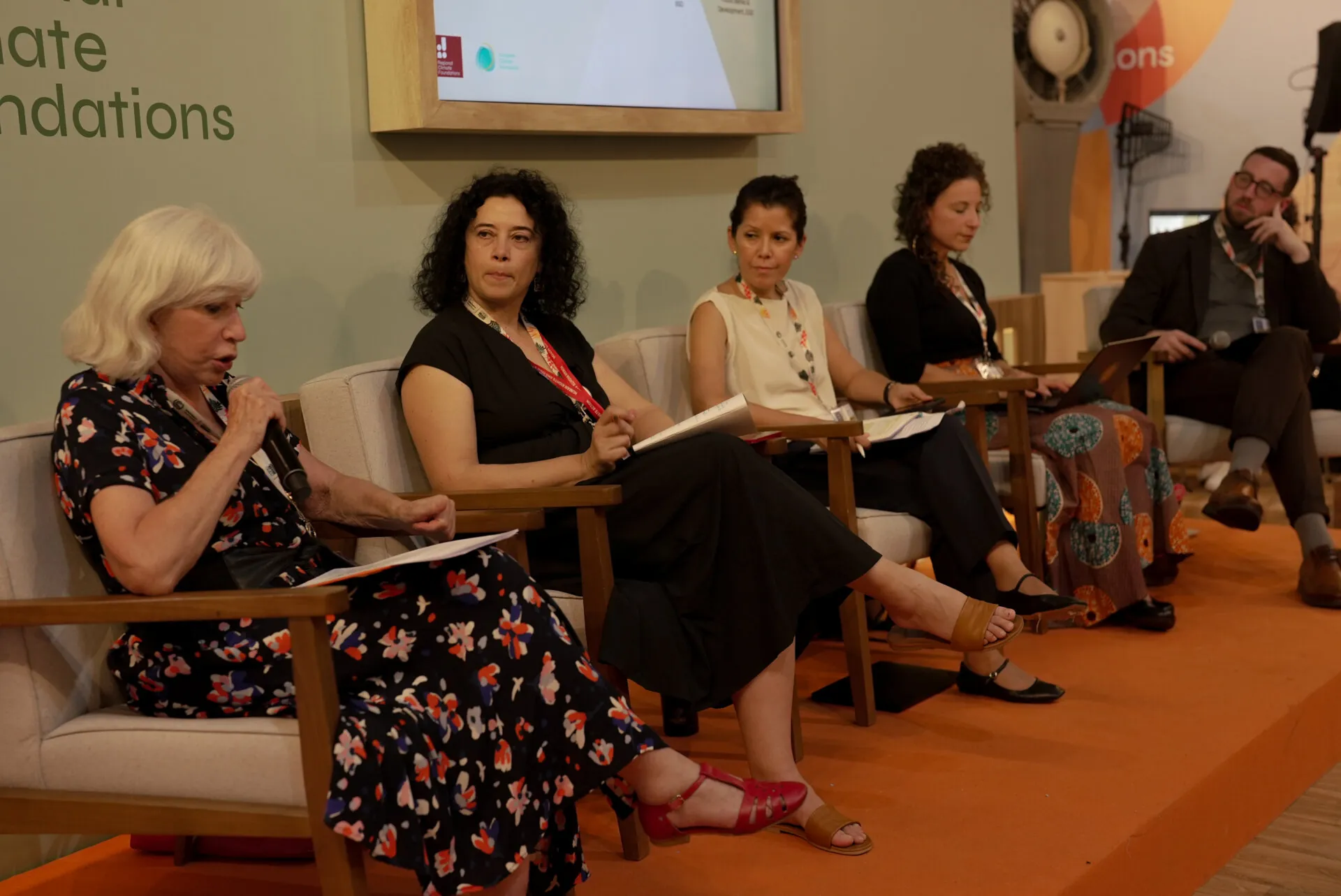
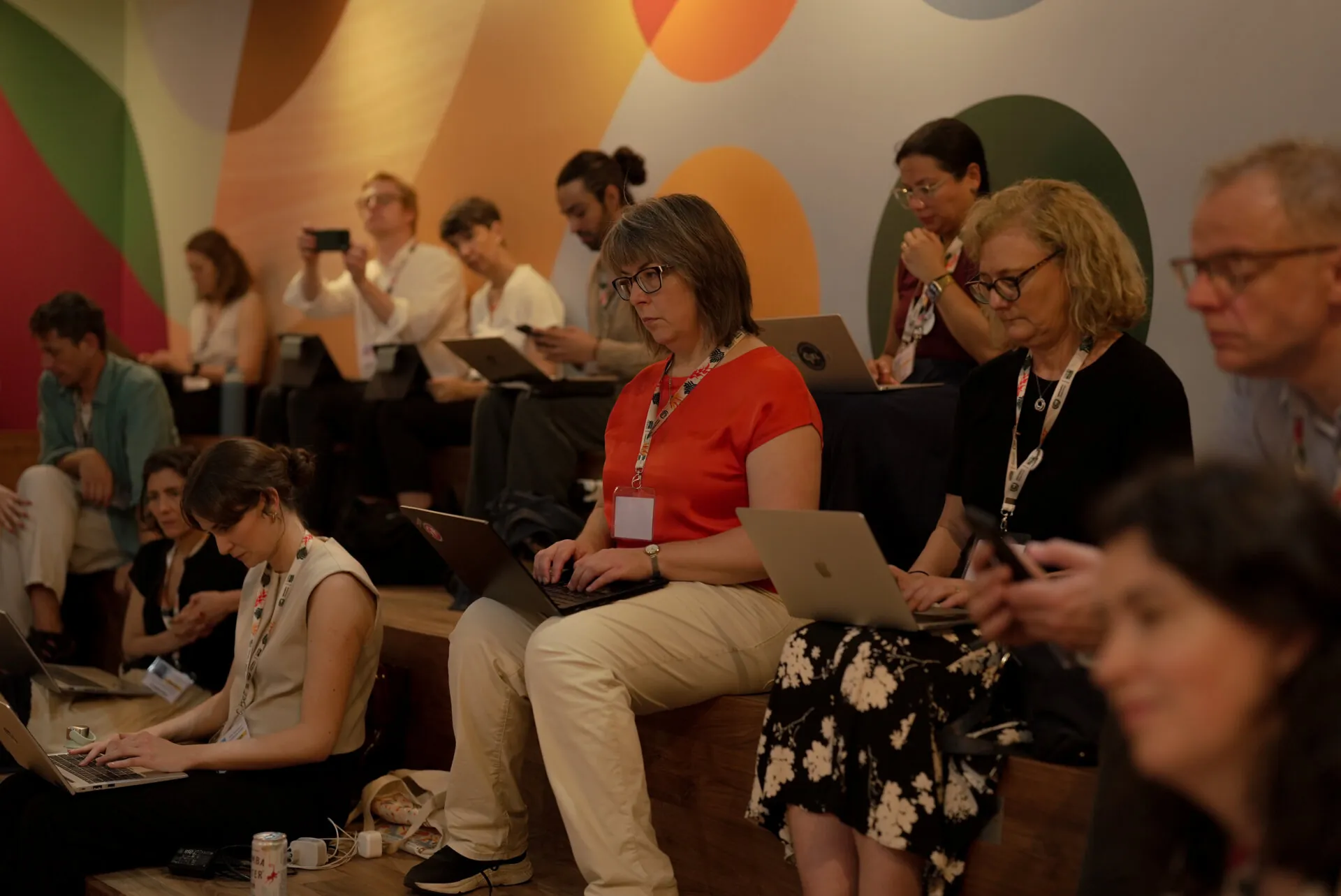
E3G and partners hosted a panel at the Regional Climate Foundations Pavilion on how investment treaties and Investor-State Dispute Settlement (ISDS) create costly barriers to achieving climate objectives.
Key takeaways:
-
Investment treaties with ISDS create structural barriers to climate action. ISDS enables fossil fuel investors to challenge legitimate climate policies through private arbitration, draining public resources and raising the cost of advancing climate action.
-
The ICJ Advisory Opinion strengthens the case for ISDS reform. States have a duty to regulate for people and the environment, and investor protection can no longer override climate responsibilities.
-
Coordinated and swift reform is needed. A coalition of willing states could pursue a plurilateral carve-out of fossil fuel investments from ISDS. Countries should also advance long-term structural reform, including terminating outdated treaties. ISDS threatens both decarbonisation and broader sustainable development objectives.
Thank you to Elisa Morgera, Nikki Reisch, Laurence Tubiana, Anne Hammill and Rob Moore for their insightful interventions. It was a pleasure to co-organise this event with Center for International Environmental Law (CIEL), International Institute for Sustainable Development, Climate Action Network (CAN) Europe, Global Justice Now, War on Want.
What we need from week two at COP30
Kaysie Brown, Associate Director – Climate Diplomacy & Geopolitics, E3G, said:
“As COP30 enters its decisive week in Belém, all eyes will be on whether and how early positive momentum can translate into tangible decisions to drive urgent climate action forward. For that to take shape, countries must come together and walk the talk on outcomes aimed at closing the emissions gap, elevating adaptation, connecting nature and climate, and locking in a credible plan to mobilize and deliver finance. Leaders now need to forge common cause, bridge differences, and commit to implementation that people can see and feel. Done right, Belém can show that multilateralism and action can work hand in hand, helping define a new era of climate action that is faster, fairer, and firmly focused on real-economy delivery.”
Republic of Korea and Bahrain join the Powering Past Coal Alliance at COP30
At COP30, the Republic of Korea and Bahrain joined the Powering Past Coal Alliance, adding momentum to coal-to-clean transition efforts.
- Korea, which operates the world’s seventh-largest coal fleet, made its first official commitment to stop building new unabated coal plants and to phase out 40 of its 61 existing plants by 2040, with plans for the remaining units to be set next year.
- Bahrain also committed to never building coal plants.
- The PPCA launched its new Plan to Accelerate Coal Transitions at COP30, and on 19 November the Coal Transition Commission will release two technical reports on scaling coal retirement and the role of flexible coal in emerging markets.
Kim Sung-hwan, Minister of Climate, Energy and Environment, Republic of Korea said:
“By joining the PPCA, we are demonstrating the Republic of Korea’s commitment to accelerating a just and clean energy transition. Through the Alliance, we will kickstart our coal phase-out, as well as help the Alliance advance the coal transition worldwide. The shift from coal to clean power is not only essential for the climate. It will also help both the Republic of Korea, and all other countries increase our energy security, boost the competitiveness of our businesses, and create thousands of jobs in the industries of the future.”
Read the PPCA’s full press release: Republic of Korea and Bahrain join the Powering Past Coal Alliance at COP30 – PPCA
More information about PPCA activities and events at the COP can be found here: https://poweringpastcoal.org/cop30/
For comment: Anna Drazkiewicz, PPCA Communications Manager, 00 32 487 32 45 62, anna.drazkiewicz@poweringpastcoal.org
E3G Events at COP30 – Today
Accelerating the coal-to-clean transition: Delivering on the Global Stocktake – Action Agenda event (PPCA in partnership with RMI, GIZ)
09:30–10:30 GMT –3, Axis 1 Thematic Room
This high-level event will bring together ministers and change-makers to showcase the showcase global progress, highlight solutions and announce new developments.
Climate councils: Aligning international climate architecture with national climate plans (ICCN event)
17:30–18:30 GMT –3, RCF Pavilion (Register)
This conversation will explore the varying roles that councils play in advising on national climate policies and plans.
Week 1
COP30 midpoint update and reaction
As we reach the midpoint of COP, the Subsidiary Bodies (SB) are set to conclude today and negotiators hand their work over to incoming Ministers, who take over from Monday. The COP/CMP/CMA Plenary is from 16.00-19.00.
Today’s agenda also contains the delayed stocktaking session on the four contentious items and several High-Level events: including on the Baku to Belém Roadmap to $1.3T, Climate Finance (High Level Ministerial Dialogue), and Trade and Solidarity Levies. Outside the venue, the People’s March is taking place in Belém, expected to draw huge crowds.
Ethiopia formally announced its official COP32 Presidency and key priorities today.
E3G reaction to Belém 4x Pledge on Sustainable Fuels
The COP30 Presidency’s Ministerial Roundtable took place yesterday on Implementation of the Belém 4X Pledge on Sustainable Fuels.
Matt Webb, Associate Director, Global Clean Power Diplomacy, E3G, said:
“We welcome the Brazilian Presidency’s overall focus on accelerating the transition to clean energy at COP30, including on developing a roadmap to accelerate the transition from fossil fuels, but the 4x Sustainable Fuels pledge should be treated with caution. Whilst there will be a limited role for sustainable fuels to reduce emissions in technically difficult sectors such as aviation, in most countries, the cheapest and quickest transition from fossil fuels will be through renewable energy, energy efficiency and electrification. As the IEA highlights, sustainable fuels carry significant technical challenges and costs to reduce emissions in their production and require strict guardrails to avoid aggravating food or land insecurity.”
Trade tensions ongoing
The stocktake on the Presidency consultations and this morning’s launch of the Integrated Forum on Climate Change and Trade (IFCCT) will provide more clarity on where trade discussions need to sit within the overall agenda, and a chance for Parties to elaborate on some of the proposals made.
Ellie Belton, Senior Policy Advisor, Trade & Climate, E3G. said:
“Trade tensions continue to disrupt vital climate progress at COP30. Parties must remain open to testing new approaches if we are going to break this deadlock. The Integrated Forum on Climate Change & Trade, whilst still at an early stage of development, offers an opportunity to rebuild trust and revive collaboration by creating a safe space to continue dialogues and work towards shared solutions.”
Investment Treaties are misaligned with Energy Transition
Panellists at the E3G partner event yesterday on Investment Treaties as a Barrier to Achieving Climate Goals, including Laurence Tubiana, CEO of the European Climate Foundation, agreed on the urgent need to reform the current system and increase public awareness of ISDS as a form of political risk insurance for fossil fuel investors which is misaligned with energy transition objectives.
Energy – NDCs and 1.5 overshoot
The Presidency held the first part of a highly anticipated consultation on the response to the NDCs and 1.5 overshoot yesterday in three parts, with discussions continuing today with a focus on turning negotiations into concrete implementation:
- United in celebration of the 10-year anniversary of the Paris Agreement
- Negotiation to implementation: Paris Agreement policy cycle in motion
- Responding to urgency, accelerating implementation, solidarity and international cooperation.
Look out today for the 11th Energy Transition Council Ministerial Dialogue – Financing the Energy Transition: From Fossil Fuel Incentives to Clean Energy Investment (14.30-16.00 Special Event Space Madeira), a High-Level event co-hosted by the COP30 Presidency.
Delivering on the finance
The Circle of Finance Ministers convened a high-level session on Friday where COP30 CEO Ana Toni framed climate finance as the engine to accelerate the Paris Agreement, insisting it must translate into jobs, livelihoods, and real-world impact.
The Independent High-Level Group on Climate Finance also organised a closed event to discuss the Baku to Belém Roadmap.
More about the Baku to Belém Roadmap here
The Roadmap includes reforms to regulatory frameworks to ensure they are adaptive and forward-looking, reflecting the importance of the global transition to long-term financial stability and economic growth. E3G’s policy briefing makes practical recommendations to reform international prudential regulation to better address climate change as a source of long-term financial instability.
Transition Away from Fossil Fuels (TAFF) and energy developments
The Action Agenda event on Friday – Novel Approaches to Transition Away from Fossil Fuels (TAFF), from “What” to “How” – for the first time brought together key initiatives targeting different aspects of the fossil fuel ecosystem.
Speakers from BOGA, PPCA, CETP, and COFFIS reflected on the practical challenges that have been seen on the road to implement commitments to end coal, oil and gas and with a financial environment that means for most of the world, investment in new fossil fuel infrastructure is still the more straightforward and profitable financial choice for governments and investors.
Examples from the Clean Energy Transition Partnership since its creation in 2021 show however that members have implemented reductions in overseas fossil fuel financing equivalent to over $30bn despite a global energy crisis that has added pressure to invest in new and readily available supplies. This should provide confidence that countries at all different stages of planning their transition away from fossil fuels are able to embark with renewed commitment on this plan, and to meet the challenges along the way.
Charley Roberts, Senior Policy Advisor – Clean Energy Transition Partnership (CETP) Secretariat, said:
“The diversity and depth of countries, institutions and actors already engaging with the global transition away from fossil fuels is reflected in a set of clear signals from those present at the Action Agenda event in support of a country-led process to develop a roadmap on the Transition Away from Fossil Fuels. Most importantly, it’s clear that although despite its challenges, progress and implementation of ambitious commitments is happening.”
The Role of Country Platforms
A shift is needed towards country-led, mission-driven delivery anchored in strengthening national and local institutions and systems. This was the conclusion of a roundtable co-organised by the Climate Vulnerable Forum-V20 Finance Ministers (CVF-V20) Secretariat, the 2050 Pathways Platform, and the Climate and Development Ministerial Secretariat (E3G and IIED provide the secretariat). Participants agreed that the global climate agenda has reached a decisive stage where the focus must move to how to support implementation.
Thematic focus: Energy, finance, trade
Today is the start of a two day focus on energy, finance and trade at COP30. Find the full list of expected key moments from day five at COP30 here.
Read E3G’s analysis of energy outcomes at COP here.
Find the latest from E3G on driving progress on trade at COP30 here.
E3G Events at COP30 – Today
Investment treaties as a barrier to achieving climate objectives (E3G, CIEL, CAN E, Columbia, ECF)
10:00–11:00 GMT –3, RCF Pavilion (More information)
E3G hosted an event at the Regional Climate Foundations Pavilion on Investment Treaties as a Barrier to Achieving Climate Goals. We were joined by Laurence Tubiana (CEO, ECF), Elisa Morgera (UN Special Rapporteur on Human Rights and Climate Change), Nikki Reisch (Director Climate & Energy, CIEL), and Anne Hammill (AVP, IISD) for a discussion on what needs to be done to reduce the risk of inventor state dispute settlement clauses in investment treaties. Panellists agreed on the urgent need to reform the current system and increase public awareness of ISDS as a form of political risk insurance for fossil fuel investors which is misaligned with energy transition objectives.
Moderator: Rob Moore, Associate Director, Public Banks & Development, E3G
Presidency Consultations Continued
After the shortest Stocktaking Plenary ever on Wednesday, where COP30 President André Corrêa do Lago announced a postponement of the Stocktake until Saturday, Head of Strategy Tulio Andrade led a further consultation session, referring to it as an opportunity for “collective therapy”.
While many Arab Group nations spoke in support of an action plan and work programme on article 9.1, as well as a dialogue to discuss unilateral trade measures, the EU dismissed such proposals as infringing on their national determination. Many countries picked up on the analogy, with Colombia lamenting at the toxic relationship and making a plea for a middle ground.
The path to delivering fossil fuel phase out?
Support for a roadmap to transition away from fossil fuels (TAFF) continues to grow – with further calls from the four co-Chairs of the Under 2 Coalition and questions raised at both Presidency press conferences yesterday.
The TAFF roadmap and the Colombia Declaration are complementary – one negotiated, one political – for driving momentum for a just and orderly transition.
Securing wider Party backing for clear TAFF language and means of implementation as well as positioning the Colombia Declaration as open and aligned with TAFF is key.
Read more about energy outcomes at COP30 in E3G’s blog here.
The finance agenda
To see meaningful progress, countries need to show the money will flow – and that means demonstrating how the Baku to Belém Roadmap to $1.3T will be implemented. Some developing countries are expressing frustration that they are being asked to support stronger ambition without more finance being made available.
Against this difficult geopolitical backdrop, many are looking to the EU in particular, as self-proclaimed climate leader and the world’s biggest provider of climate finance, to step up and show it will lead the charge on finance for adaptation as well as mitigation.
Rob Moore, Associate Director, Public Banks & Development, E3G said:
“Finance, as always, will be a dividing line as we enter the second week of the COP. The EU mustn’t be fearful of a more ambitious finance agenda. It is in a position to increase international support and investment, especially for adaptation, but needs political courage. The modernised framework for getting support to developing countries put forward by the Brazilian Presidency shows a path to meeting the global goals Europe strives towards. It must stop worrying about being handed a bill and start talking about what it will do and what others must also do to get finance flowing to those hit by climate impacts and to accelerate the transition.”
Ministerial pairs announced
The Presidency announced the ministerial pairs to lead the support of negotiations in Week 2. On adaptation, this will be the Gambia and Germany; on finance: Kenya and the United Kingdom; on mitigation: Egypt and Spain; on Just Transition: Mexico and Poland; on technology: Australia and India; on the Global Stocktake: Norway and the United Arab Emirates; and on Gender: Chile and Sweden.
Thematic Focus
Today’s thematic focus will be on health, jobs, education and information integrity. Read more about what to expect from day four at COP30 here.
E3G Events at COP30 – Today
The case for transition planning: Finance mobilisation and policy execution (Ecosperity, in partnership with ITPN)
11:30–13:00 GMT–3 | Singapore Pavilion | [More information]
This event will explore how public and private sector leadership on transition planning complement one another, with a focus on progress within Asia.
Speaker: Dr Ben Caldecott, Chair, Advisory Group, ITPN
Harvesting solutions: Real-world policy to transform food, land and agriculture (ICCN event)
19:00–20:00 GMT–3 | Swedish Pavilion | [Register to attend]
Launch of the ICCN report Harvesting Solutions: Real-world Policy to Transform Food, Land and Agriculture.
Calls for a fossil fuel transition roadmap
In a session at the Brazilian Pavilion, “Challenges for the Implementation of Paragraph 28 of the GST: Initiatives for Transitioning Away From Fossil Fuels”, there were strong calls by Climate Envoys for the UK, Germany, France, Columbia, Kenya, Denmark, and from Professor of Economics and Government & Chair of the Grantham Research Institute, Nick Stern, and Chief Executive Officer at Council on Energy, Environment and Water (CEEW), Arunabha Ghosh for a Roadmap for Fossil Fuel Transition.
Much reference was made to President Lula’s remarks in the opening plenary and last week’s Leaders’ Summit on the need to drive implementation of the GST decision on the transition away from fossil fuels. This was reinforced by Minister of the Environment and Climate Change of Brazil, Marina Silva, in her opening and closing speeches.
The clearest example of this support for a roadmap to transition away from fossil fuels came from Jochen Flasbarth, State Secretary at the Federal Ministry for the Environment, Nature Conservation and Nuclear Safety, who stated that Germany “will support any decision to create a process to develop a roadmap on the transition away from fossil fuels here in Belem.”
Leo Roberts, Programme Lead, Global Clean Power Diplomacy, said,
“Countries talking openly about fossil fuels at COP is, oddly, a very rare thing indeed. So it’s pretty groundbreaking to see a group so overtly supporting President Lula’s messaging on the need for this COP to kick off a process by which countries can discuss pathways to transition away from fossil fuels. The challenge now for these countries is to work with a creditably open COP Presidency to turn this momentum into something concrete by the time the COP concludes in 10 days.”
Delivering an integrated climate finance agenda in support of the Baku to Belém Roadmap To 1.3T
Launched today: report by the Independent High-Level Expert Group (IHLEG) on Climate Finance.
The COP29 and COP30 Presidencies tasked the IHLEG, co-chaired by Amar Bhattacharya, Senior fellow in the Centre for Sustainable Development, Vera Songwe, The World Bank, and Nicholas Stern, with laying an “analytical foundation” for the Baku to Belém Roadmap to 1.3T.
The report confirms the findings of last year’s IHLEG report, which paved the way for the Roadmap:
- EMDEs (excluding China) will need $3.2 trillion per year by 2035 – $1.9 trillion financed from domestic sources and $1.3 trillion from external sources – to meet the goals of the Paris Agreement and accelerate progress towards the Sustainable Development Goals.
- And of the $1.3 trillion per year needed in external finance for climate action in EMDEs (excluding China), half must come from public sources while half should come from private.
- To achieve this, the report calls for action across three pillars: using investments and technology for transformative change; establishing the foundations of country-led investment frameworks, policy environments, and fiscal space; and unlocking the $1.3T in external finance from public and private sources.
Reacting to the report, Rob Moore, Associate Director, Public Banks & Development, E3G said:
“The IHLEG report adds to a growing body of work setting out a blueprint of known and credible measures for scaling finance to developing countries over the next decade. This needs a better system and smart investment – not huge amounts of money – and what it does cost will pay for itself through a better economy and a safer planet. The only thing standing in the way is the political leadership to turn words into reality.”
At COP30 on Saturday, there will be a session scheduled to build a concrete proposal for implementation of the Baku to Belém Roadmap.
Information Integrity Prominence
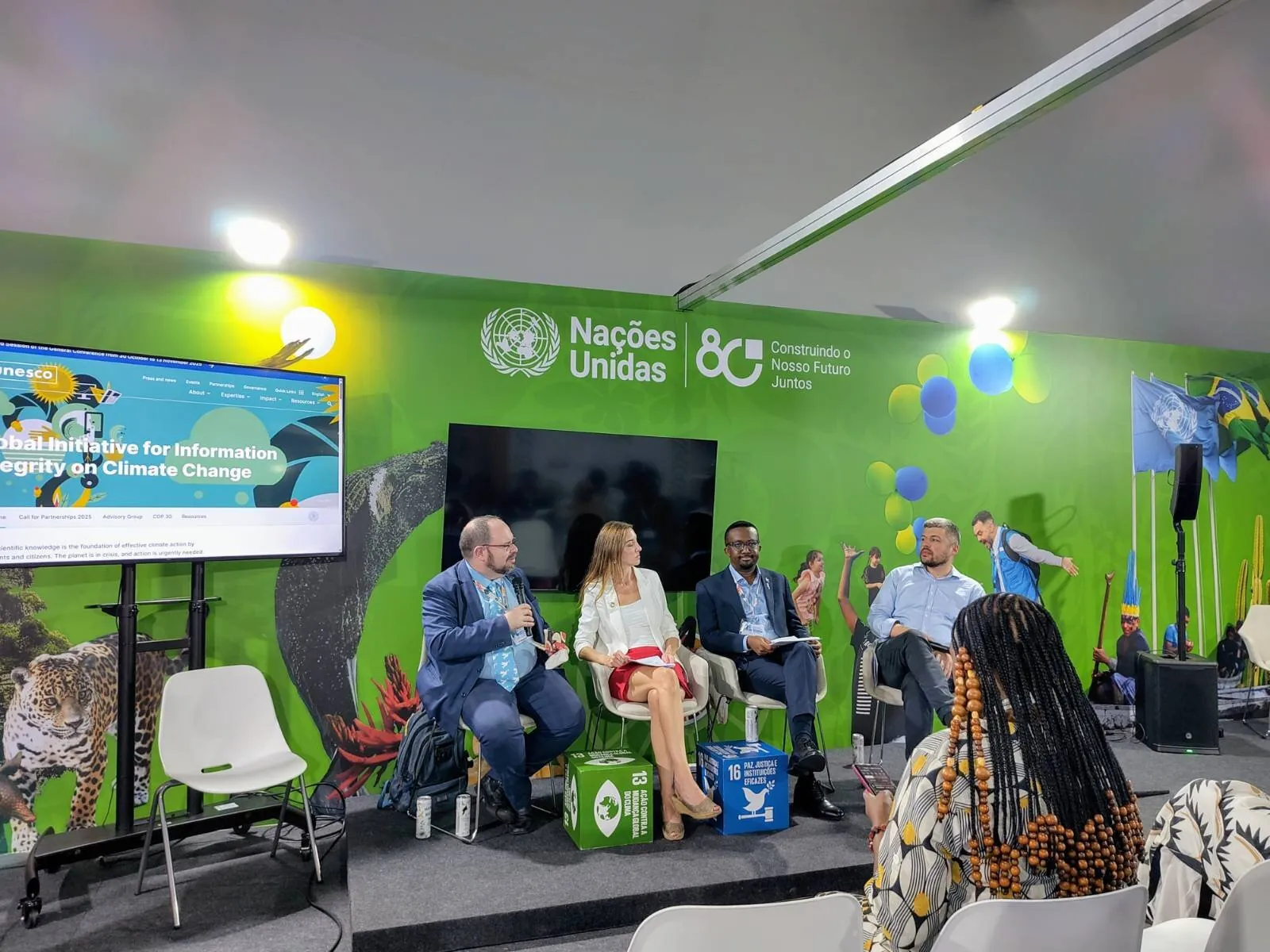
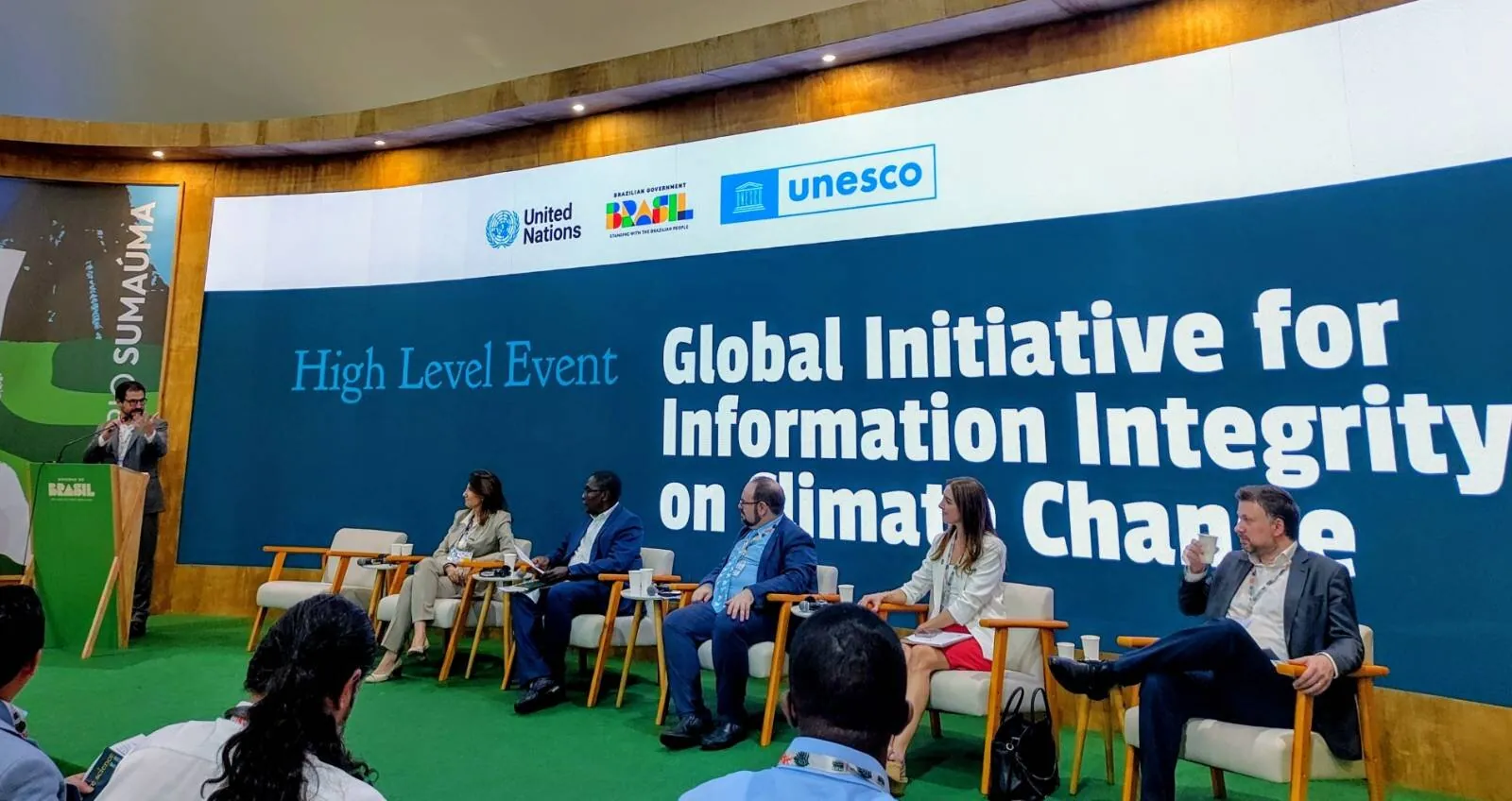
The Global Initiative for Information Integrity on Climate Change, led by the UN, Brazil, and UNESCO, welcomed Canada as its latest official signatory. The Initiative also launched the Declaration on Information Integrity on Climate Change, laying the ground for stronger multilateral cooperation to address the risks posed by disinformation and misinformation to climate action, multilateralism, and public trust in national and international institutions.
Diplomatic discussions were reinforced by a global open letter from non-governmental organisations, signed by E3G and 188 others, calling for the upholding of information integrity on climate action.
IEA World Energy Outlook 2025
Today, the IEA released its World Energy Outlook 2025. Despite political headwinds, it confirms that the energy transition is now structural and irreversible. Renewables and electrification are the backbone of economic resilience, cutting fossil-fuel import bills by over two-thirds in the Net Zero (NZE) scenario.
The IEA’s Current Policies Scenario (CPS) is not a credible baseline: it ignores market and policy realities and locks in high import bills and volatility.
Maria Pastukhova, Programme Leader Energy Transition at E3G said:
“This year’s World Energy Outlook makes the choices for the global energy system and the global economy unambiguous. The Current Policies Scenario points to continued fossil fuel dependence, persistent market volatility, and structurally high energy prices. That may suit a few producing countries, but for economies representing around 90% of global GDP, it means declining competitiveness and welfare increasingly exposed to the political will of (mostly authoritarian) petrostates.If countries want to grow their economies and protect their citizens from rollercoaster energy prices, they need to focus relentlessly on energy efficiency and the decarbonisation of energy demand. These are not just climate measures; they are economic imperatives.”
E3G Events at COP30 – Today
All in: Why business leaders back a fossil-free future (E3G event)
13:30–14:30 GMT–3 | GRA/IRENA Pavilion | [Register to attend]
Event take-aways:
This session highlighted how business leaders worldwide are championing the shift to renewable energy as a driver of jobs, economic growth, and energy security – and calling on governments to match their ambition.
- Executives from across sectors shared insights into how they see the clean energy transition as an enabler of energy security, local value chains, and economic growth
- How policymakers can support the private sector’s shift by unlocking investment and accelerating the clean energy transition.
Climate councils: Bridging science and policy to implement NDCs and NAPs (ICCN event)
17:00–18:00 GMT–3 | NDC Partnership Pavilion | [Register to attend]
Climate councils, officially mandated government advisors on climate change, are uniquely positioned to provide ambitious, science-based advice. At this event, council leaders will discuss balancing ambition with achievability, ensuring evidence-based advice while engaging diverse stakeholders, and aligning international ambition with national climate governance.
E3G Press Briefing
Following the opening plenary and conclusion of day one, and successful agenda fight ‘ceasefire’, our press conference today will look at what to expect from this week, the different negotiation tracks and the politics surrounding them, and what to look out for.
09.30-10.00 local time Brasilia GMT-3 (12.30 GMT, 13.30 CET, 07.30am ET), in person Press Conference Room 2 or live streamed on UNFCCC website.
Cosima Cassel, E3G Programme Lead Multilateral Venues, stressed that COP30 must deliver a clear pivot from promises to delivery.
“Time is short and emissions must peak this year and reduce rapidly for pathways to remain credible. COP30 must be a moment to move from pledges to action and set in motion the implementation that we need to see.”
Rob Moore, E3G Associate Director, noted this moment lays down the gauntlet for countries to work together to fill the financing gap.
“Brazil have shaped the conversation. Through the Baku to Belém Roadmap and the Circle of Finance Ministers’ report we saw a comprehensive suite of measures that can help advance the structuring of the discussion around climate finance. Laying down the gauntlet to countries … to work together to fill the financing gap.”
Alden Meyer, E3G Senior Associate, highlighted that Brazil now carries a clear mandate and the responsibility to drive ambition over the next two weeks.
“President Lula last week issued the Belém call to action – a stirring call for raising ambition across the board. So Brazil has the instructions from their President on what they need to deliver here and they need to work with Parties over the next two weeks to try to get as far as they can.”
Gustavo Pinheiro, E3G Senior Associate, says after months of consultation, Brazil must now bring forward its unifying vision for COP30.
“The Brazilian COP Presidency has been in listening mode for most of the year. They moved into a more facilitative mode from [the June UN Climate Change Conference] SB62, and at New York and Pre-COP. Now it’s time for orchestrating mode. Brazil has to present what the mutirão package can be.”
Today’s event at COP30
Grid modernization: Electrification and the transition to renewable energy (E3G, with Solutions for Our Climate and Beyond Fossil Fuels)
15:45–17:00 GMT –3
📍Asia Climate Solutions Pavilion
E3G hosted an event with Beyond Fossil Fuels, Global Renewables Alliance and Solutions For Our Climate on the role of grid modernisation in enabling electrification and the transition to renewable energy.
Challenges facing modernising grids in Europe, Asia and South America were a main topic of discussion. Panellists agreed that the energy transition will only move as fast as our power grids allow it to, and that modernising the grid isn’t just a technical challenge – it’s a political and financial one too.
In his closing remarks, Rexor Amancio, Country Funds Manager, UK PACT, Philippines emphasized that to “make the energy transition right, we must first make the grids right.” He underscored the critical role of electrification, describing it as the backbone of the transition, and called for smarter, more flexible, and more interconnected systems to meet future energy demands.
Powering the Planet: The Global Solar Moment and Road to 2030
12:00 – 13:00 BRT.
📍 The Solar Hub Pavilion (C-79), Blue Zone, COP30, Belém (International Solar Alliance Pavilion)
E3G hosted an event with the International Solar Alliance to discuss global solar momentum and the road to 2030. Participants shared their views on the role of coordinated policy change, resilient global value chains and reformed market design in delivering real world action to scale up solar power capacity.
The pledge, the plan, and the pipeline: Unlocking subnational climate finance for localised impact
15:15–16:30 BRT
📍 Lounge Area, Canto Coworking, Belém
E3G, IEEFA, and Vasudha Foundation, and the India Climate Collaborative hosted a roundtable which discussed the the need for transition planning at the national, subnational and sectoral levels. The discussion focused on the value of developing solutions tailored to local contexts, capacity building needs of domestic and regional development banks and the financial ecosystem, and financing innovation in subnational in emerging economies such as Brazil, India, Argentina, and Nigeria.
Event take-aways:
The discussion explored how substantial governments can translate national climate goals into credible, financeable transition plans tailored to local contexts and grounded in just transition priorities.
Key discussion points:
-
The need for transition planning at the national, subnational and sectoral levels, and the value of developing solutions tailored to local contextsCapacity building needs of domestic and regional development banks and the financial ecosystem and policy makers.
-
Channels for directing finance to smaller projects, communities, and local governments.
-
Financing innovation in subnational contexts across emerging economies such as Brazil, India, Argentina, and Nigeria.
-
The need for mitigation and adaptation action to go hand in hand, supported by robust MRV systems, as what is measured gets financed.
-
Partnerships between domestic and international stakeholders are key to identifying what works, learning from what doesn’t, and scaling solutions that enable resilient, clean, and just transitions aligned with both development and climate goals.
-
This session is part of India Climate Collaborative’s day-long “From India, with others: A shared journey forward” event.
Watch E3G’s media briefing – November 11th
What happened: The positive tone of last week’s World Leaders’ Summit set the scene for today’s ceremonial opening of COP30 which kicked off with the much anticipated agenda fight averted. With intense thunderstorms punctuating the heat outside, the plenary audience followed speeches by Mukhtar Babayev, President of COP29, formally handing over to André Corrêa do Lago as COP30 President, along with Simon Stiell, executive secretary of the United Nations Framework Convention on Climate Change, and President Luiz Inácio Lula da Silva.
COP President Do Lago confirmed that intensive consultations with Parties had led to agreement on how to handle four key agenda proposals: unilateral trade measures, provision of finance for developing countries/Article 9.1, addressing the NDC ambition and implementation gap, and the EU proposals on reviewing the first round of countries’ biennial transparency reports.
What next: The Presidency will conduct consultations on these issues with an initial progress report tomorrow and a proposal on how to proceed forward from there. With this agreement, he authoritatively (and rapidly) gavelled through the agreed agenda. Additional sessions are scheduled for today and tomorrow.
What this means: The first round of consultations demonstrated there are still deep divisions among Parties on how to address these controversial issues in any COP30 decisions. However, given the odds, avoiding the agenda fight seems like a positive diplomatic first day.
Why country platforms are gaining traction
E3G, IIED and the Government of Vanuatu hosted a Climate & Development Ministerial (C&DM) reflections event today. This kicked off COP30 with a lively session at the Moana Blue Pacific Pavilion on getting country platforms for adaptation up and running for SIDS and LDCs.
The discussion brought the most salient take-aways from the Ministerial meeting at Pre-COP to the wider climate community, particularly around operationalising country platforms for adaptation for LDCs and SIDS and the priorities for 2026.
Five years in, the Climate and Development Ministerial (C&DM) process is delivering an honest, solutions focused dialogue that LDCs and SIDS have been calling for, with the following themes standing out:
- 2025 is a decisive year: adaptation finance is emerging as a political litmus test for a successful COP in Belém.
- Country platforms are gaining real traction: Countries are shaping their own investment pathways and using them to bring partners around a single coherent plan.
- Adaptation needs a step-change in scale: With warming trends still heading towards 2.3–2.8°C, the limits to adaptation are rapidly approaching. The gap to 2035 is estimated at USD 165bn per year.
- Grant based finance remains essential: In particular for SIDS and LDCs facing compounding climate and fiscal pressures.
- System reform still matters: From MDBs to climate funds, alignment with resilience and low emissions pathways needs to accelerate.
As the discussions at COP30 continue, it is clear that we need to turn these insights into actions that make climate finance more accessible, predictable and genuinely country led. The forthcoming C&DM Country Platforms Toolkit can serve as a practical enabler — capturing lessons, promoting South–South learning, and connecting countries to technical and financial partners.
2026 will be equally important, with both collective and individual action playing a crucial role. The panellists highlighted several priorities for the year ahead, including:
- Making adaptation investable, as well as building the detailed evidence base and better understanding of risk to help facilitate capacity building for national institutions to ensure effective adaptation finance.
- Alignment and coherence across multilateral climate funds including the Adaptation Fund, the Green Climate Fund and Fund for Responding to Loss and Damage.
- Collaboration between national finance institutions and institutional funds.
- Investment in priority domestic projects such as rainwater harvesting and scaling coral restoration efforts.
The C&DM is a valuable space where vulnerable countries and providers can meet face to face and move towards solution driven outcomes and welcomes more members. Find out more here.
Ahead of COP30
Signals from World Leaders’ Summit
As COP opened and leaders returned back home following last week’s World Leaders’ Summit, we saw signals that:
(1) COP30 must move past promises and towards implementation;
(2) Multilateral climate finance must be scaled to cover both adaptation and just transition pathways;
(3) Climate action and clean energy is increasingly recognised as an economic, strategic and national security imperative.
The leaders’ summit gathered 154 delegations from across 131 countries and 23 non-state actors, including over 50 Heads of State, who reaffirmed that countries and organisations around the globe remain committed to climate action even among geopolitical and economic challenges.
President Lula kicked off the COP30 World Leaders Summit
- Brazil backs a COP30 outcome to advance the fossil fuel transition: President Lula kicked off the COP30 World Leaders Summit with a strong call for COP to deliver “roadmaps” to overcome dependence on fossil fuels and reverse deforestation, setting clear expectations for COP on the eve of the Summit.
- Lula called for “accelerating the energy transition” as one of the most effective ways to curb global warming and said Belém will honor the legacies of COP28 in recognising the need to move away from fossil fuels.
- The UN agrees: UN Secretary-General Guterres called for all countries to turn the COP28 “commitment into action – ensuring low- and middle-income developing countries that are highly dependent on fossil fuels receive the support they need to develop their transition pathways.”
- What it means: Brazil has made its priorities clear – it’s now time for the Presidency to fulfil its promise and table a strong proposal to advance the fossil fuel transition at COP30.
E3G experts are available for further in-person background, quotes, and analysis
Diplomacy and Geopolitics
Kaysie Brown (EN), E3G Associate Director, (multilateral climate diplomacy, geopolitics, US foreign policy, closing the ambition gap) | kaysie.brown@e3g.org
Alden Meyer (EN), Senior Associate, (UNFCCC and G7/G20 dynamics, multilateral climate and clean energy diplomacy, mitigation ambition, climate finance, US policy and politics)
m: +1-202-378-8619 | alden.meyer@e3g.org
Cosima Cassel (EN, SP, DE) E3G Programme Lead Multilateral Venues, (Climate Diplomacy & Geopolitics, COP30) m: +49 (0) 160 339 0883 | Cosima.cassel@e3g.org
Gustavo Pinheiro (EN, PT, ES), E3G Senior Associate, (COP30, G20 dynamics, BRICS) +55 (61) 98338 8586 | gustavo.pinheiro@e3g.org
Ben Rhodes (EN,FR) Head of Secretariat – International Climate Councils Network (ICCN) | ben.rhodes@e3g.org
Energy transition
Matt Webb – week two (EN), Associate Director, Global Clean Power Diplomacy | matthew.webb@e3g.org
Ujunwa Ojemeni (EN), Senior Policy Advisor, Global Clean Power Diplomacy, E3G. (energy diplomacy, COP30 global stocktake, Energy Transition Council Secretariat representative, renewable energy transition for Africa) m: +44 (0) 7710 167747 | ujunwa.ojemeni@e3g.org
Julia Skorupska – Head of Secretariat Powering Past Coal Alliance m: +44 7867361737 | julia.skorupska@poweringpastcoal.org
Finance
Rob Moore (EN), E3G Associate Director, (MDBs/DFIs, financial architecture reform, climate finance geopolitics) | rob.moore@e3g.org
Lily Hartzell (EN), Senior Policy Advisor, (Public Banks and Development, multilateral diplomacy and climate finance) | lily.hartzell@e3g.org
Adaptation
Rachael Drake (EN) Senior Policy Advisor (UNFCCC, Climate Diplomacy, Adaptation)| rachael.drake@e3g.org
Trade
Ellie Belton (EN) Senior Policy Advisory (Trade, ISDS, CBAM) ellie.belton@e3g.org
EU
Marc Weissgerber (EN, DE) E3G Executive Director Germany and CEE, (Germany at COP, International financial architecture reform, World Bank group, private capital mobilisation) m: +49 175 1974404 | marc.weissgerber@e3g.org
Diplomacy and Geopolitics
Nick Mabey OBE (EN), co-CEO and co-founder, (climate diplomacy, foreign policy, macroeconomics)
m: +44 (0)7949 768 771 | nick.mabey@e3g.org
Finance
Salvatore Serravalle (EN,FR) – E3G Programme Lead for Global Macro & Finance Resilience | Salvatore.serravalle@e3g.org
Kate Levick (EN), E3G Associate Director (International and UK sustainable finance, public and private sector finance, financial initiatives, climate disclosure, transition planning, financial regulation)
m: +44 (0) 7860 861225 | kate.levick@e3g.org
EU
Elisa Giannelli (EN, IT, FR) E3G Programme Lead (EU politics, 2040 target) Elisa.Giannelli@e3g.org | + 32 (0) 494 58 48 29
UK
Ed Matthew (EN) E3G Director of UK Programme (Energy and climate across UK politics and policy)
+44 7827 157 906, ed.matthew@e3g.org
Energy
Leo Roberts – week two (EN), E3G Programme Lead, (JETPs, coal phase-out, power sector transitions particularly Global South)
m: +44 (0) 7908 664 334 | leo.roberts@e3g.org
Matt Webb – week one (EN), Associate Director, Global Clean Power Diplomacy matthew.webb@e3g.org
Katrine Petersen (EN) Senior Policy Advisor Global Clean Power Diplomacy m: +44 (0) 7961754452 | katrine.petersen@e3g.org
Beth Walker (EN), E3G Senior Policy Advisor, (Energy transition, upstream oil and gas, fossil fuel producing countries’ transition, COP energy package) m: +44 7827 9668038 | beth.walker@e3g.org
Madhura Joshi (EN), E3G Senior Associate, (Indian geopolitics and policy, energy transition) m: +91 9650783893 | madhura.joshi@e3g.org
Trade
Johanna Lehne (EN, DE), E3G Programme Lead, (Industry decarbonisation including steel, industrial policy, circular economy, built environment, trade policy)
m: +44 (0) 770 848 6383 | johanna.lehne@e3g.org
Adaptation
Ana Mulio Alvarez, Policy Advisor (UNFCCC, Adaptation, Loss and Damage) m: +34 639916760 | ana.mulio@e3g.org
Explore E3G’s events and speakers at COP30