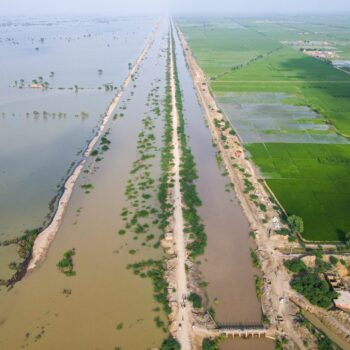

The macro-criticality of climate is increasingly evident in, among others, economic losses from extreme weather events, shifting trade and financial flows, and investments in resilience. As the only institution mandated to promote international monetary cooperation and empowered to facilitate consultation and collaboration on international monetary problems, the International Monetary Fund (IMF) plays an important role in deepening our understanding of climate’s macro-criticality and impact on financial stability.
The adoption of an institutional climate strategy in 2021, which emphasizes the macro-criticality of climate, was an important step in shaping the integration of climate into the Fund’s core activities. Over the next 12–24 months, a series of IMF policy reviews will provide an opportunity to assess and refine the Fund’s approach to climate, thereby fostering greater macroeconomic and financial stability.
This briefing provides recommendations in relation to each of the Fund’s core activities – surveillance, lending, and capacity development – as well as considerations for the Fund’s approach to debt sustainability. It grounds these recommendations in a more explicit link between IMF activities and countries’ climate considerations and commitments, which in turn can facilitate global cooperation.
How the IMF can advance its work to integrate climate into its activities
Surveillance
- Continue implementing the Fund’s 2021 climate strategy and strengthen its integration into bilateral and multilateral surveillance.
- Include a one-page summary of members’ main climate considerations in all Article IV reports.
- Continue to reflect spillover effects of climate in multilateral surveillance, particularly flagship reports.
- Streamline modelling efforts through consolidation and targeted support.
- Continue to advance coverage of climate in financial surveillance to better identify risks to financial stability stemming from physical and transition risks.
Lending
- Ensure alignment of Upper Credit Tranche (UCT) program design with countries’ climate commitments.
- Evaluate options and provide proposals to evolve the Resilience and Sustainability Trust (RST) in preparation for the 2027/28 RST review.
Capacity development (CD)
- Protect the demand-driven nature of IMF CD and ensure the Fund and its partners have the technical skills to respond to members’ needs.
- Maintain and diversify funding for CD as integral to the effectiveness of surveillance and lending.
- Prioritize data collection capacity in climate-related macro-critical areas.
Debt Sustainability Analysis (DSA)
- Enhance realism of outlooks in DSA alternative scenarios, using existing climate models and tools.
- Revise the criteria triggering a stress test for natural disasters and fine tune quantifying methods.
- Extend the low-income country (LIC-DSA) forecast to 30 years, creating consistency with the Sovereign Risk and Debt Sustainability Analysis and World Bank Group’s Country Climate and Development Reports.