
In the twenty-first century, climate change, emergent technologies, and geopolitical tensions require novel and agile approaches to safeguard financial stability and economic growth. Despite the speed of change, overarching lessons can be learned from past economic disruptions to better inform current choices. In this briefing, we draw six key risk areas from past macroeconomic and financial shocks and demonstrate that climate change acts as a risk multiplier in each case.
In an increasingly shock-prone world, the first step to containing risks is knowing they exist. Climate change, driven by greenhouse gas (GHG) intensive economies, is a macro-critical issue as it “affects, or has the potential to affect, domestic or external stability” through bilateral and/or spillover risks.
From more frequent and extreme weather events to financial destabilization and price shocks, climate both multiplies pre-existing risks and exposes and worsens previously ignored vulnerabilities in the global economic and financial system.
We highlight six crucial risk areas of macroeconomic and financial shocks and argue that climate change is a macro-critical issue that requires adequate monitoring from macroeconomists.
Risk area 1: Debt sustainability
Recent floods in Pakistan and Hurricane Fiona in the Dominican Republic showed how natural catastrophes can trigger or exacerbate debt vulnerabilities. The Latin American and eurozone debt crises of the 1980s and 2010s showed that country debt crises and potential defaults threaten macroeconomic stability and can trigger regional debt crises.
Risk area 2: Trade and supply chains
Operational challenges to semiconductor production in drought-hit Taiwan revealed that a localized supply chain shock can have deep trade impacts in an interconnected global economy. Worsening extreme weather events and environmental stressors due to climate change are likely to increasingly destabilize supply chains and trade, turning critical local shocks into global crises.
Risk area 3: Energy markets
The historical volatility of fossil fuel energy markets demonstrates that the reliance on a finite set of geographically dependent energy commodities is a significant macroeconomic risk for both fossil-fuel-importing and -exporting countries. Moreover, GHG-intensive economies, largely fossil-fuel-intensive energy economies, are exacerbating climate change and creating spillover risks for climate-vulnerable countries.
Risk area 4: Food markets, inflation and monetary policy
Shocks to agricultural production cause inflation and instability, threatening growth and creating challenges for monetary policy. With climate change and climate impacts negatively impacting the quantity and quality of agricultural yields, more acute and/or persistent inflation with lower supply will pose challenges for short-term price stability and long-term monetary policy formulation.
Risk area 5: Financial stability
The 2008 financial crisis revealed that an asset crash coupled with the interconnectedness of financial systems could have devastating macroeconomic and financial implications worldwide. Today, growing climate-induced physical losses and transition risks are threatening asset classes and insurance markets. Given the speed of information technologies and suddenness of climate shocks, a climate-induced financial crisis is not unlikely.
Risk area 6: Labor and productivity
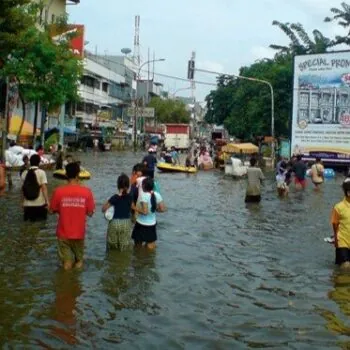
The COVID-19 pandemic demonstrated that human health is intimately linked to productivity and growth. With climate driving more extreme and frequent flooding, millions in densely populated South-East Asian regions are at risk of vector-borne disease outbreaks, putting in jeopardy regional growth.
From this analysis, we draw the conclusion that the IMF must be equipped with a robust framework to monitor and assess the macro-financial risks that climate change can pose and that it has a responsibility to engage with these challenges.

Claire Peraldi Decitre authored this briefing while working as an intern in E3G’s Global Macro & Finance Resilience team. She returns to the team as a Researcher in September 2025.