
The EU Emissions Trading System (ETS) remains one of Europe’s most important tools for cutting emissions, raising revenues and supporting industrial transformation. The 2026 review needs to strengthen this role: protecting the carbon price while making the system’s resources work harder for clean industrial investment.
This will require the ETS to work in tandem with Europe’s wider industrial policy framework, including action on electrification and energy prices, infrastructure, lead markets and product standards under the Industrial Accelerator Act. The ETS cannot deliver industrial transformation alone, but it can become a much stronger investment engine if its price signal, revenues and carbon-leakage support are better aligned around deployment.
Recent delays and cancellations of clean industrial projects underline the urgency of this task. They show that a carbon price and public funding awards are not, on their own, often not enough to move project pipelines to final investment decision. At the same time, political pressure to weaken, pause or reopen parts of the system risks reducing the very investment power Europe needs to maximise.
This briefing argues that the ETS’s investment power is currently being squeezed from three sides:
- interventions that could lower the carbon price;
- pressures to prolong free allocation and expand indirect cost compensation;
- proposals to divert auction revenues to wider EU budget needs.
A stronger investment architecture is needed to prevent these pressures from turning the ETS into a weaker price signal with fewer resources to deploy.
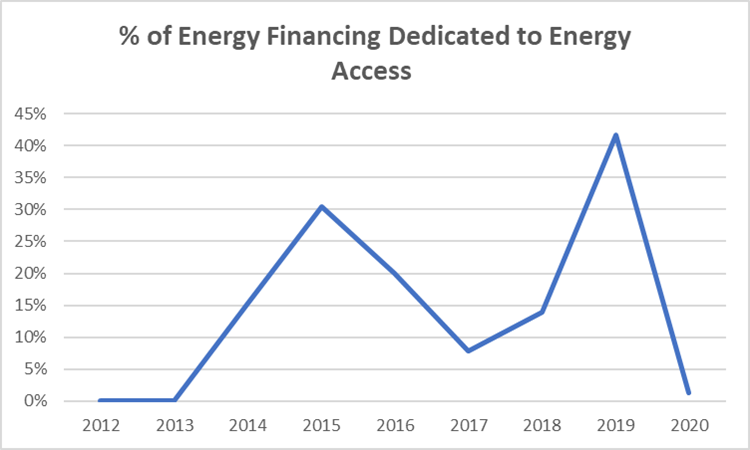
Figure 1: Closing the ETS investment gap requires a layered architecture.
A layered architecture, combining a credible carbon price, better-targeted spending of Member State Revenues, a well-resourced Industrial Decarbonisation Bank, and narrowing, conditional free allocation, will be essential to turning the ETS into an investment engine for European industry.
Recommended actions for the EU ETS review
- Protect the carbon price signal and the revenues it generates, avoiding price caps, corridors and de-facto ceilings, or supply interventions that would weaken investment certainty and drain revenues.
- Ensure national ETS revenues work harder for industrial transformation, by linking spending more clearly to decarbonisation and industrial policy goals, supported by clearer rules, more transparent reporting and broader use of auctions-as-service schemes.
- Create a strong Industrial Decarbonisation Bank as the main EU-level industrial decarbonisation deployment vehicle, focused on performance-based support for projects where the carbon-price/clean-cost gap is the binding barrier to investment.
- Reform carbon-leakage support into a conditional bridge, keeping free allocation and indirect cost compensation targeted, time-bound and linked to credible investment and emissions-reduction delivery.