

Great British Energy (GBE) is the UK government’s vehicle to deliver energy security and economic resilience, but it needs to close the gap between ambition and delivery. With fiscal headroom in the UK weak amid the second energy price shock in five years, reducing exposure to fossil fuels is a not only a climate imperative, but also an economic one. GBE will need to use its limited budget strategically to maximise economic impact in the short term.
Higher energy prices following Russia’s invasion of Ukraine cost the UK economy £183 billion over four years. Lasting prosperity depends on cheaper home-grown power, stronger regional economies and greater resilience to future crises.
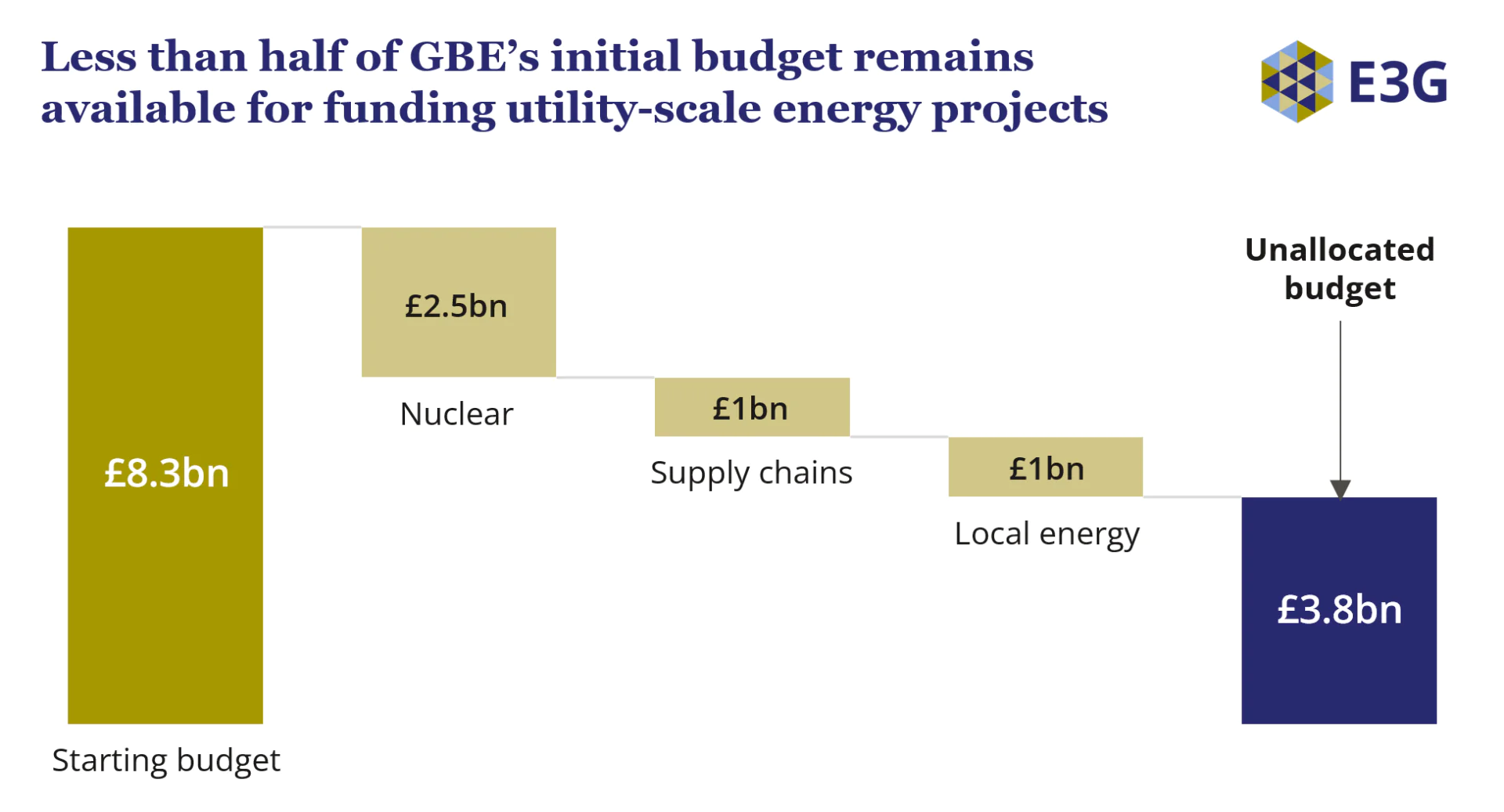
GBE’s strategy aims to tackle these challenges head-on, with its stated priorities of local and community energy, supply chains, and energy generation. However, its current budget – almost one-third of which is already earmarked for nuclear power – is not sufficient for it to drive meaningful change across this full range of priorities.
GBE has a choice: either seek additional funding or narrow its focus on a smaller set of immediate priorities to close the delivery gap.
Great British Energy must meet three conditions to unlock its full potential
- Build institutional capacity aligned with its ambition to establish a world-leading energy company (by 2026).
- Focus its resources on areas of highest impact in the first two years. Demonstrate delivery in key areas to ensure its projects reduce energy bills for communities, build strong supply chains and support local jobs (by 2028).
- Establish financial credibility to be in a strong position to scale its impact (by 2030).
Recommendations to translate these conditions into action
The time to deliver is now. Getting the sequencing and prioritisation right can deliver visible impact for communities, households and businesses. This will help lock in the political and public support that is necessary for GBE’s survival beyond this Parliament.
To achieve visible economic impact by 2028, GBE should:
- Unlock a new wave of community and local energy investment by removing barriers to community energy, and crowding in private finance. GBE should also partner with the National Wealth Fund to support local and combined mayoral authorities on their decarbonisation journeys by plugging gaps in advice and finance.
- Reindustrialise Britain’s regions by strategically scaling finance for clean energy supply chains, creating good jobs and delivering a more secure energy system. GBE needs to prioritise to maximise the impact of its limited budget. It should map UK strengths against critical supply chain bottlenecks, and target investment where the UK has a genuine chance of being globally competitive.
In parallel, to lay the foundations for long-term success, GBE should:
- Translate ambition into a delivery roadmap for the next phase that drives investment by setting out sector prioritisation and an investor engagement strategy, and by articulating how GBE will manage trade-offs. This will put GBE in a stronger position to achieve its goal of mobilising £15 billion in private finance.
Download the full briefing for more detail about these recommendations.