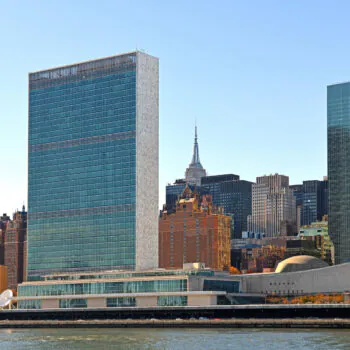

This year’s UNGA took place against a hugely consequential fragmented geopolitical landscape for the United Nations (UN) itself and international cooperation overall. As the UN commemorated its 80th anniversary, the city was abuzz in debate around the reforms it must and indeed can undertake, both to respond to criticisms of its impact and to better shape its own focus around global cooperation. On climate cooperation, UNGA and New York Climate Week (NYCW) reflected multiple trends and narratives that are colliding at once with significant implications for what might comes next.
These included encouraging and positive signals and overtures including:
- An overwhelming recognition that climate is not in fact a hoax but rather that climate is an imperative that leaders are still committed to supporting and protecting and is seen as critical to security, stability, and prosperity.
- An appreciation for elevating climate science to ground knowledge, facts, and actions.
- An understanding that due to collective commitment under the Paris Agreement and elsewhere, progress has been made to reduce emissions and drive down the impacts of climate change but that we are still short of the goal.
- A demonstration that the real world is delivering, especially in the advances being made around clean technologies and renewables which has shown increased investments and reductions in cost, and with that a determination that the private sector and others are committed and playing the long game on climate action (some accounts show that this was actually the largest NYCW on record).
- An increased focus on the need to mainstream and build on adaptation and resilience as part of our collective commitment, alongside mitigation efforts and financing.
But so too were the very real tensions and challenges at play, including:
- A growing recognition that climate action is coming against a very significant ambition gap that must be addressed, shown by the NDCs being put forward and more generally on the effort needed to drive accelerated climate action that needs more than just holding the line action but rather greater collective focus and drive to ensure the energy transition, not merely the energy addition.
- That this gap is taking place at precisely the moment when the signals are flashing brightly that this is a world not only in flux and reeling on the geopolitical front but also when it comes to domestic politics as well.
- And this tension is causing challenges across the narratives and media space as well, making it hard to understand what works, what does not, and where climate action is and needs to be.
- At the heart of much of this is a test for climate leadership and where it is and where it needs to be.
What must happen next to meet the moment on climate action?
To meet the moment on climate action, those committed have a dual task of protecting progress while building for the future, and all while contending to domestic and global pressures that at times create very real headwinds or at least challenges to staying the course and ensuring that climate remains at the top of our collective agendas. This means too in breaking out of molds to build and support different coalitions and partnerships to better reflect the world that is shifting before our eyes, and to demand more where more is needed. These coalitions and this leadership must continue to leverage the real economy progress and indeed connect it more concertedly to demonstrate why cooperation matters, why COPs matter, and how we must collectively grapple with the hard and messy competing narratives that exist in the climate space.
How will we collectively rise to the challenge, to work together to plan and respond to what we know will be crushing rises in energy demands in the years ahead due to AI, to building resilience to accelerated impacts, and to ensuring that the green tech momentum is met with continued determination to reduce emissions and increase financing to move critical solutions forward? These are the issues that are on our doorstep now and as we look ahead to COP30.
We know we are making huge strides; we know this year is also showing our collective gap and threats to progress. Climate, geopolitics, markets, and politics are all colliding at this moment of the transition indeed.