
The 17th Petersberg Climate Dialogue takes place on 21-22 April 2026 in Berlin, Germany. This is the first major climate ministerial meeting of 2026, bringing together Ministers from over 40 countries.
- Organised by the Government of Germany together with the COP31 Presidency of Türkiye and the COP31 Presidency of Negotiations Australia, it is an early – and critical – opportunity to build political momentum and shared ambition for COP31. It will also be the first time Türkiye and Australia in their Presidency roles have appeared together to talk about COP31 priorities, although Minister Bowen (Australia) has cancelled his trip due to a domestic fuel crisis.
- The closed-door discussions will have a strong focus on closing the gap to keep warming within 1.5°C, implementing the New Collective Quantified Goal (NCQG) agreed at COP29, particularly for adaptation finance, and enhancing the multilateral climate regime. It will also focus on accelerating implementation, including translating global energy transition commitments into rapid, bankable projects to support delivery at scale.
- In the context of today’s volatile global energy markets and the strategic vulnerabilities caused by dependence on fossil fuels, there is an even greater imperative for Ministers to double down on climate action. Petersberg Climate Dialogue is an opportunity to align on steps needed in 2026 to tangibly deliver progress. There will be pressure to show visible implementation of the first Global Stocktake decision as preparations begin for the second Global Stocktake in 2028, as well as showcasing and shaping the increasingly prominent role of the Action Agenda.
Story
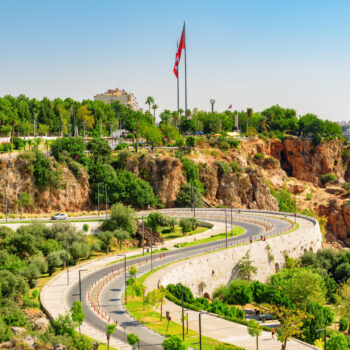
On 21-22 April 2026, the Petersberg Climate Dialogue (PCD) will take place in Berlin, Germany, bringing together Ministers from over 40 countries. It will set the direction for the climate negotiations during the June Climate Meetings (SB64) in Bonn, Germany, and at COP31 in Antalya, Turkiye in November. In its 17th year, the Ministerial will be hosted by the German Minister for the Environment, Climate Action, Nature Conservation and Nuclear Safety, Carsten Schneider, together with the COP31 President-Designate Murat Kurum, Türkiye Minister of Environment, Urbanization and Climate Change and Deputy Secretary Kushla Munro of Australia’s Department of Climate Change, Energy, the Environment and Water. Chris Bowen, Australian Minister for Climate Change and Energy and designated President of Negotiations for COP31 was due to attend but has had to cancel his in-person attendance due to a domestic fuel crisis. Under this new model of cooperation between Türkiye and Australia, the PCD will be the first opportunity of the year for both governments to present their priorities, demonstrate their shared vision and clarify roles.
In the context of escalating tensions in the Middle East, volatile markets and supply disruptions drive home the national and global security and economic imperative for a faster transition. The PCD’s closed-door format creates space for informal discussions on how to take this forward. Leaders and Ministers must use the PCD to align on steps needed in 2026, seek to build consensus and political momentum around them, and demonstrate their commitment to practical delivery and progress across the full range of climate priorities and the Action Agenda.
As set out in our briefing The Road to Antalya, in 2026 the international climate regime must demonstrate that it can make a durable and politically resilient shift, elevating the focus on implementation, delivery, and partnerships alongside consensus-based negotiations. Structured cooperation between successive Presidencies is paramount to ensure an impactful process. The COP31 Presidency will also need to build on the progress made by the Brazilian COP30 Presidency to strengthen the coherence, impact and accountability of the Action Agenda in delivering real-world results. COP31 must also lay the foundations for the second Global Stocktake, accelerate action on mitigation and transitioning away from fossil fuels in a just, orderly and equitable manner, secure public finance commitments and mobilise private finance, integrate adaptation and resilience into actionable plans and diffuse trade tensions, whilst supporting the evolution of a global climate system to advance implementation.
There is planned high level attendance at PCD with the UN Secretary-General expected to provide a keynote address. Friedrich Merz, Chancellor of the Federal Republic of Germany, will host the live-streamed High-Level Segment and may be joined virtually by President Recep Tayyip Erdoğan and Prime Minister Anthony Albanese. COP31 President of the Negotiations, Minister Bowen, will also join virtually, in lieu of having to cancel his trip to PCD. Simon Stiell, UNFCCC Executive Secretary and André Corrêa do Lago, COP30 President will also attend, as will high-level representation from the Pacific Islands, which is critical given the role of the Pacific as host of the Pre-COP on 5-8 October.
Hot on the heels of the World Bank and IMF Spring meetings, the PCD takes place alongside the UNFCCC Climate Week in Yeosu, South Korea, 21-25 April and immediately before the First Conference on Transitioning Away from Fossil Fuels in Santa Marta, 24-29 April. The EU Foreign Affairs Council will also meet in parallel to the PCD on 21 April, with Ministers expected to recognise the geopolitical value of energy and climate diplomacy in the EU’s foreign and security policy. These are all key moments to elevate and help sustain the steady drumbeat of climate leadership and delivery in the global calendar. See our timeline visual for other significant moments.
Quotes
Kaysie Brown, Associate Director, Climate Diplomacy and Geopolitics, E3G, said:
“Against a backdrop of the Iran and Middle East conflict, resulting geoeconomic crises and on the back of the World Bank and IMF Spring meetings, Climate Ministers must use their first gathering of the year at Petersberg to double down on cooperation and delivery to drive climate action and clean energy security, thereby demonstrating they are adapting to this new reality.”
Cosima Cassel, Programme Lead, Climate Diplomacy and Geopolitics, E3G, said:
“The Petersberg Climate Dialogue is a crucial early moment on the road to COP31. This will be the first chance Türkiye and Australia have to set out their priorities to their peers. It will provide an early insight into whether Ministers have the political resolve to decisively close the ambition and implementation gaps that exist and integrate climate action into the geopolitical arenas shaping this decaden.”
Marc Weissgerber, Executive Director E3G Germany and CEE said:
“At a time of mounting geopolitical turbulence, the Petersberg Climate Dialogue must send a clear signals that international climate cooperation remains resilient and decisive. As host, Germany carries a special responsibility to lead by example—strengthening existing alliances while forging new coalitions of the willing. The world will be watching closely to see whether Germany, as Europe’s largest economy and a major industrial player, steps forward with the proactive leadership this decisive decade demands.”
Natasha Green, Senior Associate, Australia, Global Clean Power Diplomacy, E3G said:
“PCD is Türkiye and Australia’s first joint public engagement at PCD. Other Governments and stakeholders will be watching this partnership closely and looking for signs of a strong and growing partnership on COP31. Türkiye and Australia have been in close collaboration since COP30, and in consultation with Pacific partners, meaning both governments are well placed to come together to demonstrate how the COP31 priorities will elevate the priorities of the Pacific and other Small Island Developing States at PCD and beyond to Bonn, pre-COP and COP31, held in Antalya in November.”
Hajja Naseem, Senior Associate, Climate Diplomacy and Geopolitics, E3G, said:
“Looking towards Pre-COP in Fiji and COP31, SIDS and LDCs will expect a clear shift towards constructive dialogue and delivery at PCD. At its core, PCD must demonstrate that the international system is prepared to match ambition with implementation, with increased momentum towards scaling finance at scale and speed to match the urgency of the climate crisis. The focus will remain high on mitigation ambition, keeping the 1.5 degrees Celsius threshold target alive and considering a just, fair and equitable energy transition, but for SIDS and LDCs mitigation priorities must not overshadow or drown out the priorities on adaptation, loss and damage and finance. The lived realities of the frontline states must result in tangible outcomes on the negotiations.”
Ana Mulio, Policy Advisor E3G said:
“Placing adaptation finance firmly on the agenda at the PCD, and explicitly linking it to the delivery of commitments made at COP29, signals a welcome shift from pledges to implementation. At a time of growing climate impacts and geopolitical uncertainty, sustained investment in resilience across developing countries is not only a moral imperative, but a strategic one: it underpins economic stability, reduces systemic risk, and strengthens global security. The focus must now turn to translating this momentum into concrete, measurable progress through 2026 and beyond. With the Pre-COP set to take place in Fiji, there is a timely opportunity to elevate Pacific priorities and build a broader coalition around adaptation as a cornerstone of climate action.”
Anton Jaekel, Policy Advisor, Climate Diplomacy and Geopolitics, said:
Making the international climate regime fit for purpose requires EU to combines a multi-year strategic approach with a commitment to multilateralism and alliance building, including with the most vulnerable. If agreed on 21 April, the anticipated Foreign Affairs Council Conclusions on energy and climate diplomacy can send a strong signal to the Petersberg Climate Dialogue by making clear that the EU will take a forward‑leaning position, and posit the climate and energy transition as a long‑term strategic interest for the EU and its partners as well as a cornerstone of EU foreign and security policy.
Katrine Petersen, Programme Lead, Global Clean Power Diplomacy, E3G, said:
“COP30 debates on a global roadmap showed more and more countries want to move beyond pledges and towards practical actions to transition away from fossil fuels — and the latest energy crisis has only sharpened the risks of dependence on coal, oil and gas, and the benefits of a faster transition.
“Against this backdrop, and ahead of the first global conference on transitioning from fossil fuels in Santa Marta, Ministers meeting at PCD have a clear opportunity to double down on clean energy transitions as a core priority for political cooperation— not just for the climate, but to guard against economic shocks and build more resilient, secure and prosperous futures.”
Available for comment
Nick Mabey OBE (EN), co-CEO and co-founder, (climate diplomacy, foreign policy, macroeconomics) nick.mabey@e3g.org
Marc Weissgerber (EN, DE) E3G Executive Director Germany and CEE, (Germany at COP, International financial architecture reform, World Bank group, private capital mobilisation) marc.weissgerber@e3g.org
Cosima Cassel (EN, SP, DE) Programme Lead Multilateral Venues, (Climate Diplomacy and Geopolitics, COP30) Cosima.cassel@e3g.org
Anton Jaekel (EN, DE), Policy Advisor, EU Climate Diplomacy, EU Foreign Policy. anton.jaekel@e3g.org