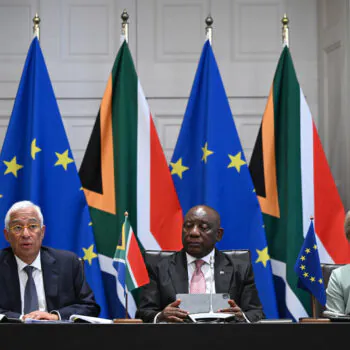

In March 2025, the European Union launched negotiations on its first Clean Trade and Investment Partnership (CTIP) with South Africa. Launched in the framework of the Clean Industrial Deal, CTIPs are meant to align EU external action with industrial policy objectives, reshape dependencies in global supply chains, foster cooperation on clean energy and clean tech with partner countries and support regulatory cooperation. They will not replace but rather complement existing trade agreements with a “faster, more flexible, and more targeted approach, tailored to the concrete business interests of the EU and its partners”.
CTIPs can be an important addition to the existing set of EU tools and make an effective and credible proposition to partners for the overall objective of mutually beneficial partnerships and supply chain diversification. If successful, CTIPs may improve the EU’s offer to partners, by structuring investments and creating clear demand signals. They can also provide alignment on industrial policies and regulatory cooperation.
But the effectiveness of CTIPs will depend on their ability to fill gaps and create new forms of cooperation. It will be essential to show what is new and how the CTIP with South Africa can add value to the existing Just Energy Transition Partnership (JETP). Credibility requires transparency. Partners need clarity on financial flows and a timeline for delivering on commitments to avoid the EU being perceived as ‘pledging without delivering’.
For a successful and effective CTIP, a shared understanding of what both parties seek to achieve is vital.