
As we head into London Climate Action Week, the football World Cup offers a useful half-time metaphor: a moment to take stock of where the global energy transition stands, and what needs to happen next.
Taking stock as we pause at the mid-point of the year
Few would have expected 2026 to bring conflict in the Middle East and renewed disruption to the Strait of Hormuz (the third and largest fossil fuel-driven energy crisis), yet again exposing the fragility of a global economy still heavily dependent on fossil fuels. This latest energy shock has shown, once more, how oil and gas volatility spills into wider sectors, including fertilisers and food systems. Emerging and developing countries have been hit hardest but no country is immune, including major fossil fuel producers.
At the same time, despite the progress made since the Paris Agreement, we are living in a world in which climate impacts are still accelerating, the rate of global warming has increased, and where we face the added impact of a turbocharged El Nino. Commitments made by governments to triple renewables, double energy efficiency by 2030, and to transition away from fossils must now be urgently delivered to tackle the twin energy and climate crises caused by fossil fuels.
These commitments have survived in a geopolitically fraught world and the economic case for deploying ever cheaper renewable energy is now stronger than ever as governments seek energy security and industrial competitiveness.
But we are going to have to move even faster to clean up and expand this renewable-based electricity system to avoid further fossil lock in as we face increasing demand from data centres, expanding electric vehicle fleets and cooling.
Critical barriers remain
Businesses and households still face obstacles to making the transition at the pace required (as new polling by E3G with WMB and GRA has shown), particularly where grids are weak, planning is slow, or the cost of capital is high. These challenges are especially acute in emerging and developing economies, where the financing gap remains one of the biggest barriers to deployment.
Game strategy for the second half
This year’s edition of London Climate Action Week (LCAW) will be the first major international moment outside the COP negotiating space that brings governments, industry and civil society together. LCAW can help provide space to help build the new coalitions, strengthened partnerships and a greater sense of shared direction, building up to COP31 in Antalya.
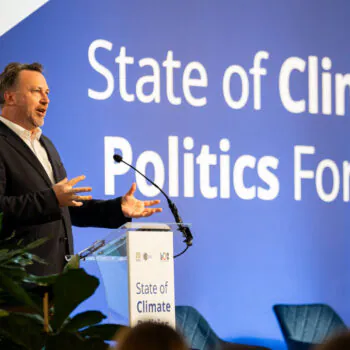
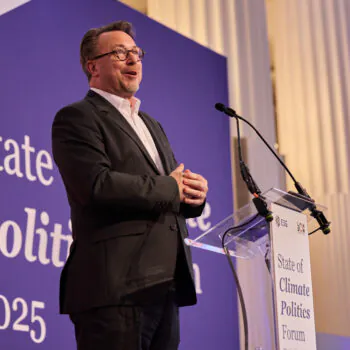
There will be key moments during the week where leaders will provide signals of how they are going to respond to these crises. These include a keynote speech by the UN Secretary General, State of Climate Politics and the Global Energy Transition and Electrification Summit, but there will be wider conversations on climate and development finance and green industrialisation.
Electrification will be a key part of this discussion.
The Turkish COP31 Presidency included a flagship goal to increase the share of electricity in final energy consumption to 35% by 2035 as part of its vision for the COP31 Action Agenda, putting delivery on the global energy transition firmly at the heart of the COP agenda.
LCAW will provide an opportunity for Government’s to respond to this ambition and show that they are going to accelerate domestic policy delivery and international cooperation through a joined-up, committed and whole-economy approach to the energy transition (and avoid the risk of too many players crowding around a narrow electrification target).
Leaders should use the week to send three clear signals.
- First, a signal that they are accelerating the clean-up of the power sector. Upgrading and strengthening domestic policies -reflected in roadmaps and NDCs, and commitment to continue the Santa Marta Conference and Brazilian TAFF Roadmap process – to demonstrate credible, national planning for a whole-economy transition away from fossil fuels. Countries must show how they are going to clean up remaining power generation in line with our climate commitments, stop building new coal and gas plants, and plan an orderly retirement of existing unabated coal and gas power plants, aiming to hit a net-zero power sector within 10 years in OECD countries (working with the Powering Past Coal Alliance). Beyond the power sector, the transition must extend to clean, electrified transport, heat and industry to halve our global dependency on fossil fuels over the next decade.
- Second, a signal that they are transforming and electrifying the energy system. Driving fast deployment of clean renewable energy and electrified systems, redesign and expand new grids (local and regional) to provide stability, flexibility and storage to realise an energy system that is characterised by electrons not molecules. Taking critical steps to control the costs of electricity to the consumer in order to incentivise the uptake of demand side measures like EVs and Heat Pumps.
- Third, a signal that they are building new, deep and long-lasting global partnerships. Intensifying international collaboration to increase the diversity of clean energy supply chains and using our clean energy and trade partnerships to ensure shared prosperity and industrial opportunity for all countries in the transition. These partnerships should include vulnerable developing countries facing short-term fuel costs, offering packages that help build expanded energy access and economic growth and industrialisation, and double down on our technical and financial support packages to support emerging and developing markets, including in support of Just Energy Transition Partnerships and Country Platforms.
Upping the tempo in the second half
Above all, leaders must set out clear plans to up the political tempo for the second half of the year. LCAW must blow the whistle for a second-half political push to ensure by Antalya, we deliver real commitments to the right targets – we cannot be delaying for extra time.
We must convert chances into implementation goals – driving real additional action on system transformation, financing and an accelerated transition away from fossil fuels to deliver clean energy security and put us on track to deliver the goal of the energy and climate security that we need.