As all countries address major challenges including economic and energy security, competitiveness and climate impacts, E3G sets out three tests that COP31 needs to meet to credibly address these challenges and accelerate delivery, living up to its promise as an implementation COP.
- In the context of accelerating climate impacts and the threats from El Niño, COP31 must deliver a credible response to the climate science and the growing risk of a significant 1.5 °C overshoot.
- COP31 must show progress on climate finance moving from commitments to implementation, particularly for developing and climate-vulnerable countries, seizing the opportunity to demonstrate that climate action is increasingly central to tackling the major challenges countries face: protecting economic and national security, strengthening energy and food security, and building prosperity and resilience.
- COP31 must demonstrate the evolution of the UN climate process to meet the demands of the implementation era and set up the pathway to GST2 in 2028. The Presidencies have framed COP31 as an implementation COP. Its credibility will depend on turning existing commitments into delivery, backed by accessible finance, enabling infrastructure, practical support and stronger accountability.
- COP31 will not be judged on a single outcome. Its success depends on whether the overall package connects ambition to delivery. Australia and Türkiye, in the joint-Presidency structure have complementary roles in bringing that package together.
Briefing paper
Read our E3G Briefing setting out the detail of each of the 3 tests for COP31:
Bridging Ambition and Action at COP31: Accelerating Implementation of the Paris Agreement in a changing world. https://www.e3g.org/publications/bridging-ambition-and-action-at-cop31/
E3G Media Briefing – COP31
E3G is offering a virtual briefing for journalists on what to look for at this year’s COP.
Register at this link: https://e3g-org.zoom.us/webinar/register/WN_GfccTRQKQwe2rV9ZY_oBlg#/registration
Date: Tuesday 3 November, 2026, 15.00-16.00 GMT – what to look for from COP31 this year. Join our media briefing for shared insights and a Q&A with our experts on diplomacy and geopolitics, the negotiations, energy transition, and climate finance.
Story
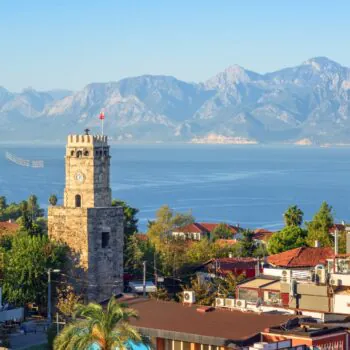
World leaders meet in Antalya for the COP31 climate conference from 9–20 November 2026 which takes place amid geopolitical strain, economic pressure and growing energy and food security risks. While leaders focus on cost of living and domestic politics, the impacts of extreme weather and climate shocks are compounding these challenges and exacerbating risks worldwide. COP31 is an opportunity to demonstrate that climate action is central to tackling the major challenges countries face: protecting economic and national security, strengthening energy and food security, and building prosperity and resilience.
The gap between promised and mobilised finance remains with adaptation and resilience front and centre driven by climate impacts, the threat of El Niño, and the anticipated risks from overshoot of the 1.5 °C Paris climate target. For the financial community fresh from the World Bank Annual Meetings, there is growing recognition that energy shocks, debt pressures, and climate vulnerability are converging. Countries must deliver on funding commitments and move to implementation, particularly for developing and climate-vulnerable countries.
Financing clean, resilient energy systems is becoming a macroeconomic and development imperative and will see the energy transition accelerate. COP31 must drive implementation of climate mitigation efforts cutting greenhouse gas emissions as fast as possible, accelerating the orderly and equitable transition away from fossil fuels, the implementation of mass electrification, scaling of clean power, and sharply reducing methane emissions.
As countries this year begin the political runway to the next Global Stocktake in 2028 that collectively assesses how countries have done against their commitments, most of the “Paris rulebook” – the processes of ambition-setting and evaluation of progress towards the goals of the Paris Agreement – is now in place. Can the UNFCCC and the COP processes now meet the changing demands of the implementation era and link negotiations to the delivery of finance and real-economy action? As well as more transparency and political accountability, we look to see progress on the Action Agenda, critical roadmaps advanced, i.e. for the transition away from fossil fuels and deforestation, plus action on initiatives announced to date. (See attached image from the Briefing paper that sets out the how the UN climate processes must evolve)
COP31 will not be judged on a single outcome. Its success depends on whether the overall package connects ambition to delivery. Australia and Türkiye, in the co-Presidency structure have complementary roles. Australia as President of negotiations, can bridge political divides on finance, adaptation and implementation. Türkiye’s role is in demonstrating delivery, by using the Action Agenda and other initiatives to mobilise implementation partnerships. Their roles must be complementary and mutually reinforcing: progress in the negotiations and delivery through the Action Agenda are both essential to COP31’s overall success.
Delivered together as a coherent outcome, these tracks would demonstrate that international climate cooperation remains capable of providing practical benefits: greater energy security, economic resilience and protection from climate risks in an increasingly fragmented world.
Quotes
Kaysie Brown, Associate Director, Climate Diplomacy & Geopolitics, E3G, said:
“COP31 takes place at a moment when the science is sending the message loud and clear that the world is currently off track for 1.5°C. The prospect of El Niño adds to the urgency of action. This year’s COP – one being billed as critical to drive climate implementation and translate commitments into action – must demonstrate this urgency and commitment to impact and global cooperation. The risk of overshooting 1.5°C is not a reason to give up on the goal, but to accelerate emissions cuts, minimise the scale and duration of overshoot, and invest in resilience. Climate action can also help countries tackle immediate challenges, from energy security and economic stability to competitiveness. In a fractured world, Antalya must show that international cooperation can still deliver practical benefits for people and countries, grounded in science and commensurate with the scale of the challenge.”
Cosima Cassel, Programme Lead, Climate Diplomacy & Geopolitics, E3G, said:
“COP31 has been billed as the ‘implementation COP’, and Antalya must deliver on that promise. That means a strong package across mitigation, adaptation, loss and damage, finance and just transition, alongside a clear path towards the second Global Stocktake. The negotiations and the Action Agenda must reinforce each other, connecting political commitments with real-world progress and helping to overcome the barriers to delivery. Türkiye and Australia have a shared responsibility to provide the leadership and alignment needed to secure ambitious outcomes, but success will depend on every country with a stake in the outcome stepping up.”
Leo Roberts, Associate Director, Energy Transition, E3G, said:
“Ministers and negotiators will arrive in Antalya under the unprecedented weight of an ongoing global energy crisis – itself a symptom, not an aberration, of the fossil fuel endgame we find ourselves in. With many countries now accelerating their transition to clean energy on pragmatic economic, hard security and simple re-election grounds, the global energy transition IS underway – the only questions are whether it can be delivered in a fast and well-managed enough manner.
“The UNFCCC of course remains a key space for high-ambition commitments, but COP31 must also be a place for explicitly demonstrating that countries have internalised not just the need to transition their economies away from fossil fuels, but the fundamental necessity to do so cooperatively, and collaboratively.”
Katrine Petersen, Programme Lead, Global Clean Power Diplomacy, E3G, said:
“Households everywhere are paying the price of the fossil fuel crisis and climate impacts are escalating – at COP31, leaders must show that they can work together for a faster clean energy transition as a response. The Presidency’s electrification agenda gives Antalya momentum, but to truly meet the moment it must go hand in hand with action on renewables, grids, and finance that makes a just, orderly transition away from fossil fuels possible for all countries.
“This is not an abstract debate but a strategic imperative: countries are already electrifying to cut costly fossil fuel imports and transition roadmaps are emerging as plans for prosperity and resilience. To accelerate the transition, Antalya must secure strong political signals on a faster shift to clean, electrified systems, carry forward the COP30 fossil fuel roadmap dialogue, and deliver finance to make sure no country has to watch the transition from the sidelines.”
Jurei Yada, Associate Director, Finance & Resilience, E3G, said:
“COP31 should be judged on whether it helps create the conditions to unlock the investment needed, removes barriers to accessing climate finance, and strengthens confidence that countries and companies can act on their commitments. Donors, in particular from developed countries, must send a positive signal that they will deliver on their climate finance obligations and give partner countries a clearer picture of what support they can expect in the years ahead. Without such a signal, trust will erode further and make negotiations on this and other matters much harder, hindering climate action and adaptation in vulnerable countries.”
Natasha Green, Programme Lead for Australia, Engagement and Diplomacy, Climate Diplomacy & Geopolitics, E3G, said:
“In October, governments and climate leaders left the Pacific Pre-COP with a clear call for stronger, more urgent action to keep the 1.5C goal in reach. The Pre-COP captured a spirit of partnership and collaboration on scalable solutions, and put the realities of the communities most exposed to climate impacts at the centre. Once again, the Pacific has shown the way on climate leadership. As Australia and its Pacific partners head to Antalya for COP31, the Pacific’s vision must not be lost. Australia and Türkiye must carry forward the Pacific’s priorities – keeping 1.5 in reach, access to finance, and the ocean-climate nexus – and strengthen the international architecture needed to turn national and regional ambition into action.
Öykü Şenlen Gundogen, Senior Researcher, Türkiye engagement and diplomacy, Global Clean Power Diplomacy, E3G, said:
“Türkiye has put implementation at the heart of its Presidency- its electrification initiative and the Climate Implementation Bridge speak to priorities shared by many countries. But implementation goes further. It must cover adaptation, just transition and loss and damage, alongside the fossil fuel transition agreed in Dubai and the finance promised in the Baku to Belém roadmap. Countries will expect progress on all these issues in Antalya. The Presidency’s credibility will rest on giving these issues the same care as its flagship initiatives.”
Available for comment
• Kaysie Brown (EN), E3G Associate Director, (multilateral climate diplomacy, geopolitics, US foreign policy) | e: kaysie.brown@e3g.org
• Cosima Cassel (EN, DE, ES), Programme Lead, E3G, (Multilateral venues, Climate Diplomacy and Geopolitics, UNFCCC and COP) m: +49 160 339 0883 | e: cosima.cassel@e3g.org
• Alden Meyer (EN), Senior Associate, (multilateral climate diplomacy, geopolitics, US federal & subnational policy) m: +1(202)-378-8619 | e: alden.meyer@e3g.org
• Jurei Yada (EN, FR), Associate Director, Finance & Resilience, E3G (sustainable and climate finance, macro-fiscal policy, financial reform, public banks, and resilience), e: jurei.yada@e3g.org
• Katrine Petersen (EN, DA), Programme Lead, Global Clean Power Diplomacy, E3G, (global fossil fuel phaseout diplomacy, power sector transitions, multilateralism) m: +44 7961754452 | e: katrine.petersen@e3g.org
• Natasha Green (EN), Programme Lead for Australia, Engagement and Diplomacy. Australia (COP31, Australia-Türkiye partnership, global energy transition, Australia) | e: natasha.green@e3g.org
• Öykü Şenlen Gundogen (EN, TR), Senior Researcher (Türkiye strategy, global clean energy transition, Türkiye climate and energy policy) | m: +44 7444439202 e: oyku.senlen@e3g.org
For further enquiries email press@e3g.org or phone +44 (0)7783 787 863
Leads representing the following E3G hosted Secretariats and coalitions will also be present:
• Powering Past Coal Alliance (Julia Skorupska (PPCA) julia.skorupska@poweringpastcoal.org)
• International Transition Plan Network (ITPN) (Jacques Morris jacques.morris@e3g.org)
• International Climate Councils Network (ICCN) (Ben Rhodes ben.rhodes@climatecouncils.org)
• Clean Energy Transition Partnership (CETP) (Charley Roberts charley.roberts@e3g.org)
• Global Clean Power Alliance-Finance Mission (GCPA-FM) (Ujunwa Ojemeni ujunwa.ojemeni@e3g.org).
To connect with a spokesperson, you can also email E3G for more information or see their websites.
Meet E3G and partners at COP
Notes, and connecting with COP31 insights from E3G
- E3G is an independent think tank working to deliver a safe climate for all. We drive systemic action on climate by identifying barriers and constructing coalitions to advance the solutions needed. We create spaces for honest dialogue, and help guide governments, businesses and the public on how to deliver change at the page the planet demands.
- For further enquiries email press@e3g.org or phone +44 (0)7783 787 863
- Media can register for our journalist WhatsApp briefing service to receive updates and analysis during COP31: E3G WhatsApp registration for journalists
- Press conferences will be held by E3G as allocated by the UNFCCC – please see the main UNFCCC schedule.
- Events – E3G will be hosting and participating in numerous events both private and public. Selected events open to journalists will be shared subsequently.
- Check in regularly with our COP31 landing page signposted on www.e3g.org where we’ll post and share information from across E3G and our partners as well as via WhatsApp above and on our Linkedin channels and weekly subscriber Newsletter. All these are linked to from the home page of our website.