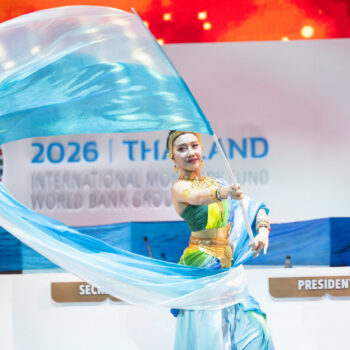

The World Bank and IMF Annual Meetings will bring finance ministers, central bankers and development leaders to Bangkok from 12–18 October. Finance leaders will confront a question with particular force for Asia, and consequences far beyond it: how can countries protect their economies from the energy shock while financing a more secure and resilient future?
The disruption to oil and gas flows through the Strait of Hormuz has exposed the risks of dependence on imported fuels. It has reinforced pressure from some corners for the international financial institutions (IFIs) and multilateral development banks (MDBs) to manage the energy security risks by prioritising fossil fuel investment. Importers face higher energy bills; exporters face different risks from disrupted production and trade; and countries with little fiscal space have fewer ways to cushion the impacts or invest in future resilience.
The response cannot end with managing the short-term impacts of price volatility. Bangkok should connect immediate economic protection to the longer task of building affordable and reliable clean energy systems that strengthen economic stability. Three tests can focus the discussion.
1. Stop an energy shock becoming a debt and development crisis
Higher fuel prices spread through transport, food, power and public budgets. This affects developed and developing countries alike. But, developing and most vulnerable economies are entering a very dangerous moment. For a country already struggling with debt, the pressure can force a damaging choice between protecting people today and investing in the systems that would reduce exposure to the next shock.
This is also a question of global economic stability. The IMF recently warned of the risks posed by high debt and rising borrowing costs. Even before the crisis in the Strait of Hormuz, many countries were already at high risk of – or in – debt distress. Genuinely addressing those vulnerabilities now will help build more resilient economies to withstand the next disruption.
Bangkok offers a chance to put that connection on the agenda by making space for conversations on practical reforms to debt treatment, from targeted liquidity support for countries facing liquidity pressures to improvements on debt restructuring processes for countries facing solvency challenges, and pre-arranged crisis finance.
The UK has already signalled its intention to pursue debt architecture reform under its upcoming G20 Presidency.
2. Make the clean energy transition a country-led economic strategy
Most Southeast Asian countries are net energy importers, with the corresponding exposure to fossil fuel price volatility and risks of supply shocks. Domestic clean power can mitigate these risks. Consistently, we can see where governments have invested in renewables, electrification, and storage, reducing their dependence on fossil fuels, they have built greater resilience into their energy systems, translating in turn to economic and financial stability.
There is no single national pathway. Countries differ in their energy resources and infrastructure, industrial needs, and debt positions. Finance ministries need to lead the work of turning those circumstances into sequenced investment programmes: what must be built first, what policy or regulatory changes are needed, and which financial instruments are appropriate at each stage.
Country-led platforms can bring public banks, development partners and investors around those decisions. Domestic development banks can help originate and combine projects; MDBs and bilateral development finance institutions can support preparation, policy reform and long-term financing. Early private-sector input can reveal where prices, permitting or regulation block investment, without displacing public priorities.
Emerging efforts by the Country Platforms Hub, finance-ministry networks and the Turkish COP31 Presidency’s BRIDGE initiative to structure and communicate these processes should be judged by whether they help countries resolve specific bottlenecks and deliver investment.
3. Change the terms on which finance reaches countries
An investment programme is of little use if the capital arrives too slowly, costs too much or adds debt a country cannot sustain. High financing costs, currency risks, limited project preparation and differing requirements across institutions can hold back clean energy. The IMF, the World Bank, other MDBs and their shareholders should ask what they are changing in this wider financing system, as well as how much they lend.
For the IMF, that means recognising that the energy transition and climate change are macro-critical, and reflecting that recognition in its policies, surveillance, lending and technical assistance. For MDBs, it means improving evidence about risk, making guarantees and local-currency finance more usable where they genuinely reduce costs, and aligning requirements so countries do not have to navigate a different process for every institution. It also means working with national public banks and building local capacity, so each transaction strengthens the pipeline for the next.
Shareholders should ask MDB management for evidence that finance has become more affordable, faster and easier to access. That is how Bangkok can move from a discussion of capital in the abstract to an account of what public banks are changing in practice.
The Annual Meetings will not settle the energy crisis or the debt challenge in a week. They can, however, establish a clear direction: protect countries’ ability to invest through the shock, let them lead the design of their energy and resilience strategies, and make the financing system capable of delivering those strategies on fair terms.